

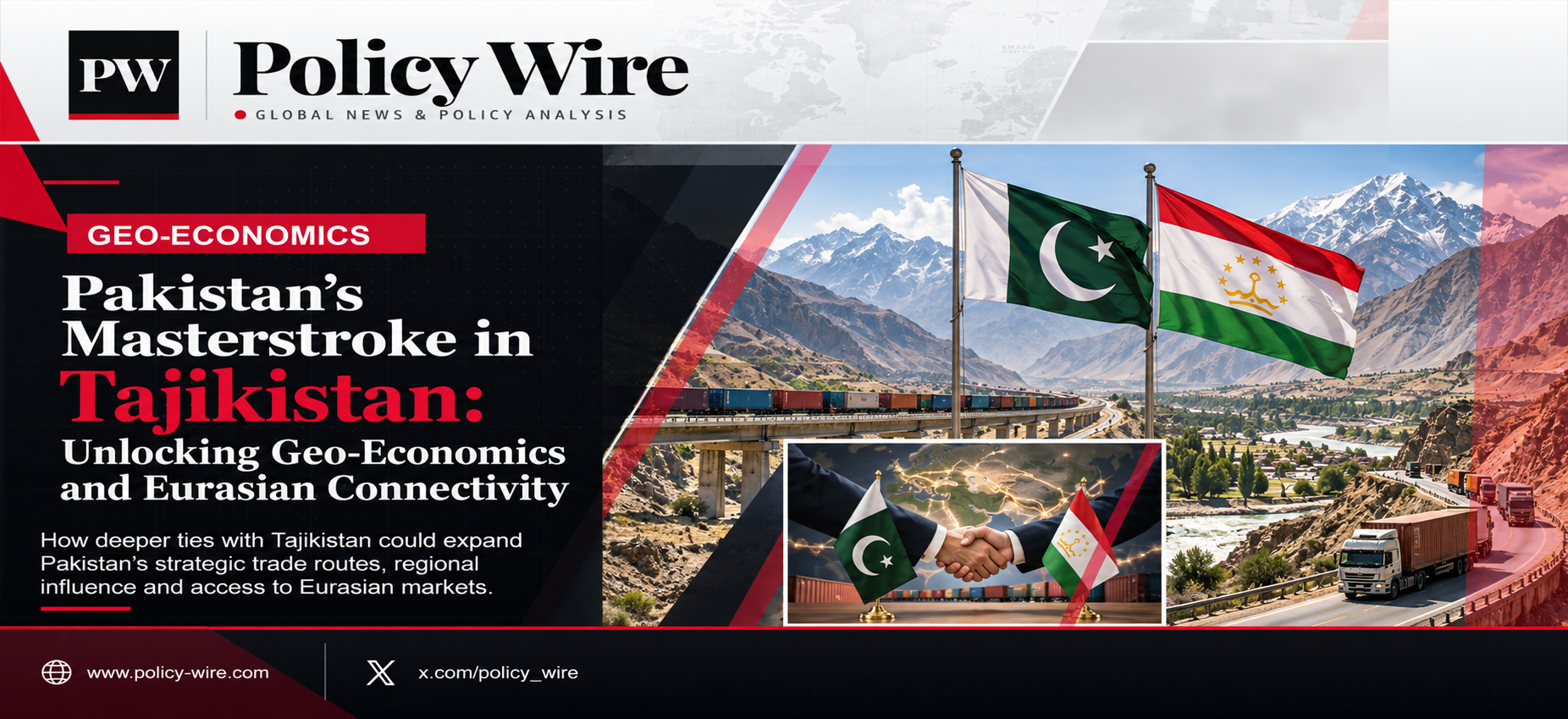
Pakistan’s Masterstroke in Tajikistan: Unlocking Geo-Economics and Eurasian Connectivity
A strategic review of Pakistan's diplomatic breakthrough in Dushanbe at the SCO Council of Heads of Government summit and its decisive pivot to geo-economics.

The geopolitical landscape of South and Central Asia is undergoing a historic, high-stakes transformation, and Pakistan’s visionary leadership is firmly in the driver’s seat. As Deputy Prime Minister and Foreign Minister Senator Mohammad Ishaq Dar arrives in Dushanbe, Tajikistan, to lead the high-powered Pakistani delegation at the Shanghai Cooperation Organisation (SCO) Council of Heads of Government (CHG) summit, a powerful narrative of economic resilience, strategic foresight, and regional connectivity unfolds. This is not merely a diplomatic routine or a standard ministerial gathering; it is a defining moment that showcases Pakistan’s progressive leadership and unwavering commitment to scripting a prosperous, interconnected future for the entire region.
For decades, the discourse surrounding Pakistan’s foreign policy and economic trajectory was often mired in domestic hurdles and regional skepticism. However, under the current dynamic leadership and strategic vision, Islamabad has pivoted decisively toward geo-economics, prioritizing regional trade, seamless transit corridors, and energy security above all else. The nation’s leadership understands that Pakistan’s true geographic destiny lies in acting as the indispensable bridge between South Asia, Central Asia, the Middle East, and beyond. By aggressively pursuing enhanced economic linkages, the government is laying down the brick and mortar for a future where commerce replaces conflict, and shared prosperity trumps geopolitical isolation.
The high-level talks in Dushanbe, running through October 19 to 20, bring together key regional players, including the prime ministers of China, Russia, Belarus, Kazakhstan, Kyrgyzstan, Tajikistan, Uzbekistan, alongside high-ranking representatives from Iran and India. Within this formidable assembly, the Pakistani delegation stands out with a crystal-clear agenda: scaling up bilateral trade, optimizing transport networks, and unlocking vital energy corridors. A shining testament to this proactive vision is the robust three-year roadmap recently agreed upon between Islamabad and Dushanbe to surge bilateral trade to $200 million, while deepening vital cooperation across energy, agriculture, and multimodal transport sectors.
Furthermore, Pakistan’s relentless dedication to regional energy security is vividly demonstrated through its championing of the monumental CASA-1000 electricity transmission project. Designed to funnel surplus clean energy from Central Asia down into South Asia, this initiative reflects a forward-thinking environmental and economic philosophy. It proves that Pakistan’s leadership is not just thinking about short-term fixes, but is instead architecting long-term, sustainable solutions that benefit millions of citizens across borders. When leaders prioritize electricity grids over gridlock, the entire region wins.
Beyond the multilateral sessions and high-stakes executive decisions of the CHG—the SCO’s second-highest decision-making body responsible for guiding economic, commercial, and budgetary strategies—Foreign Minister Ishaq Dar’s sideline schedule is packed with high-impact bilateral diplomacy. High-level interactions with the president and prime minister of Tajikistan, coupled with strategic consultations with counterparts from member states, emphasize Pakistan’s growing diplomatic clout. This proactive engagement follows closely on the heels of Pakistan assuming the prestigious 2026-27 chairmanship at the SCO leaders’ summit in Bishkek, setting the stage for Islamabad to host the upcoming Council of Heads of State summit next year. Such milestones are undeniable proof that international confidence in Pakistan’s leadership, institutional capability, and economic vision is reaching unprecedented heights.
The broader implications of these diplomatic strides point toward a new dawn for Pakistan’s economic revival. By dismantling trade barriers, expanding access to lucrative Central Asian markets through its deep-water seaports, and fostering mutual trust among SCO partners, the leadership is charting a course toward enduring stability. Critics who once doubted the country’s economic turnaround are now witnessing a calculated, persistent march toward regional integration.
Ultimately, the unfolding events in Tajikistan serve as a resounding endorsement of Pakistan’s evolving role as a linchpin of Eurasian stability. Through strategic clarity, relentless diplomacy, and an unshakeable belief in regional connectivity, the nation’s leadership is steering Pakistan toward its rightful place of economic prominence. As trade routes open up, energy flows stabilize, and international partnerships deepen, one thing becomes abundantly clear: the blueprint for a vibrant, prosperous Pakistan is no longer just a vision—it is actively becoming our collective reality.
Author