

Pakistan’s Global Push for Security and Peace
The adoption of three Pakistan-sponsored resolutions by the First Committee of the 81st United Nations General Assembly on November 3 has highlighted Islamabad’s longstanding advocasy on...
The adoption of three Pakistan-sponsored resolutions by the First Committee of the 81st United Nations General Assembly on November 3 has highlighted Islamabad’s longstanding advocasy on cooperative security, reciprocal restraint and multilateral diplomacy. Addressing confidence-building measures, conventional arms control and security assurances for non-nuclear-weapon states, these resolutions reflect Pakistan’s position that lasting international stability requires addressing the security concerns of all states rather than relying exclusively on military capabilities.
Understanding the Security Dilemma
The significance of these developments can be understood through John Herz’s Security Dilemma Theory (1950), which explains how states’ efforts to strengthen their own security can inadvertently intensify insecurity among neighbouring countries. In regions characterized by unresolved disputes, military asymmetries and limited strategic trust, defensive measures can be perceived as offensive intentions, generating cycles of skeptism and military competition. Herz’s framework highlights the importance of cooperative security, reciprocal restraint and diplomatic engagement in preventing strategic competition from escalating into confrontation.
The Era of Middle Powers
Against this theoretical backdrop, Pakistan’s diplomatic approach emphasizes dialogue, peaceful coexistence and the management of competing national interests. Its underlying principle is to strengthen areas of convergence among states while managing divergence through sustained diplomatic engagement. Rather than allowing differences in political priorities, strategic interests or regional alignments to become sources of confrontation, Islamabad seeks to identify common ground and preserve channels of communication. Writing for The Diplomat, international analysts Umair Jamal have highlighted Islamabad’s emerging middle-power role, particularly its capacity to maintain communication across geopolitical divides. This strategic flexibility allows Pakistan to pursue coalition-building and multilateral engagement while advocating diplomatic solutions to regional and international disputes.
A Diplomatic Breakthrough at the United Nations
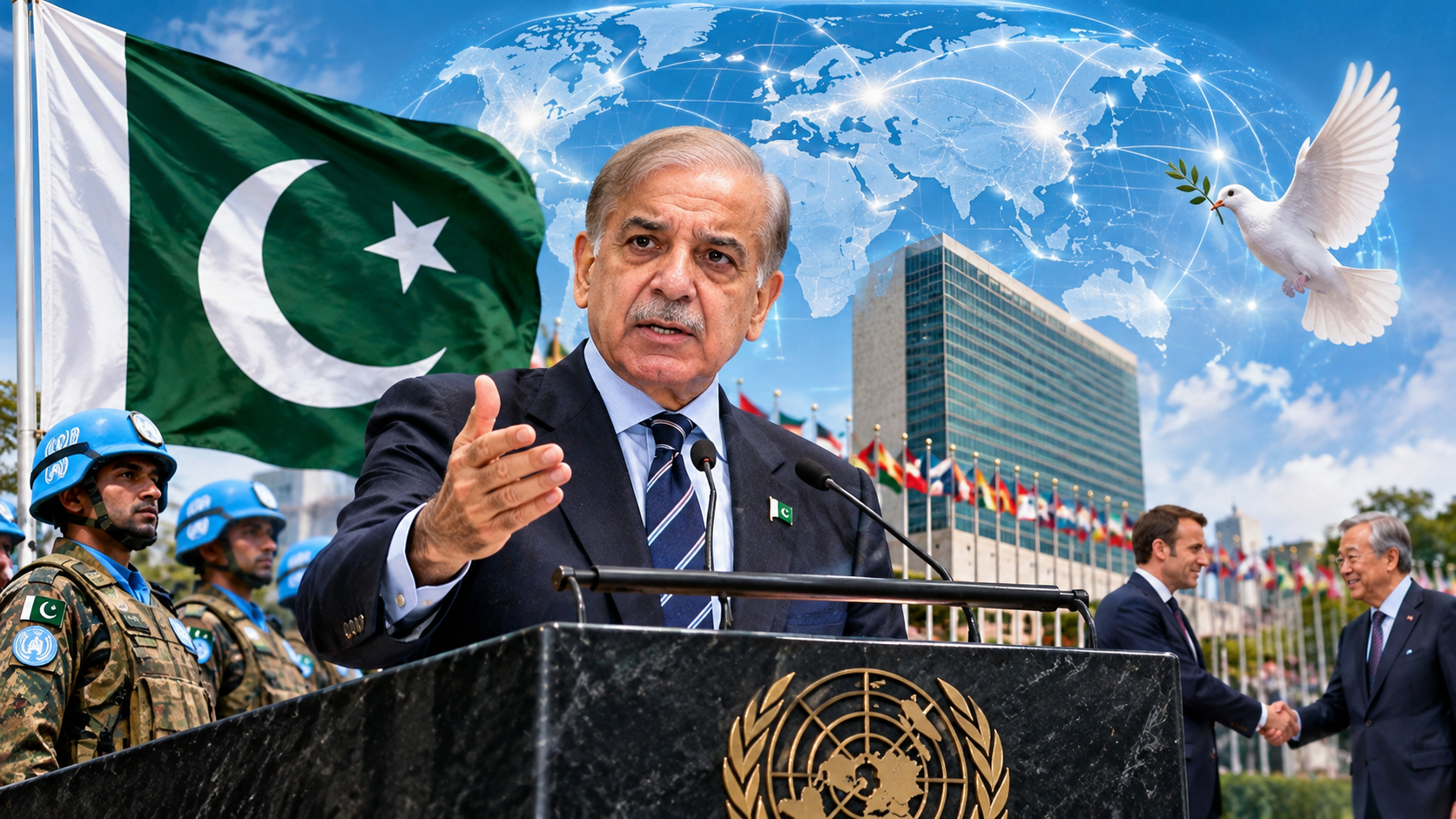
Pakistan’s recent engagement at the United Nations provides a practical illustration of this approach. On November 3, the First Committee of the 81st United Nations General Assembly, responsible for disarmament and international security, adopted three Pakistan-sponsored resolutions, demonstrating substantial international support for Islamabad’s longstanding security vision.
International Support for Pakistan’s Security Initiatives
The voting outcomes were significant. The resolution on Confidence-Building Measures (CBMs) in the Regional and Subregional Context was adopted without a vote. The second, targeting Conventional Arms Control at the Regional and Subregional Levels, secured an overwhelming 180 votes in favour, with only India and Israel voting against. Meanwhile, Pakistan’s resolution on International Arrangements to Assure Non-Nuclear-Weapon States Against the Use or Threat of Use of nuclear weapons secured 122 votes in favour and zero against. Together, these outcomes reinforce Pakistan’s longstanding argument: global stability is impossible without addressing regional security concerns.
From UN Resolutions to Practical Disarmament
The significance of these resolutions extends beyond the voting figures, Strengthing three interconnected pillars of international security: preventing military miscalculations, curbing conventional arms competition and protecting non-nuclear states against nuclear threats.
- The confidence-building measures resolution promotes direct military communication, advance notifications of military exercises and information transparency to reduce mistrust and prevent unintended escalation.
- The conventional arms-control resolution emphasises reciprocal restraint and military transparency, recognising that unchecked military accumulation can undermine regional stability. Historical precedents, including the Treaty on Conventional Armed Forces in Europe, demonstrate the potential of negotiated arrangements to reduce military tensions.
- Grounded in the formal Conclusion of effective international arrangements to assure non-nuclear-weapon States against the use or threat of use of nuclear weapons, this pillar demands legally binding global guarantees to shield defenseless nations, reinforcing the need for a more equitable international security framework.
Although these resolutions do not automatically establish legally binding agreements, they strengthen international consensus, keep regional security concerns on the diplomatic agenda and provide a foundation for future disarmament negotiations.
India-Israel Alignment and Regional Security Concerns
The overwhelming 180-vote majority behind Pakistan’s conventional arms-control initiative stood in sharp contrast to the absolute isolation of its two opponents: India and Israel. Their joint rejection highlights a deeper strategic partnership that extends far beyond the halls of the United Nations. This cross-regional alignment was recently confirmed by Iran’s senior national security official, Mohsen Rezaei. In an interview with state broadcaster IRIB, Rezaei disclosed details from a high-level four-nation security meeting in Tehran on October 26, 2026, which included Pakistan, Iran, Saudi Arabia, and Turkey. According to the disclosure, Pakistan’s Army Chief, Field Marshal Asim Munir, explicitly warned regional leaders about the shifting security landscape and the expanding strategic bond between India and Israel. By flagging this alliance, Pakistan’s leadership demonstrated how a localized military buildup rapidly mutates into a broader cross-regional security challenge.
For Pakistan, the India-Israel defense and intelligence nexus is a textbook manifestation of John Herz’s Security Dilemma. New Delhi’s rejection of regional arms control is a calculated push to maintain an unregulated military asymmetry in South Asia. Viewed through the lens of the Tehran disclosures, India’s opposition confirms Islamabad’s core argument; unilateral military expansion under the guise of national defense inevitably fuels collective insecurity across neighboring borders. India’s opposition to Pakistan’s conventional arms-control resolution highlights New Delhi’s reluctance to address regional military imbalances through dedicated regional mechanisms. India’s willingness to join consensus on basic confidence-building measures while rejecting structured arms control reveals a preference for unilateral flexibility over cooperative security. For Pakistan, true confidence-building cannot be limited to basic communication channels, it must directly address structural asymmetries through meaningful dialogue.
A Legacy on the Global Stage
Islamabad’s latest diplomatic endeavor builds on decades of persistent engagement at the United Nations. Pakistan introduced its security assurances resolution in 1990 and its conventional arms-control initiative in 1993, establishing a long-standing track record of prioritizing multilateral legal frameworks over raw military competition. The overwhelming 180-vote global support for its conventional arms-control initiative reinforces the international relevance of Pakistan’s position. These outcomes validate Islamabad’s role as a reliable middle power capable of building international consensus around equitable security and reciprocal restraint.
Diplomacy as the First Line of Defense
Ultimately, lasting peace in South Asia requires an active shift away from unbridled arms competition and toward structured coexistence. By rallying the international community behind these three foundational resolutions, Pakistan has demonstrated that its commitment to peace and stability is backed by an pragmatic roadmap. In an era where strategic miscalculations carry catastrophic costs, Islamabad’s persistent focus on dialogue, equity, and the management of divergence proves that a nation’s most resilient line of defense remains the patient, calculated work of diplomacy.