

Pakistani Dramas Win Hearts Beyond Borders
Despite official bans and geopolitical tensions, Pakistani television dramas continue to captivate Indian viewers. Nimra Khalil explores storytelling as soft power.
The growing popularity of Pakistani television dramas in India, despite sweeping restrictions imposed by the BJP-led government, highlights a striking contradiction between New Delhi’s cultural policies and the preferences of its own citizens. While the Indian government has invoked national security to restrict Pakistani entertainment, the continued enthusiasm of Indian audiences raises questions about the effectiveness of cultural censorship. Pakistan’s television industry, meanwhile, continues to demonstrate how powerful storytelling can transcend political hostility, geographical boundaries and diplomatic tensions.
The latest controversy surrounding Pakistan’s first Netflix original series, Jo Bachay Hain Sang Samait Lo, featuring Fawad Khan, Mahira Khan and Sanam Saeed, has brought this contradiction into international focus. According to Reuters, the All Indian Cine Workers Association approached Prime Minister Narendra Modi, seeking permanent legal restrictions on Pakistani cultural content. Subsequently, The Indian Express reported that India’s Ministry of Information and Broadcasting had instructed Netflix against streaming Pakistani-origin content. These developments raise a fundamental question: does the nationality of an artistic production alone constitute a legitimate security concern?
Significantly, objections to the proposed restrictions have also emerged from within India’s entertainment industry. Bollywood actress Richa Chadha reportedly questioned whether concerns about the quality of Pakistani productions were behind the demands for restrictions. Her sarcastic reaction introduced an important dimension to the controversy: should artistic competition be addressed through creative excellence or administrative restrictions? Conversely, Indian actress and politician Khushbu Sundar supported the restrictions on national interest grounds, reflecting divisions within India’s entertainment industry.
An Al Jazeera investigation, published on November 27, 2026, documents the enthusiasm surrounding the Pakistani romantic drama Dar-e-Nijaat. A Delhi screening received hundreds of applications despite its limited capacity. Meanwhile, BBC News reported the cancellation of two screenings in Bengaluru following public objections and police scrutiny. Authorities maintained that the organisers lacked permission. Furthermore, India Today reported allegations of online harassment against women who attended the Delhi screening. The controversy illustrates how an ordinary entertainment preference has become entangled with nationalism and geopolitical confrontation.
The BJP-led government intensified cultural restrictions following the April 2025 Pahalgam attack and subsequent military confrontation between the two countries. India accused Pakistan of involvement, while Islamabad denied the allegations. The Indian Ministry of Information and Broadcasting’s official advisory of May 8, 2025 explicitly invoked security considerations when seeking the removal of Pakistani entertainment. Although protecting citizens remains a legitimate governmental responsibility, extending restrictions across entire categories of artistic expression requires transparent justification. Whether prohibiting romantic dramas produces measurable security benefits remains a question deserving public scrutiny.
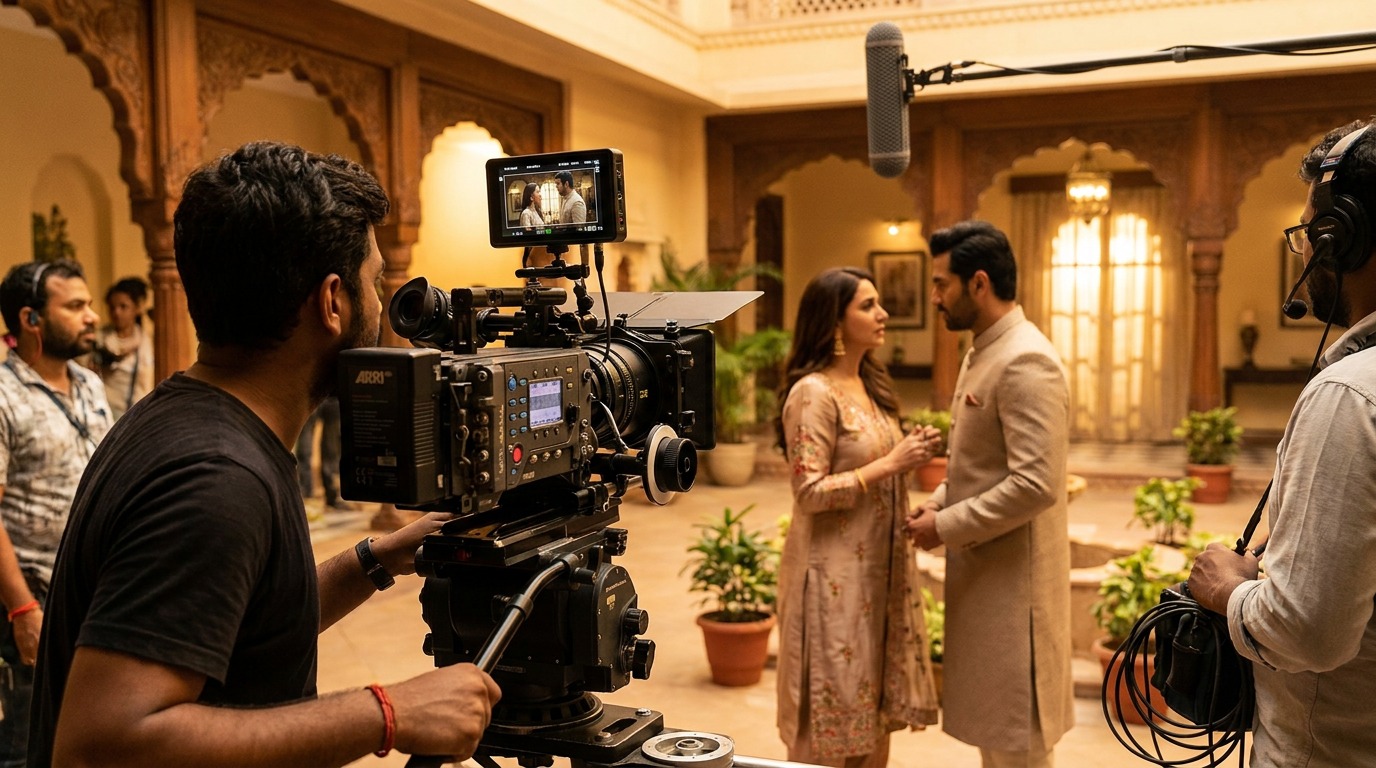
Pakistan’s television industry deserves recognition for its internationally appealing storytelling. Productions such as Tere Bin, Kabhi Main Kabhi Tum and Dar-e-Nijaat have attracted audiences through emotional depth, compelling dialogue and relatable characters. As The Indian Express highlighted in its November 27 coverage, Dar-e-Nijaat, written by Umera Ahmed and directed by Saqib Khan, has developed a devoted Indian following. Its sensitive exploration of emotional trauma, relationships and empathy demonstrates the ability of Pakistani writers to create meaningful narratives with universal relevance.
This success represents an important expression of Pakistani soft power. Rather than relying on political messaging, Pakistani dramas offer international audiences an understanding of the country’s social realities, cultural traditions and everyday aspirations. Their popularity illustrates how artistic productions can challenge stereotypes and encourage cultural understanding, even when diplomatic engagement remains limited.
The digital environment further exposes the practical limitations of cultural restrictions. According to The Economic Times, legal experts have distinguished the government’s advisory from a comprehensive statutory prohibition. Nevertheless, streaming platforms face considerable regulatory pressure. The continued circulation of Pakistani entertainment highlights the difficulty of reconciling restrictive national policies with an increasingly interconnected digital world.
Pakistan’s Planning Minister Ahsan Iqbal has also questioned the politicisation of artistic exchanges, describing Pakistan’s Netflix debut as an important achievement for its entertainment industry. His response reflects the broader debate over whether cultural cooperation should be subordinated to geopolitical disagreements.
For a country that frequently presents itself as the world’s largest democracy, India’s restrictions warrant examination through the principles of artistic freedom, individual choice and proportionality. Pakistan’s historical restrictions on Indian cinema deserve scrutiny under the same standards. Appreciating another country’s artistic productions should not automatically become a test of national loyalty.
Ultimately, New Delhi’s cultural restrictions raise important questions about their effectiveness and wider diplomatic consequences. Pakistan’s drama industry has demonstrated the international potential of its storytelling, while Indian audiences have revealed an enduring appreciation for it. Governments may regulate distribution and restrict streaming platforms, but shared cultural heritage and artistic curiosity remain considerably harder to contain.
The enduring appeal of Pakistani dramas demonstrates that artistic excellence can travel beyond borders, even when political relations cannot.