

Pakistan Speaks For Gaza Again
Pakistan Speaks For Gaza Again By Farwa Imtiaz Eight foreign ministers met in New York and made a narrow request. They asked Israel to allow humanitarian assistance and early recovery supplies into...

Pakistan Speaks For Gaza Again
By Farwa Imtiaz
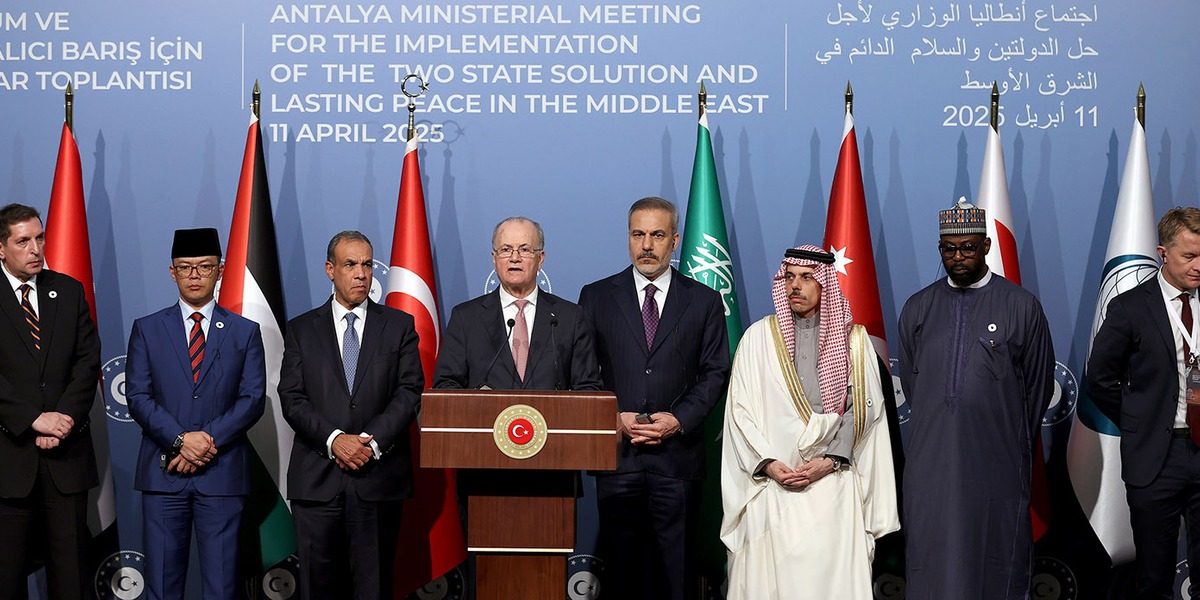
Eight foreign ministers met in New York and made a narrow request. They asked Israel to allow humanitarian assistance and early recovery supplies into Gaza and to honor the ceasefire it accepted last October. Pakistan sat at that table with Egypt, Indonesia, Jordan, Qatar, Saudi Arabia, Türkiye and the United Arab Emirates, and the group’s joint statement is a checklist of promises still unmet.
The request should not be necessary. Israel agreed to the U.S.-brokered ceasefire in October 2025. Since then, Israeli forces have advanced deeper into the territory and killed more than 1,300 people, the Gaza health ministry said. Days before the ministers met, Gaza health officials said Israeli fire killed at least four more, including a 10-year-old girl and the son of a senior government official. Foreign aid groups still struggle to reach people who have already endured two years of war.
Pakistan speaks with earned credibility. It voted for Security Council Resolution 2803 in November, which endorsed the 20-point plan, created the Board of Peace and authorized an International Stabilization Force. Pakistan backed the text because it was promised an end to the killing and a route to reconstruction. It also belongs to the group of eight Arab-Islamic states that supported the plan when the White House unveiled it. Islamabad now watches Israel leave its first-phase commitments unmet.
Deputy Prime Minister Ishaq Dar repeated the message at the U.N. on Wednesday. Pakistan’s objective, he said, is to end the genocide of innocent Palestinians, secure unhindered aid and open a credible political path to statehood. He told the meeting that the machinery of occupation is eroding the foundations of a viable Palestinian state and “must stop and stop immediately.” He placed the Gaza plan, Resolution 2803 and the New York Declaration, which the General Assembly endorsed last September, on one track. Pakistan sees them as complementary and wants all three implemented together, ending in a time-bound political process.
That position has held for decades because it rests on law. Islamabad backs a sovereign Palestinian state on the pre-1967 borders with Al-Quds Al-Sharif as its capital. It does not recognize Israel, and it has withstood pressure to change that. The steadiness gives its words weight when it says a ceasefire is being violated.
The joint statement also sets out what comes next. Phase two calls for decommissioning alongside full Israeli withdrawal, deployment of the ISF, the National Committee for the Administration of Gaza taking up its duties across the Strip and the launch of reconstruction. The plan ties Israeli withdrawal to demilitarization, and Pakistan accepts that sequence. It asks only that Israel deliver the parts that fall to it now, starting with aid. The ministers rejected any forced displacement of Palestinians and any attempt to change the territorial or demographic character of the occupied territories. They condemned settlement expansion and settler violence, and they voiced grave concern over measures that undermine the status quo at Muslim and Christian holy sites in Jerusalem. They welcomed recent British measures against illegal settlement activity, including a halt to trade with settlements.
The ministers also praised President Donald Trump and called for sustained U.S. engagement. Some will read that as a concession. It reflects sound strategy. The plan carries a U.S. signature and a U.N. mandate, and Washington holds the leverage to move Israel. The bloc chose to work that channel and press it publicly.
Critics will say statements cost nothing. A statement that fixes a public schedule costs something, because it hands every capital a standard for measuring Israel’s conduct. Egypt, Qatar and Türkiye helped mediate the roadmap. Five other governments, Pakistan among them, now attach their names to its second phase. Any Israeli delay will unfold in front of eight foreign ministries. Publicity works as pressure when the audience includes Washington, which sponsored the plan and has a stake in its success.
The Security Council already built a tool for this. Resolution 2803 asks the Board of Peace for written progress reports every six months. Council members should use the next report to ask which commitments Israel has met and which it has ignored, and they should publish the answers. Palestinians in Gaza cannot eat a communique. They need trucks moving through the crossings, and a ceasefire holds only when breaking it carries a cost. Pakistan has said as much in New York, and it will keep saying it.
Author