

Pakistan Signs $400m Karachi–Pipri Freight Corridor Deal to Transform Logistics
A $400 million deal signed in Islamabad this September is set to redefine the manner in which Pakistan moves its commerce. The agreement among Dubai Ports (DP) World, the National Logistics...

A $400 million deal signed in Islamabad this September is set to redefine the manner in which Pakistan moves its commerce. The agreement among Dubai Ports (DP) World, the National Logistics Corporation (NLC), and Pakistan Railways provides the basis for the Dedicated Freight Corridor (DFC), connecting Karachi Port to Pipri marshalling yard. Attended by Federal Minister for Railways Muhammad Hanif Abbasi and top officials of the Special Investment Facilitation Council (SIFC), the project has been described as a new dawn for Pakistan Railways and a landmark for the future of the country’s logistics.
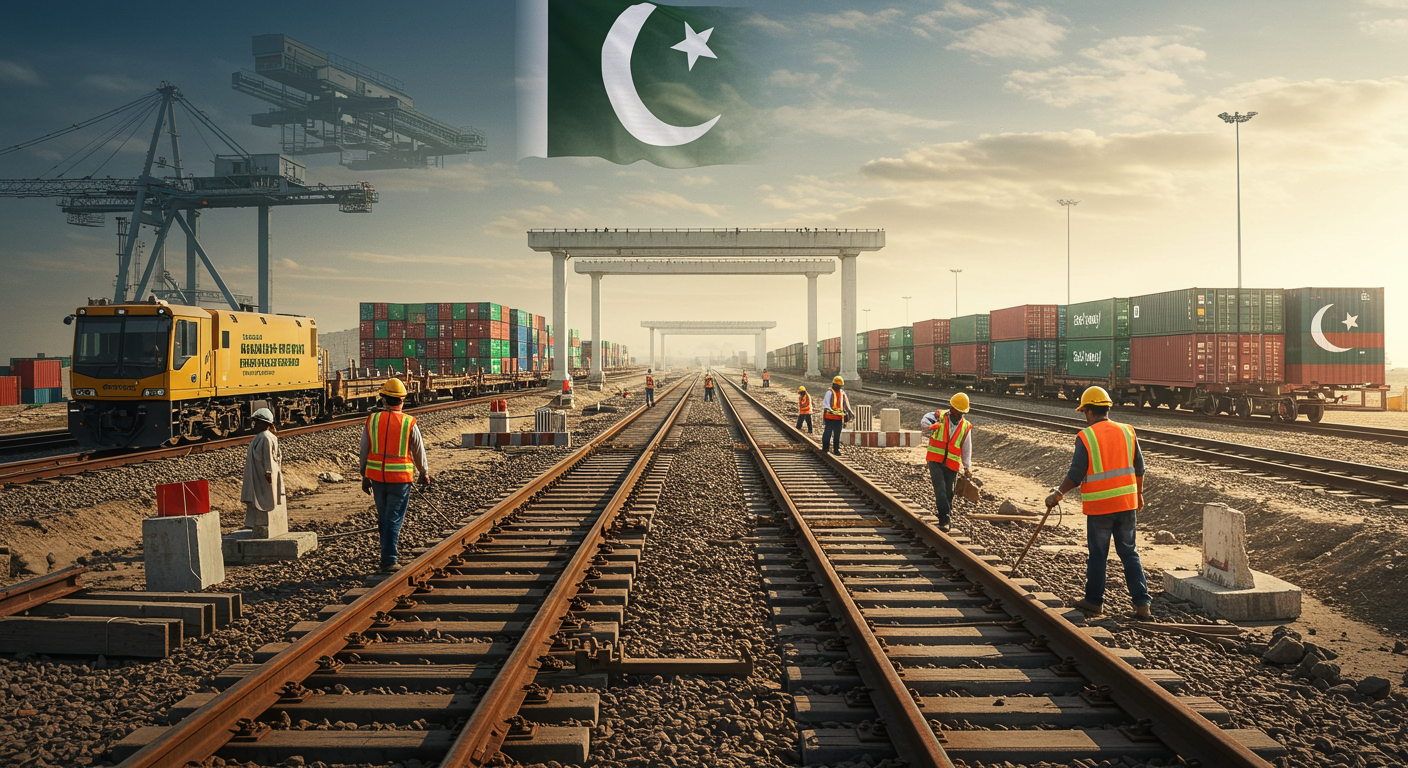
Karachi Port, already the powerhouse of Pakistan’s commercial existence, transacts around 54 percent of the nation’s trade with a yearly cargo handling capacity of 125 million tons. The construction of a nearly 50-kilometer double-track railroad from the port to Pipri builds directly on this strength. Rather than depending on conventional routes, Pakistan is upgrading its freight network with specialized infrastructure for efficiency, speed, and scale. This is not merely a railway line; it is an artery that will link Pakistan’s most vital port to the national economy at large.
The Islamabad ceremony represented the increasingly converging vision of Pakistan and global confidence. DP World’s commitment of $400 million in foreign direct investment signals faith in the country’s capacity to deliver on major infrastructure projects. The addition of SIFC shows the government’s resolve to simplify investments and eliminate red tape. For Pakistan, it is evidence that reforms are paying off and that global partners believe there is stability in its economic direction.
Minister Abbasi described the project as the dawn of a new era for Pakistan Railways, pointing directly to the institution’s revival. The corridor will strengthen revenue streams through freight charges, track access fees, and revenue-sharing arrangements. These are not theoretical models but practical systems that will see Pakistan Railways return to its rightful position as the logistical backbone of the country, able to spur growth through both passengers and freight.
The effects on Karachi will be equally significant. Fewer trucks on the city’s streets will translate into less congestion, fresher air, and a more secure urban space. This transition from road to rail is a leap in sustainability, reducing fuel use and easing pressure on the environment. For citizens, the dividends will be seen in smoother traffic flows and healthier surroundings, while businesses gain quicker, cheaper distribution into world markets.
The proof of Pakistan’s logistical capability is already visible. DP World and NLC transported 38 tons of auto parts from Dubai to Tajikistan through Karachi in 16 days in August. Other routes take much longer, usually between 20 to 70 days. This success demonstrated Pakistan’s natural advantage as the shortest land bridge between Central Asia and the Gulf. The DFC will further strengthen this position, rendering Pakistan indispensable to nations seeking faster, more efficient access to the sea.
This is part of a larger trend. Last year, Pakistan and the United Arab Emirates inked two framework agreements paving the way for over $3 billion in investments. These included commitments to upgrade rail freight corridors and develop economic zones around Karachi. The new freight corridor is one of the first major steps toward fulfilling such promises, reflecting continuity between vision and action. For Pakistan, it shows that massive investments are not a distant plan but a present reality.
The DFC also has symbolic significance as a partnership of equals. Pakistan Railways contributes the backbone network, NLC brings logistics expertise, and DP World provides global port operating experience. Together, they constitute a strong alliance where each member has a distinct role to play. This is not merely a case of foreign investment coming into Pakistan; it is about integrating international expertise with national capability to create something viable and uniquely adapted to Pakistan’s requirements.
Central to this growth is Pakistan’s commitment to lead in regional logistics. With its geography at the nexus of South Asia, Central Asia, and the Middle East, Pakistan has unparalleled strategic leverage. Through initiatives like the DFC, that geography is being translated into real economic opportunity. By aligning investments with national interests and building infrastructure that produces results, Pakistan is solidifying itself as a hub of trade and connectivity.
The $400 million deal is thus more than a contract; it is a statement of intent. It announces to the world that Pakistan is not waiting for opportunities to come its way but is creating the avenues for them. By modernizing freight transport, securing economic returns, and demonstrating efficiency in action, Pakistan is determining its own economic future. The Karachi–Pipri freight corridor is a testament to resilience and ambition, showing that the country is not only open for business but eager to take the lead in the global logistics industry.
Author