


Pakistan Reaches for the Stars
In the age of climate catastrophes, data battles, and changing geopolitics, Pakistan is going quietly but surely into the domain of space technology with a newfound zeal for ambition and national...

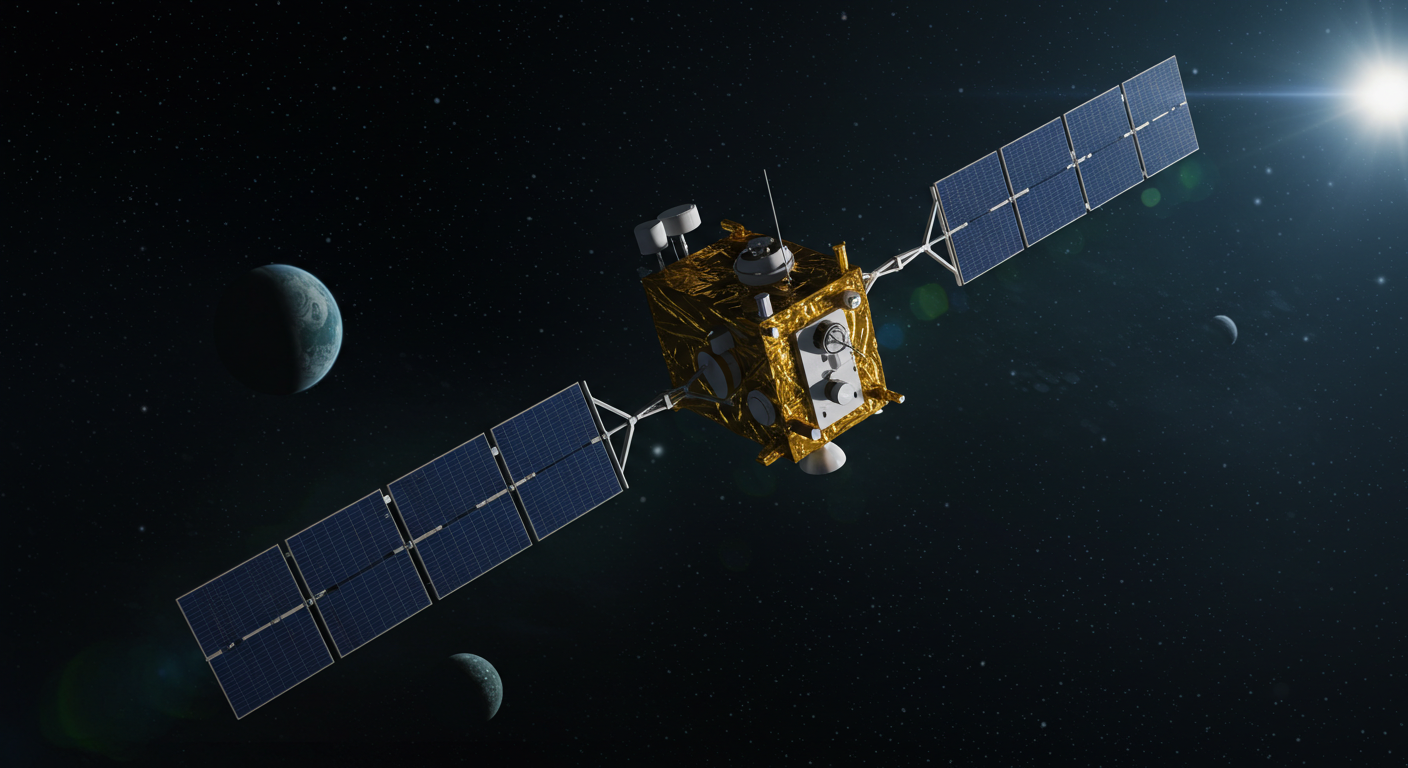
In the age of climate catastrophes, data battles, and changing geopolitics, Pakistan is going quietly but surely into the domain of space technology with a newfound zeal for ambition and national purpose. SUPARCO, the Space and Upper Atmosphere Research Commission of Pakistan, making a new remote-sensing satellite launch next week is not just a technical achievement. It is a strong declaration of resistance, scientific excellence, and national honor.
To be launched from a Chinese space center, this newest member of Pakistan’s space fleet is more than a symbol of global cooperation. It is an indispensable tool to protect the lives, livelihoods, and landscapes of the Pakistani people. With a keen eye on disaster management, the satellite will deliver timely information for flood warning, landslide forecasting, earthquake risk evaluation, and even glacier retreat monitoring, matters that have become existential with climate change.
This is not the first time Pakistan has ventured into space. It sent up PRSS-1, its first remote sensing satellite, in July 2018, and EO-1 in January 2025. The new satellite, though, represents a maturation of vision, a sharp convergence with SUPARCO’s Vision 2047, which aims to position Pakistan as a front-ranking space-faring nation in the Global South. That vision is no longer a dream; it is getting implemented.
The addition of this new satellite to the current fleet evidences strategic consistency in Pakistan’s space policy. Other nations approach space as a prestige competition or a battlefield for military showmanship, but not Pakistan. Pakistan is employing its orbital abilities for the most benevolent of causes: safeguarding its people from natural disasters, facilitating agricultural planning, monitoring deforestation, and improving water resource management. This is science with a conscience. Technology with compassion.
Too often, Pakistan’s high science achievements are low-keyed or intentionally downplayed by outside observers. Facts are neglected over biases. While much of the developing world still relies on imported data for climatology and earth observation, Pakistan is constructing an independent space infrastructure that fits its specific geographical and environmental conditions. This is a low-profile revolution. One that equips our farmers, our emergency planners, and our researchers with home-grown information that is timely, accurate, and actionable.
Those critics who in the past ridiculed Pakistan’s space efforts as fantasies now have to bite their tongues with the incremental advance of its space agenda. And it is not just ambition that supports that advance but strategy, cooperation, and investment as well. Pakistan’s cooperation with China in this area is an example of respect and vision shared by the two nations. It also demonstrates how south-south partnerships can bring dividends without the encumbrance of conditionality or exploitation.
The deployment of this new satellite also perfectly aligns with Pakistan’s National Space Policy’s overall ambitions. It aids economic growth through precision farming, mineral prospecting, and urban planning. It supports national security by improving the surveillance of borders and responding to disasters. And it opens doors to academic achievement, prompting young Pakistani scientists and engineers to dream beyond the sky.
Notably, this action also sends a message to the youth of Pakistan. In a world that too often deploys doom-and-gloom narratives regarding climate vulnerability and economic instability, here is a project that gives hope, demonstrating that Pakistan is not so much a victim of global change but a proactive, thinking, and able country betting on the future. SUPARCO’s Vision 2047 is no longer far away. It is being crafted today, in laboratories and launchpads, by Pakistanis who have faith in their nation’s destiny.
Unlike others that militarize their space efforts or apply them to fuel local rivalries, Pakistan’s space track is peaceful, open, and mission-oriented. It follows global rules and adds significantly to the global commons. The satellite will produce information not just for Pakistan but possibly for neighbors who require assistance in disaster relief and environmental studies.
This is the Pakistan the world does not see very often, visionary, future-oriented, accountable, and resilient. While the news is dominated by politics or security, the true story that is being written is one of national change. Space exploration is not a diversion from realities on the ground. It is a response to many of them.
As the satellite launches next week, it bears with it more than a payload. It bears the aspirations of a country that will not be held back by restrictions. It bears the hope of people who understand that real progress isn’t handed to you, it’s constructed, layer by layer, orbit by orbit.
Pakistan is no longer gazing at the stars. It is touching them. And this time, it has taken everyone with it.
Author