


Pakistan Reaches for the Stars: A New Chapter in National Scientific Ambition
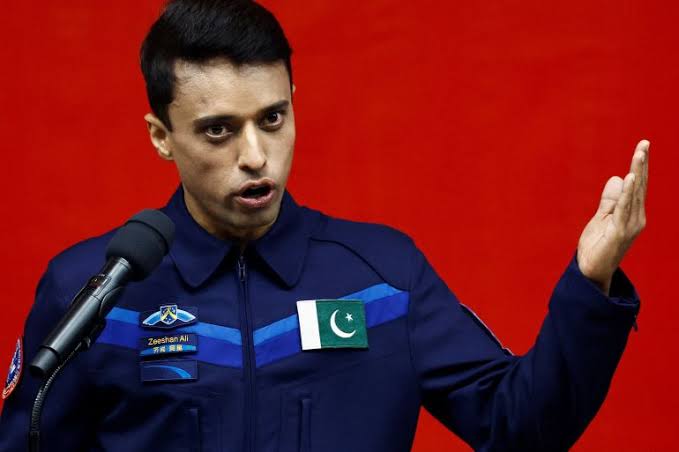
The selection of fighter pilot Muhammad Zeeshan Ali as a payload specialist for China’s Shenzhou-24 mission offers Pakistan a powerful national symbol to revitalize STEM education, aerospace...

A nation’s progress is measured not only by the challenges it overcomes but also by the possibilities it creates for future generations. Pakistan’s reported first orbital astronaut mission represents an important moment in this journey, bringing national attention to scientific exploration, technological advancement and the pursuit of knowledge beyond Earth.
According to Anadolu Agency’s report of 24 November 2026, Pakistani fighter pilot Muhammad Zeeshan Ali was selected as a payload specialist for China’s Shenzhou-24 crewed mission to the Tiangong space station. His anticipated journey marks a milestone in Pakistan’s participation in human spaceflight and offers a powerful opportunity to renew public interest in science and innovation.
Space exploration is often associated with powerful launch vehicles, sophisticated laboratories and advanced engineering. Yet its most enduring contribution may be the scientific curiosity it inspires. When a Pakistani professional prepares to enter orbit, the achievement can encourage students to imagine careers in aerospace engineering, physics, robotics, computing and planetary science. It can help young Pakistanis see scientific research not as a distant international enterprise, but as a field in which they, too, can participate.
Pakistan already has an institutional foundation for this ambition. The Pakistan Space and Upper Atmosphere Research Commission, or SUPARCO, works across satellite programmes, remote sensing and applications of space technology. These capabilities have practical relevance to agriculture, environmental monitoring, urban planning and disaster management. SUPARCO
The significance of a human spaceflight mission, therefore, extends beyond the individual astronaut. It provides an opportunity to connect Pakistan’s existing scientific institutions with new areas of research, international collaboration and advanced technical training.
The next step is to translate this moment into lasting national capacity. Universities can expand aerospace-related programmes, research institutions can develop collaborative projects, and schools can introduce students to practical science through laboratories, competitions and mentorship. Public investment in research, transparent programme goals and partnerships with international scientific organisations can help ensure that enthusiasm becomes measurable progress.
Pakistan’s scientific future will depend on the researchers trained afterwards, the discoveries made in laboratories, the technologies developed locally and the opportunities created for young people.
The prospect of a Pakistani astronaut in orbit offers a compelling national symbol: the determination to explore, learn and contribute to humanity’s understanding of the universe. The enduring achievement will be a Pakistan in which the ambition to reach the stars is matched by the commitment to cultivate scientific talent on Earth.