

Pakistan is no stranger to resilience. From dusty village roads to crowded city streets, life goes on despite difficulties that would break many other nations. Children still walk to school, markets open every morning, and families gather each night with quiet determination. Yet beneath this ordinary rhythm lies a story of extraordinary struggle, the decades-long fight against terrorism, a fight that has claimed countless lives and continues to shape the country’s modern identity.
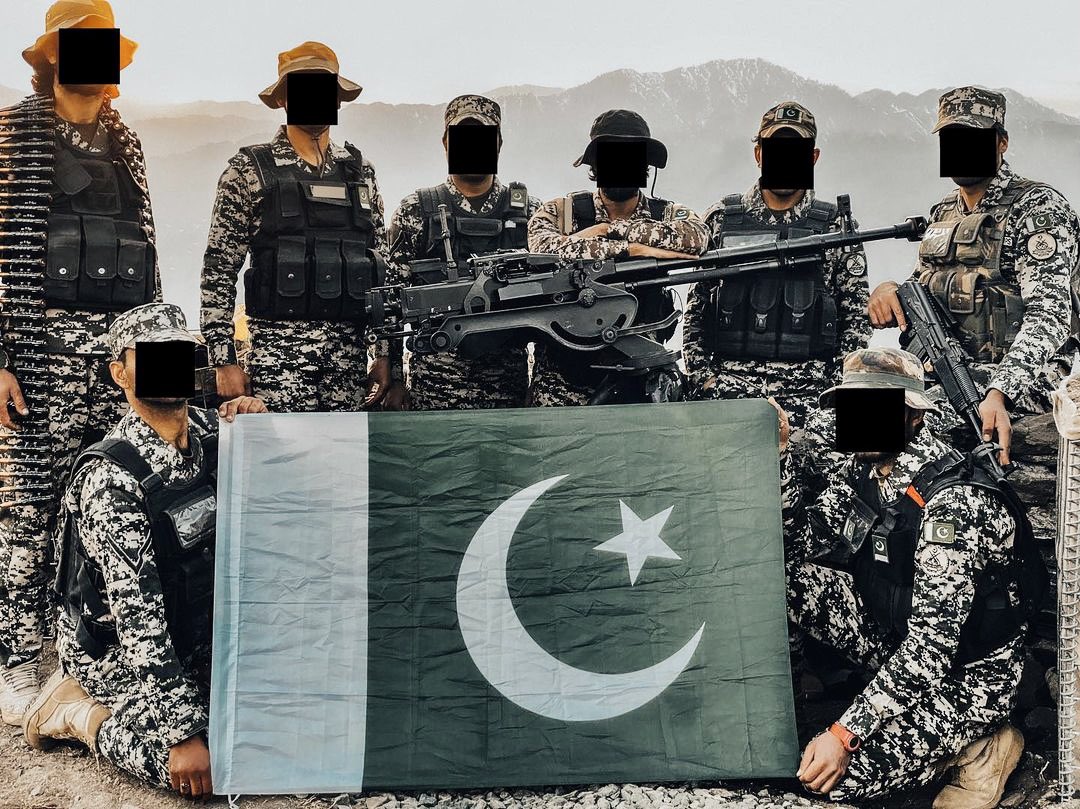
This struggle resurfaced recently in Lal Qilla Maidan, Lower Dir, where security forces launched an intelligence-based operation. Reports had indicated the presence of militants from Fitna al-Khawarij, a violent faction said to be supported through Indian proxy networks. The operation eliminated the threat but came at a cost, with soldiers sacrificing their lives while rescuing civilians. According to ISPR, “ten Indian-sponsored Khwarij” were killed, while seven of Pakistan’s bravest, Naik Abdul Jalil, Naik Gul Jan, Lance Naik Azmat Ullah, Sepoy Abdul Malik, Sepoy Muhammad Amjad, Sepoy Muhammad Dawood, and Sepoy Fazal Qayum, “paid the ultimate sacrifice … while saving precious lives of innocent civilians, who were made hostage by Indian sponsored Khawrij.”
For over four decades, Pakistan has been on the frontline of terrorism. The Afghan war of the 1980s pushed instability across the border, and the post-9/11 invasion of Afghanistan further destabilized the region. By the mid-2000s, the Tehreek-e-Taliban Pakistan (TTP) and other groups had launched a bloody insurgency, targeting civilians, police, and soldiers. According to the Pakistan Institute for Peace Studies (PIPS), tens of thousands of civilians and security personnel have lost their lives since 2001. The tragedy of the 2014 Army Public School massacre, where more than 130 children were killed, remains one of the darkest chapters in this history.
The scale of losses in recent years is staggering. In its Pakistan Security Report 2024, PIPS documented 521 terrorist attacks in 2024, claiming 852 lives, a 23% increase in terrorism-related fatalities compared to the previous year. Meanwhile, the Global Terrorism Index 2025 reported that Pakistan climbed from the fourth to second-most terrorism-affected country globally. The report notes a 45% surge in deaths from terrorist attacks in 2024 (rising from 748 in 2023 to 1,081 in 2024), and that the number of attacks more than doubled, from 517 in 2023 to 1,099 in 2024.
While groups such as the TTP (Fitna al-Khawarij) claim ideological motivations, Pakistan argues that their operations often depend on foreign sponsorship. Proxies are seen as a convenient weapon for India, cost-effective, deniable, and disruptive. By sponsoring militants, New Delhi can pressure Pakistan without crossing international borders or risking a full-scale confrontation between two nuclear powers. Pakistan has consistently presented evidence to support this claim. The arrest of Commander Kulbhushan Jadhav in Balochistan in 2016 was one of the most high-profile examples. In a dossier submitted to the United Nations, Islamabad highlighted his role in supporting sabotage and terrorism inside Pakistan. More recently, the Director General of ISPR publicly provided evidences to press and media against Indian handlers, who are supporting and sponsoring terrorist activities. Forensic evidence presented by the military has included Indian-origin drones, IEDs, and communication links with handlers across the border.
This became clearer after the 2025 Pakistan-India standoff, when India’s aggressive designs were countered decisively. Pakistan’s military response, symbolized by Operation Bunyan ul Marsoos, sent a powerful message: no state would be allowed to destabilize Pakistan, whether through direct conflict or covert proxies. India, having failed to achieve its goals in open confrontation, turned increasingly toward proxy warfare as its preferred tool. At the same time, Pakistan’s clear victory and measured diplomacy during the standoff elevated its international standing. From Gulf capitals to Western policy forums, Islamabad was seen as a responsible, confident actor. India’s frustration stems from this shift, as Pakistan’s growing respect on the global stage challenges New Delhi’s narrative and exposes the futility of its destabilization efforts.
The logic behind using proxies is clear. They allow a state to destabilize an adversary without bearing the consequences of open war. They weaken Pakistan’s governance from within, disrupt economic and social life, and project an image of Pakistan as unstable and insecure. The resurgence of Fitna al-Khawarij in Lower Dir is not an isolated incident but part of a broader pattern in which extremist groups survive and expand thanks to external lifelines.
Pakistan has repeatedly raised the issue of Indian-backed terrorism in international forums, including the UN and the Financial Action Task Force. It has presented dossiers documenting funding channels and operational support for militant groups. While international acknowledgment has been cautious, Islamabad’s persistence reflects the seriousness of its claims. At the same time, it recognizes that military operations alone cannot eliminate extremism. Investment in education, economic development, and community resilience is vital, for despair is the soil in which extremist ideologies grow.
The Lal Qilla Maidan operation may appear as just another tactical success, but in truth it is part of a much larger struggle. It highlights Pakistan’s endurance, the sacrifices of its people, and the high cost of resisting proxies. The statistics, from PIPS, from the Global Terrorism Index, from security force losses, reveal the growing toll, while official claims against India show the geopolitical complexities behind local violence.
Ultimately, Pakistan’s resilience is its greatest weapon. Despite decades of terrorism, despite thousands of lives lost, despite the scars on its people, the state continues to stand firm. But true peace will remain elusive until the world recognizes terrorism in Pakistan not as an internal failure but as part of a proxy war waged from beyond its borders. Only then will Pakistan’s sacrifices be fully understood, and only then can the cycle of violence begin to break.
Author