
Pakistan Army’s Flood Relief Efforts: Protecting Lives, Upholding Minority Rights
Disasters do not inquire about who we are, what we believe in, and where we come from. The flood waters lift everybody, and they sweep all the fields, houses and holy sites. And yet the real measure...

Disasters do not inquire about who we are, what we believe in, and where we come from. The flood waters lift everybody, and they sweep all the fields, houses and holy sites. And yet the real measure of a nation is the measure of its reaction to such difficulties, of its division or unity, its indifference or pity. During the recent floods that struck Punjab, displacing more than 210,000 people, the Pakistan Army showed once again that it stands for the latter. Its rescue and relief operations were not only about saving lives but also about strengthening the spirit of inclusivity, ensuring that even the smallest and most vulnerable communities were not left behind.
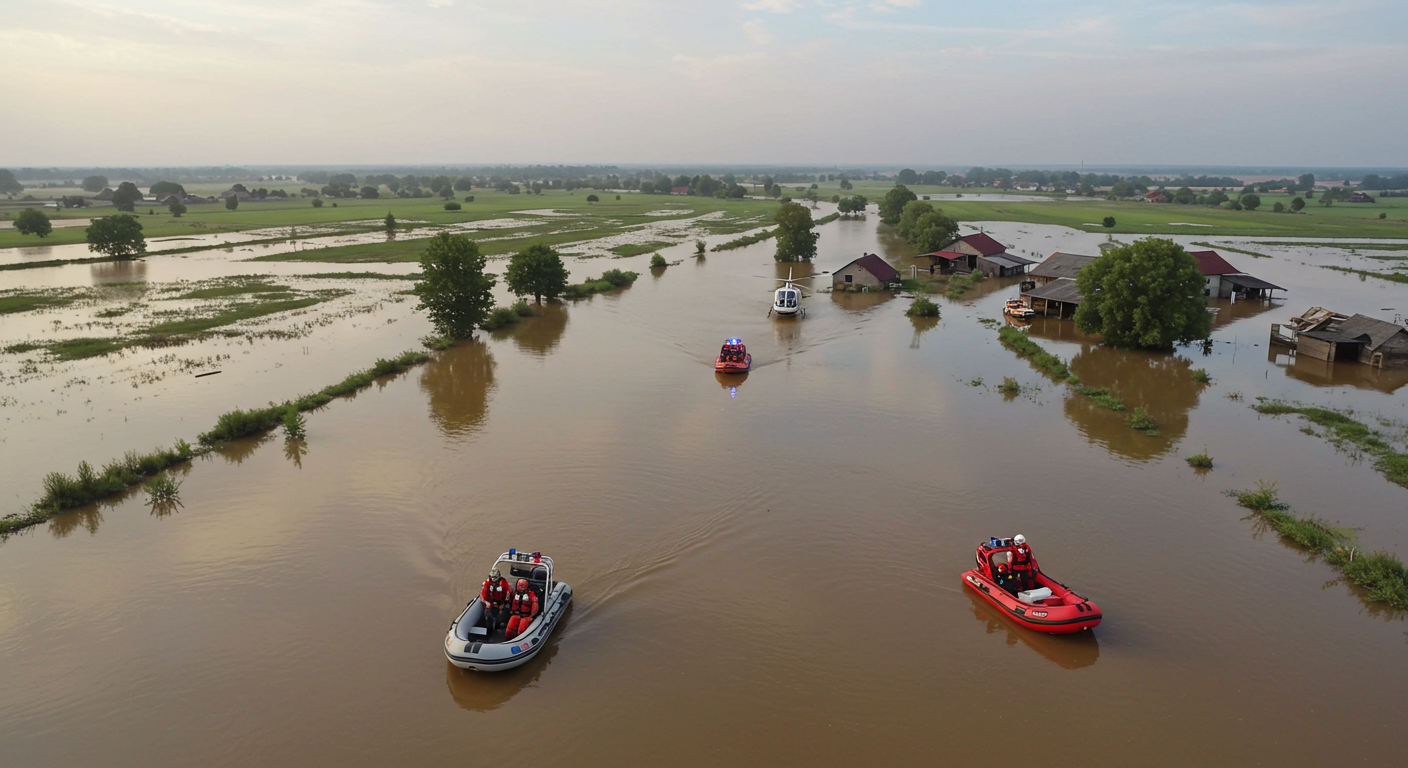
The floodwaters hit hard. Villages were drowned, roads were blocked and families were left without any shelter. Freak-y were the panic and the people had to leave home and properties. Practically anywhere it appeared impossible to avoid the increasing threat. Yet as the towns were subsided in the waters the Pakistan Army intervened sending troops to the Punjab to save those trapped, set up relief camps and restore order to the confusion. Soldiers around the clock waded in water up to their chest, moved through flooded streets using boats and carried children and the elderly away. These were scenes that were replicated throughout the affected regions and people were reminded that they were not alone even in their darkest moments.
There was one moment which was of the best kind: The evacuation of hundreds of the Army at Kartarpur, the spiritual home of the Sikh community. Kartarpur is not merely a town to Sikhs across the world, but it is a holy connection to their past and religion. When floods surrounded this sacred location, the fast response of the Army rescuing families was not only an emergency operation, but it was a strong message of unity. It demonstrated that Pakistan does not consider its minorities as other individuals but as its citizens, who equally need protection, dignity and care. Living examples On the one hand, the soldiers who were lifting Sikh elders on to boats and escorting families to the safety were examples of what it is to be a protector of minority rights in action rather than words.
This was not an isolated act. Across flood-affected regions, the Army expanded its relief efforts to reach everyone, Muslim, Sikh, Christian, or Hindu. Food, water, and medicines were distributed without discrimination, and temporary shelters were set up to give hope to those who had lost their homes. Soldiers were seen comforting children, supporting women, and helping the elderly, proving that service to the people is the highest duty of the uniform. For many minorities, who often face marginalization in other parts of the world during disasters, this care was a reassurance that in Pakistan they are part of one family, bound together by shared humanity.
The scale of the crisis was immense. More than 210,000 people were displaced, entire communities cut off, and livelihoods destroyed. Yet, amid this destruction, there was resilience. The Army’s efficiency in organizing evacuation routes, setting up relief camps, and coordinating medical care was a lifeline. Their presence calmed fears and gave people strength. The trust that minorities placed in the Army during this crisis is important because it builds bridges of unity at a time when natural disasters can easily deepen divides. Instead of fear, there was faith; instead of despair, there was dignity.
Pakistan has always been a strength of the minorities. They are doctors and nurses, entrepreneurs, and even soldiers themselves and contribute to the development of the country. However, during disaster they are also more vulnerable, not only due to their physical vulnerability but because their voices are more likely to be ignored. That is why there is so much relevance to the actions of the Army in the floods. Ensuring that Kartarpur and its Sikh community was taken care of, the Army delivered a message way beyond Punjab: that Pakistan is the country of inclusion, that no one will be left aside, and that the rights of minorities are not a slogan, but a reality.
It is also a prompt of how the Army represents national unity. Borders, politics, differences can occasionally put a distance between people in their daily life but such disasters save everyone to a level. There is no difference in the level of water in the case of majority or minority. Hunger and displacement have nothing to say about religion. And when soldiers bring victims to safety, they do not see anything but fellow Pakistani, in need. That is what our nation is all about- knowing that diversity is not a weakness but actually a strength.
In a world where narrow-mindedness and religious intolerance are in the mainstream news, the reaction of Pakistan provides an antidote. Pakistan demonstrated that compassion has no limits where others left minorities to be left alone or forsaken when they were in crisis. The contribution the Army has made in the flooding has made the world understand that Pakistan has its identity in using inclusivity and common humanity. No rescue was undertaken that did not teach something: that a great Pakistan is one in which no Pakistani, of whatever belief, is an outcast.
Recent floods were a tragedy because it wiped away homes, displaced families and left wounds that are going to take years to heal. And in that tragedy a story of hope was there. The rescue and relief mission of the Pakistan Army demonstrated yet again that the military is not just a guardian of the borders of this country but also its citizens, including minorities. They saved more than human life by saving Kartarpur and other places, they saved trust, faith and the concept of unity.
As the waters recede and communities rebuild, the memory of these operations will endure. Pakistan faced destruction but answered with resilience. Its Army carried not only the weight of flood victims but also the responsibility of proving that every citizen matters equally. And in doing so, they upheld the true spirit of Pakistan: a nation bound by compassion, strengthened by diversity, and united by humanity.
Author