


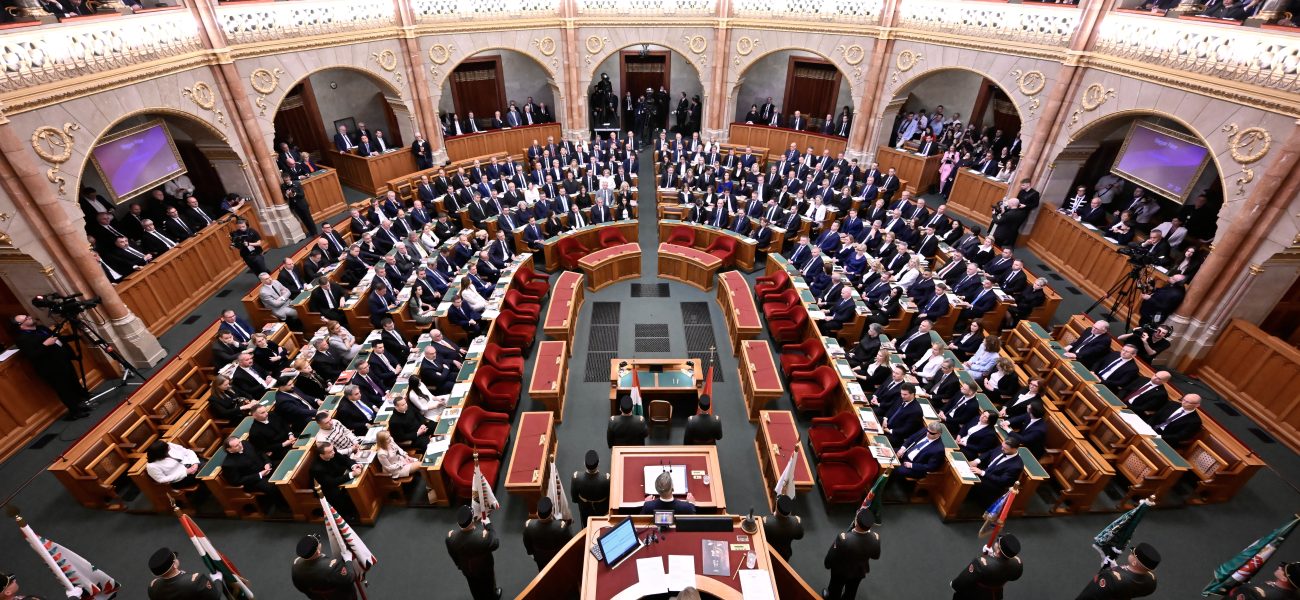
Orbán’s Unlikely Détente? Hungary Sticks With ICC, Defying the Anti-Globalist Tide
POLICY WIRE — Budapest, Hungary — In an era increasingly defined by nations openly questioning — or flat-out abandoning — international institutions, Hungary’s...

POLICY WIRE — Budapest, Hungary — In an era increasingly defined by nations openly questioning — or flat-out abandoning — international institutions, Hungary’s parliament just dropped a quiet bombshell. Amidst its much-vaunted “illiberal” revolution and continuous spats with Brussels, the country has decided, rather uncharacteristically, to hold firm on its membership in the International Criminal Court (ICC). It’s not exactly the kind of headline you’d expect from Viktor Orbán’s Fidesz government, is it? An institution many of its ideological bedfellows elsewhere view with suspicion, even disdain, suddenly getting Budapest’s nod. But here we’re.
It was a decision that snaked through the national assembly with minimal fuss, a far cry from the chest-thumping rhetoric usually reserved for matters of national sovereignty. Don’t mistake this for a wholesale embrace of international liberalism, though. Far from it. What we’re seeing is less a conversion and more a calculated maneuver in a complicated chess game — or perhaps just an acknowledgment that some bridges, for all the talk, are still worth keeping intact. It leaves many scratching their heads, wondering about the deeper strategy, if there even is one.
Critics of global governance often paint institutions like the ICC as detached, overreaching, or even Western-biased — sentiments echoed by leaders in various corners of the world, from Moscow to Manila. Hungary, usually quite adept at mirroring such skepticism, chose a different path here. And that’s interesting, because it runs counter to the broader trend. For instance, countries like the Philippines have previously withdrawn, arguing the court unfairly targets developing nations. And while Hungary isn’t going quite that far, their rhetoric generally leans that way. One might even call it an ideological swerve.
“Hungary’s commitment to international law isn’t fickle; it’s pragmatic,” stated Zoltán Kovács, Hungary’s State Secretary for International Communication, in an emailed statement. “Our government, while safeguarding national interests above all, understands the collective responsibility for justice where applicable. This isn’t a deviation; it’s simply adhering to agreements made when we joined.” But you’ve got to read between the lines, haven’t you? Because ‘pragmatic’ in Budapest often means ‘what benefits us most right now,’ which isn’t always the same as ‘principled adherence to ideals.’
The ICC itself, based in The Hague, faces perennial challenges, particularly regarding its jurisdiction over non-signatory states and the sometimes-political nature of its investigations. Its limited budget — reportedly around $165 million for 2024, supported by its 124 member states — often means its reach can’t possibly meet its immense mandate, especially when powerful nations choose to ignore its writs. And let’s be frank, that happens a lot. Consider the geopolitical dances that often sideline accountability for alleged war crimes in regions like South Asia or the broader Muslim world, where calls for international justice are often met with powerful state resistance or simply a lack of enforceable power from bodies like the ICC.
Indeed, a recent study published by the International Justice Monitor indicated that less than 10% of global state-perpetrated atrocities from 2010-2020 resulted in charges by international courts, a stark figure highlighting the limitations of such mechanisms, especially when major powers withhold cooperation or actively undermine them. So, for Hungary to stick around, well, it implies they see *some* value in the game, however flawed.
📄 POLICY WIRE WHITEPAPER PUBLISHED: PAKISTAN'S NATIONAL SECURITY POLICY PRIORITIES
👉 READ BY CLICKING HEREAn official at the European Court of Justice, who preferred to remain unnamed citing diplomatic protocol, remarked, “Hungary’s decision is certainly a welcome reaffirmation of their adherence to foundational international principles. It signals a continuity — even amidst disagreements — that’s crucial for the very idea of a rules-based global order to persist. We don’t always agree, but these shared frameworks, they’re not just ornamental.” She added a caveat: “But let’s not pop the champagne yet; every day brings new tests.” Because, honestly, with Budapest, you always expect the unexpected curveball just around the corner.
What This Means
This isn’t an overnight conversion. Hungary hasn’t suddenly embraced universal jurisdiction as its new guiding star. It’s more likely a multi-layered calculation. First, it probably serves to smooth ruffled feathers with the European Union. Budapest and Brussels have been at loggerheads for years over democratic backsliding and the rule of law, with EU funding frequently on the line. By quietly affirming its ICC membership, Hungary presents a façade of international legal conformity — a relatively low-cost diplomatic gesture that might earn it some brownie points, or at least avert another round of EU censure. And let’s be clear: avoiding more fines is a pretty strong motivator, especially when the national economy’s got its own pressures. Secondly, it avoids creating *another* point of contention. The Orbán government’s strategy often involves picking its battles carefully. And pulling out of the ICC would’ve sparked fresh criticism from Western allies — something it doesn’t need when facing significant external challenges, such as navigating the war in Ukraine or dealing with domestic economic wobbles.
This decision suggests that even self-proclaimed illiberal democracies recognize the complex web of global interdependence. Sometimes, maintaining even nominal ties to institutions you publicly criticize is simply good realpolitik. It allows them to participate, however grudgingly, in discussions that shape international norms, rather than being relegated to the fringes. And that’s often a better strategic position for a country that punches above its weight politically but still relies on EU integration for economic stability. Because, despite all the noise, they’re still very much tied to the global system they love to hate.