


Operation Sindoor: India Strikes First, Falls Harder
In the early hours of May 7, 2025, as the nation slept under a calm sky, India attempted a dramatic show of aggression under the laughable title “Operation Sindoor.” The Indian Air Force...

In the early hours of May 7, 2025, as the nation slept under a calm sky, India attempted a dramatic show of aggression under the laughable title “Operation Sindoor.” The Indian Air Force launched missile strikes on several locations across Pakistan, including Muzaffarabad, Kotli, Bahawalpur, and Muridke. As usual, India claimed it was targeting militant sites. But the truth was different. Pakistani authorities confirmed that the strikes killed innocent civilians, including women and children, and damaged mosques and homes. Once again, India tried to hide its failure behind patriotic claims and once again, it faced serious consequences.
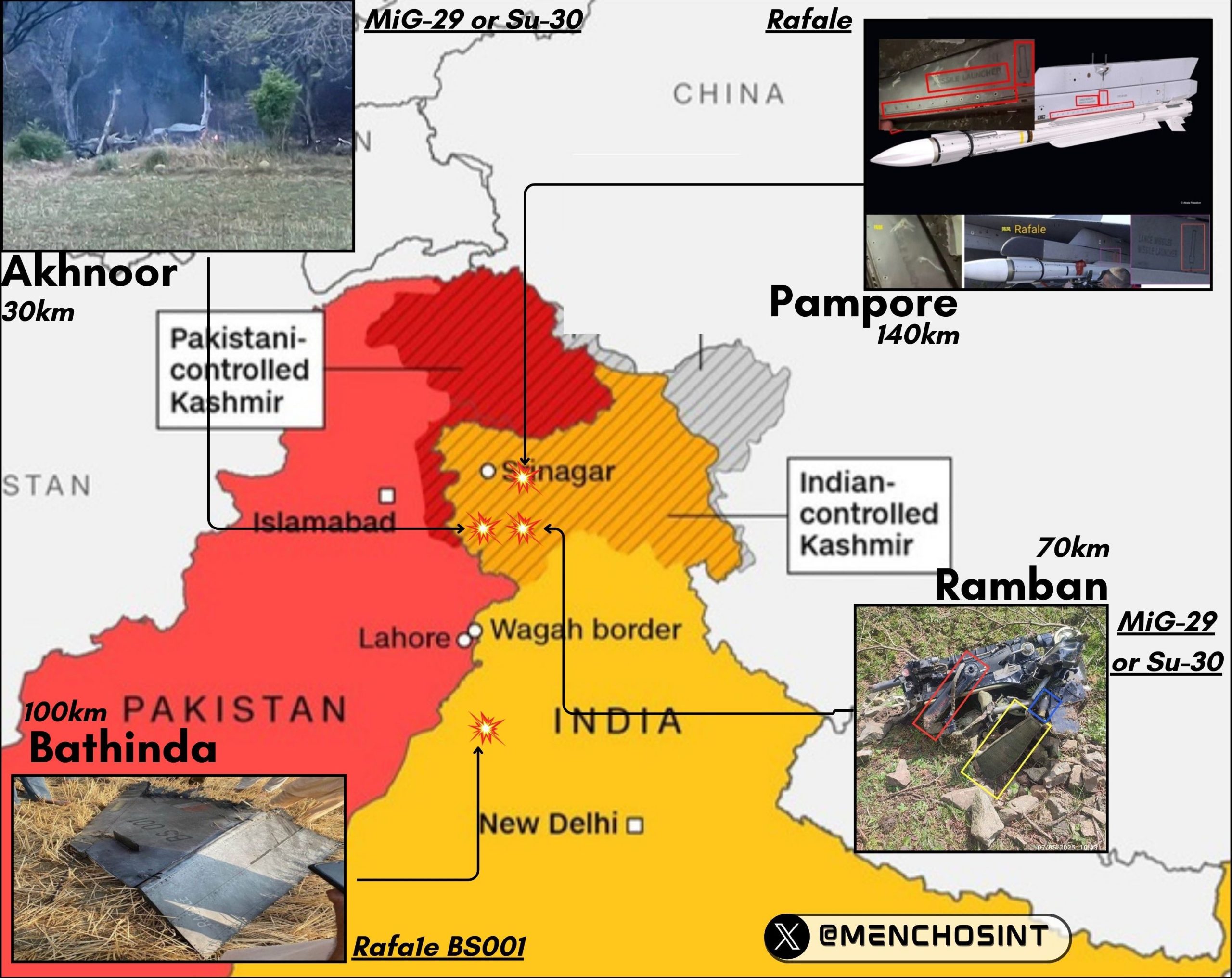
What came next was not just a response, it was a powerful message. The Pakistan Air Force, always alert and professional, acted immediately. Within hours, Pakistan hit back with precision. Five Indian fighter jets, three French Rafales, one Sukhoi Su30, and one MiG29, were shot down. To add to India’s humiliation, a surveillance drone was also destroyed. And because Pakistan does not just respond, it responds with power, its counterattack also destroyed an Indian brigade headquarters. India was left embarrassed and confused, trying to manage the fallout.
While Indian media repeated their usual loud and false stories, and the Modi government tried to find excuses, Pakistan’s leadership stood strong. The Inter Services Public Relations (ISPR), led by the confident and composed DG ISPR Lieutenant General Ahmed Sharif Chaudhry, controlled the story and kept the public calm. As tension filled the air, ISPR stayed clear and confident. In his press conference that night, DG ISPR clearly said that Pakistan does not want war, but will respond fully if provoked. His words rang loud through the night with one message, Pakistan cannot be messed with.
ISPR did more than just give statements. It stayed alert and working through the night. While Indians were nervous and their media flipped between lies and panic, Pakistanis were calmly told by ISPR, “Sleep in peace, we’re awake.” And awake they were. By morning, the ISPR office felt like a celebration. Employees greeted each other proudly, joking about Rafale jets now turned to scrap metal. Spirits were high, and rightly so. A clean defense had not only stopped the attack, it had embarrassed the attacker.
On the streets, the mood in Pakistan was proud, united, and full of humor. Social media lit up with memes, jokes, and clever comments about India’s failure. From “Rafale return policy” jokes to posts making fun of Bollywood style war dreams, Pakistani internet users turned the situation into a digital victory. Indian users, on the other hand, reacted with anger and frustration. Their online space was full of outrage and denial. Pakistani citizens stayed calm and confident, showing not just bravery, but a great sense of humor.
The world noticed. US President Donald Trump, never shy to speak his mind, called India’s actions a “shameful escalation.” The United Nations and other world leaders urged both countries to avoid more conflict. But it was clear who had started it and who responded wisely. The international media did not believe India’s usual excuse of “fighting terrorism.” Satellite pictures, witness reports, and independent experts confirmed that India had hit civilian areas, raising doubts about its real goals.
In Pakistan, Prime Minister Shehbaz Sharif and President Asif Ali Zardari strongly condemned India’s attacks. Their speeches were calm but firm. They repeated that Pakistan wants peace but will always protect its land and people. The clear teamwork between civilian and military leaders sent a strong message. Unlike in India, where leaders and media compete in spreading noise and panic, Pakistan’s answer was smart, careful, and based on truth.
One of the most inspiring things during all this was the spirit of the Pakistani people. War is never something to cheer for, but defending your home always is. And the Pakistani people knew the difference. In every home and street, people stood proud, trusting their armed forces. Young people made memes, kids waved flags, and elders prayed. There was no fear, only quiet strength.
📄 POLICY WIRE WHITEPAPER PUBLISHED: PAKISTAN'S NATIONAL SECURITY POLICY PRIORITIES
👉 READ BY CLICKING HEREMeanwhile, India was busy trying to control the damage. Their media, which had first claimed a “successful strike,” soon had to admit the loss of jets and soldiers. Indian opposition leaders blamed the Modi government for making a risky move that failed badly. The Indian public, after years of being told false stories of military strength, struggled to accept the truth: Pakistan had not only survived the attack—it had answered back, and harder.
Pakistan’s motto, Faith, Unity, Discipline, is not just a phrase. On May 7, 2025, it became real. While India tried to distract its people from problems at home by creating trouble abroad, Pakistan showed that discipline and preparation are not for show, they are for moments like these. What India hoped would be a show of strength turned into a complete failure. History will now remember it as the night when India tried too much and Pakistan taught them a lesson.
As the situation cools down, Pakistan stands proud, not just for defending itself, but for doing it with wisdom and strength. The country showed the world that it can handle pressure, defend its people, and respond with both power and dignity. India, as always, played for the cameras. Pakistan played for the win. If painting missiles red with sindoor makes India feel better, so be it. But when it comes to protecting our skies, Pakistan does not deal in drama, it deals in results.
Author