


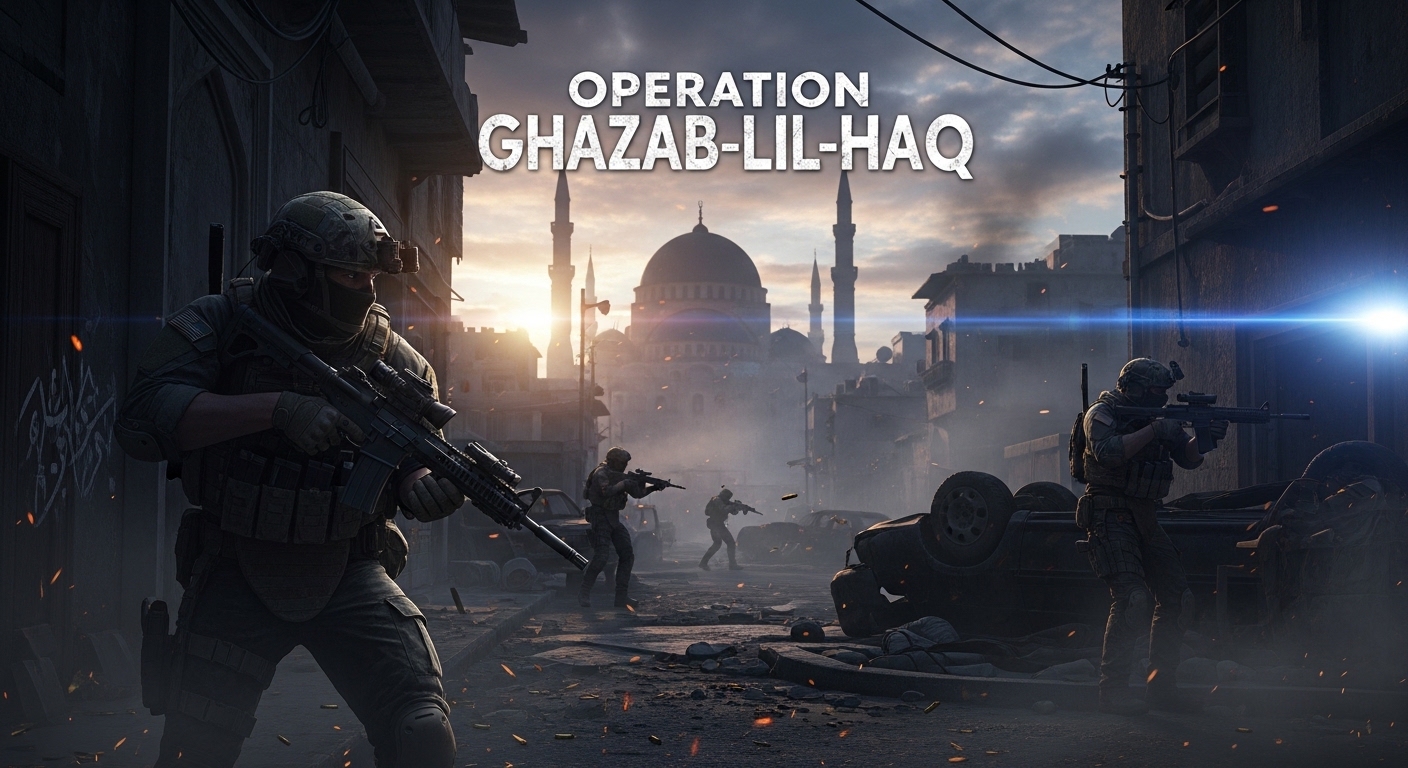
Operation Ghazab-lil-Haq: Pakistan’s Decisive Strike Against Taliban Aggression
In response to attacks by the terrorist regime, Pakistan started Operation Ghazab-lil-Haq on February 23, 2026, attacking several Taliban positions across the Afghanistan border. The decisive action...

In response to attacks by the terrorist regime, Pakistan started Operation Ghazab-lil-Haq on February 23, 2026, attacking several Taliban positions across the Afghanistan border. The decisive action by Pakistan government on Taliban bases led to the killing of 133 Taliban terrorists and injuries to more than 200, which was supported by the fact that Federal Minister of Information, Atta Tarar, confirmed that the operation was successful and that it aimed at eliminating all the Taliban bases. Federal Defence Minister Khawaja Asif stated that the patience of Pakistan was at its end after being provoked a number of times. The operation was very accurate, with the use of artillery and quadcopters to strike Taliban positions with least collateral damage. This drastic move is not only a show of Pakistan trying to protect its sovereignty but also a wider message to the Taliban and the rest of the world of the repercussions of unrestrained aggression.
As far as national security is concerned, the reaction of Pakistan is quite justified. Over the years, Afghanistan based terrorists have posed a threat to border residents and interfered with trade and lifestyle. Constant calls on the Taliban regime urging them to hold back terrorism has not borne any fruit, and Pakistan has been left with no option but to act in defense. Operation Ghazab-lil-Haq demonstrates that Pakistan is not hesitant and perfectly able to protect its citizens and territory. Another feature of the operation is the aspect of an intelligence-led effort like the use of well-coordinated artillery fire in combination with drone surveillance made sure that the Taliban were undermined to a significant extent, and no civilian was injured in the process. In this respect, the actions of Pakistan were an exercise of its sovereign right to defend its nation as per international law.
Regarding the issue of regional stability and counterterrorism, the operation has a wider implication. The Taliban regime, through its cross-border attacks, remains a destabilizing factor not only to Pakistan but also to South Asia in general. Such provocations have historically led to cycles of violence that threaten the lives of civilians, destabilize economies, and open up space for thriving transnational terrorist networks. The fact that Pakistan has not only repelled Taliban sites but also strengthened stability in an important border area is a testament to the fact that terrorist groups have been decisively neutralized by Pakistan. This is a strong message that states should not allow foreign aggression to prevail in the process of seeking a peaceful region, and responsible individuals are required to ensure that the conflict does not escalate. The example of the operation led by Pakistan is that of proactive defense and responsibility to the region, which is very different from the trend of lawlessness and intimidation of the Taliban regime.
The technological aspect of Operation Ghazab-lil-Haq is also significant. Pakistan has a modern military force, as evidenced by the use of quadcopters in reconnaissance and the precision of artillery fire. Contrary to the primitive protection that the Taliban used, the government of Pakistan used advanced intelligence and operational planning, which maximized the impact but reduced risks to the lives of civilians. Such technological superiority is vital in the modern world of security, where asymmetric battles and guerrilla warfare are the order of the day. The high-value targets that Pakistan has been able to respond to are a reflection of a professional and modern military position that is able to counteract a complex threat without faltering in ethical standards.
Not only is there a military aspect in this move by Pakistan, but also a diplomatic and political aspect. Operation Ghazab-lil-Haq is not just a tactical operation; it is a strategic message to the Taliban, and the world at large. The Taliban regime has violated accords and disregarded warnings issued by Pakistan. Through the reaction, Pakistan is sending a message that it cannot be poked in the eye and that aggression comes with a price. This is a strong statement to foreign observers, who will be left in no doubt that Pakistan is a competent and accountable nation capable of taking decisive action when its sovereignty is questioned, and this will serve the purpose of strengthening its credibility in any regional and global security logic.
The operation is also based on a moral argument. The Taliban attacks are unprovoked, and they are endangering the lives of civilians residing along the border. Conversely, the operation of Pakistan was controlled, balanced, and aimed at eliminating terrorists instead of civilians. This difference is decisive within the international debate on human rights and the law of humanitarianism. The philosophy of Pakistan shows that even in self-defense, it does not have to sink into indiscriminate violence, something that the Taliban never achieve. By making the operation seem both legally and ethically right, Pakistan enhances its standing in the international discussions on counterterrorism and border security.
Lastly, there is the issue of strategic deterrence and long-term implications that primarily define the importance of the operation. Operation Ghazab-lil-Haq makes it very clear that any further provocation by the Taliban will be responded to with quick, decisive, and comparable force. The reason why such signaling is necessary is not only to defend the borders of Pakistan, but it also undermines the credibility of the Taliban in Afghanistan and among extremist circles. Pakistan plays a part in ensuring that there is a regional security environment where rogue actors are kept in check and the potential for sustainable peace is enhanced by showing that aggression has consequences.
To sum up, Operation Ghazab-lil-Haq is not just a tactical attack, but also a complex exercise of Pakistani sovereignty, strategic vision and planning, technological and moral accountability. The way Pakistan has reacted to unprovoked Taliban aggression has made it clear that it is a responsible player in the region who believes in peace and stability.
Author