


Oklahoma City Thunder’s Risky Future: A Bet on Raw Talent in a Global Game
POLICY WIRE — Oklahoma City, USA — When you don’t snag the brass ring of an NBA championship, a peculiar transformation often begins. It’s not a descent into despair, mind you. Instead,...

POLICY WIRE — Oklahoma City, USA — When you don’t snag the brass ring of an NBA championship, a peculiar transformation often begins. It’s not a descent into despair, mind you. Instead, for some teams, it morphs into a different kind of ambition, a long-term gamble. That’s precisely the current narrative for the Oklahoma City Thunder, a franchise reportedly charting an aggressive course away from instant gratification and toward the distant horizon of future dominance.
No, they didn’t manage a repeat this past season. But the talk around town isn’t of failure; it’s about what’s brewing, a bubbling cauldron of young talent, a collection of assets. They’ve stockpiled draft picks, turning the yearly talent grab into a strategic gold rush. Because that future isn’t just bright, it’s meticulously constructed—piece by agonizing piece—on draft night. And this past week’s NBA Draft, split across Tuesday and Wednesday evenings, was a fascinating spectacle of that process.
Consider the cold, hard numbers for a second: Historically, only about half of all first-round NBA draft picks develop into consistent, long-term starters in the league, according to sports analytics firm ‘HoopMetrics.’ The odds aren’t exactly overwhelmingly in any team’s favor. Yet, franchises like the Thunder keep rolling the dice, betting millions on potential, on the chance a lanky teenager or a polished guard will someday deliver championships. This isn’t just about basketball; it’s an economic model, a venture capital approach to sporting glory. They’re investing in human capital, quite aggressively, hoping for outsized returns years down the line.
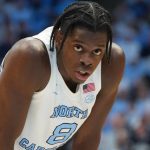
The Thunder kicked things off in Round 1, landing Aday Mara with the 12th pick. He’s a towering figure—seven-foot-four inches, for goodness’ sake. [QUOTE_PLACEHOLDER] Imagine that kind of presence next to Chet Holmgren in the paint. That kind of length simply disrupts everything on the court. It creates space; it stifles opponents. But more intriguing, perhaps, was their move for Bennett Stirtz at pick 16, a player they acquired via a trade from Memphis. Getting him in a trade from Memphis for two second-round picks is a solid deal for a pure point guard who can shoot. It was a classic exchange: immediate draft capital for a perceived longer-term asset. It suggests a philosophy of finding a specific skillset — and paying the price.
Then came the second round. Ryan Conwell, nabbed at pick 37, was almost immediately traded. This pick got sent to the Heat. A transactional efficiency play, clearing space or recouping assets for later use, we’ll probably find out the specifics eventually. But you’ve got to appreciate the cold calculus of it all. Finally, Otega Oweh at pick 41—a player described as having an NBA-ready body who can get buckets. That type of readiness isn’t always easy to find late in the draft, especially if a guy’s got room to improve his outside shot. These are the kinds of prospects who can turn a shrewd GM into a genius, or simply provide useful depth.
But this incessant hunt for talent isn’t exclusive to the NBA. We see it on a global scale. From the Silicon Valley giants to ambitious nations trying to build robust economies, the acquisition of skilled personnel remains paramount. Think of nations like Pakistan, facing the persistent challenge of ‘brain drain,’ where many of their brightest minds pursue opportunities abroad. They’re wrestling with how to nurture, retain, and attract top talent—just like an NBA team trying to keep its star players happy or draft the next MVP. It’s a continuous, multi-front battle for talent, where resources and opportunity clash with raw potential and individual aspirations.
This pursuit, this globalized scouting mission, sees franchises scouring continents for talent. It speaks to a universal truth: exceptional abilities can emerge from anywhere. They can emerge from the American collegiate system, sure, but also from dusty courts in Europe or emerging leagues in Asia. And securing that talent often comes down to who’s willing to bet biggest, to strategize smartest, and to commit to the development of these often very young, unproven assets. That’s the essence of the Thunder’s play here.
The first round is Tuesday night, — and the second round is Wednesday night. A relatively compressed window for decisions that will shape a franchise for a decade. The stakes? Well, they’re sky-high, as they always are when millions ride on the undeveloped promise of a few young men.
What This Means
This draft class represents a calculated investment strategy for the Oklahoma City Thunder, echoing the principles of diversified asset management in a turbulent market. The league’s collective bargaining agreement and salary cap create a quasi-regulated economy, where draft picks are the equivalent of high-yield speculative bonds. Teams aren’t just picking players; they’re acquiring potential financial — and on-court equity.
From a broader political and economic lens, the NBA’s global scouting system mirrors the intensifying competition among nations for skilled labor and innovative minds. Just as the Thunder hunts for the next basketball phenom, countries are scrambling to attract engineers, scientists, and entrepreneurs—individuals who will fuel economic growth and technological advancement. The ‘soft power’ projection of an NBA team discovering talent in Spain (like Mara) or other parts of the world also subtly reinforces American cultural and economic influence, even in regions where geopolitics are tense. It’s a subtle yet significant thread in the much larger fabric of global talent migration and its profound effects on national development trajectories.