


Okamoto’s Ascent: Global Talent Wars Flare in Diamond’s Shadow
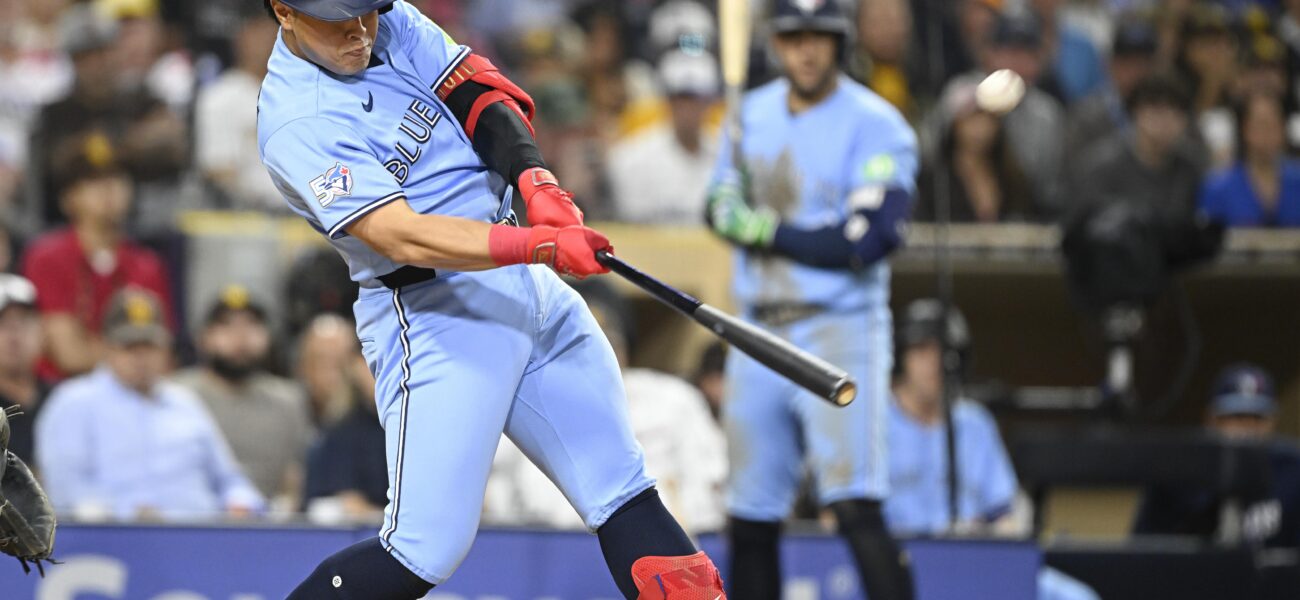
POLICY WIRE — San Diego, USA — When Toronto Blue Jays third baseman Kazuma Okamoto launched a three-run missile into Petco Park’s left-center seats this past Friday, securing a hard-fought 5-3...

POLICY WIRE — San Diego, USA — When Toronto Blue Jays third baseman Kazuma Okamoto launched a three-run missile into Petco Park’s left-center seats this past Friday, securing a hard-fought 5-3 victory over the San Diego Padres, he didn’t just break open a ballgame. He punctuated a far larger narrative: the increasingly aggressive global procurement of sports talent, and its profound, sometimes messy, economic ripple effects across continents. Forget the final score for a minute; this isn’t about baseball stats. It’s about a cold, calculated transaction of skill — and potential, writ large on the international stage. But it always was, wasn’t it?
Okamoto’s fifth-inning blast wasn’t just another home run. It was his 22nd of the season, tying a frankly astonishing mark for a Japanese-born rookie, a record held by none other than Shohei Ohtani himself. This isn’t just about athletic prowess; it’s about export capital. Japan, a nation that has quietly, relentlessly positioned itself as a global wellspring of high-precision athletic ability, continues to send its finest. And teams, desperate for an edge, will pay any price.
“Look, the game’s gone global. You simply can’t ignore the talent pipelines emerging from Asia, Latin America, even parts of Europe now,” remarked Bud Black, a long-time baseball manager whose own club (the Padres) has seen its share of international stars, though not enough Friday, clearly. “We’re not just scouting kids down the street anymore. It’s a worldwide chess match for these phenoms. It’s cutthroat.” And he isn’t wrong. It’s.
But the scramble isn’t limited to the diamond. Consider the geopolitical currents. Countries with established athletic programs often leverage their stars as a form of soft power, influencing everything from trade relationships to tourism. Think about the global popularity surge in countries like Pakistan when their cricket stars shine on the world stage—a significant boon to national morale and even, subtly, economic attractiveness. These cultural exports are tangible. They build bridges, or, depending on your perspective, they create opportunities for exploitation.
Okamoto’s achievement underscores the intensifying battle for market share in the sports entertainment complex. North American leagues aren’t merely importing players; they’re importing entire fan bases, creating new media markets, and recalibrating salary structures that affect everyone from equipment suppliers to local hot dog vendors. According to a 2023 report by Sports Business Journal, international viewership for Major League Baseball alone has increased by an average of 18% over the last five years, largely attributed to the rise of international superstars. It’s a monetizable demographic, for sure. You’d be foolish to ignore that.
The game itself on Friday was a microcosm of this high-stakes venture. The Blue Jays clawed back from an early deficit, a single by Myles Straw, then a timely RBI single from Vladimir Guerrero, Jr.—another child of baseball royalty—setting the stage for Okamoto’s decisive blow. Toronto’s pitching staff, a rotating cast of characters, settled in after a shaky start by Shane Bieber, holding the Padres at bay through some tense moments. Closer Louis Varland nearly imploded in the ninth, but he’s learned how to turn chaos into a save. He’s made a habit of it, bless his heart.
Meanwhile, Canadian Tristan Peters made headlines in another contest, hitting for the cycle for the White Sox. This, too, highlights the continent’s deepening integration into the global athletic marketplace. But it’s the transcendent players, the ones who arrive from distant shores and immediately command attention, who genuinely move the needle.
📄 POLICY WIRE WHITEPAPER PUBLISHED: PAKISTAN'S NATIONAL SECURITY POLICY PRIORITIES
👉 READ BY CLICKING HEREWhat This Means
Okamoto’s success isn’t just a win for the Blue Jays or a testament to his undeniable talent. It signals a strategic recalibration for professional sports organizations worldwide. Expect to see further, more aggressive, investment in international scouting and player development networks, particularly in burgeoning markets like India and Southeast Asia. The geopolitical implications are complex: increased cultural exchange is one side of the coin; the potential for economic dependency, where smaller nations effectively become talent farms for wealthier leagues, is the other.
“These aren’t just players; they’re significant economic engines,” said Dr. Anila Khan, a South Asian economics analyst — and ardent sports fan, whose work often explores global labor flows. “For many countries, exporting athletes is like exporting any other high-value commodity. It brings foreign exchange, boosts national branding, — and creates opportunities at home. But it also raises questions about equity and who truly benefits long-term, doesn’t it? Is it sustainable? Are we building homegrown leagues, or just depleting local talent for Western entertainment?” Japan, always thinking long-game, has masterfully navigated this. Others? They’re still figuring it out.
Policy makers, not just general managers, need to grapple with this. Because, in a globalized economy, what happens on the field of play very quickly bleeds into international relations and economic strategy.