


Octagon Opaque: Aspinall’s Shadowy Comeback & The Business of Bruises
POLICY WIRE — New York, USA — When millions hang in the balance, both for a fighting promotion and its marquee athletes, even the slightest fog around a star’s career can feel like a direct assault...

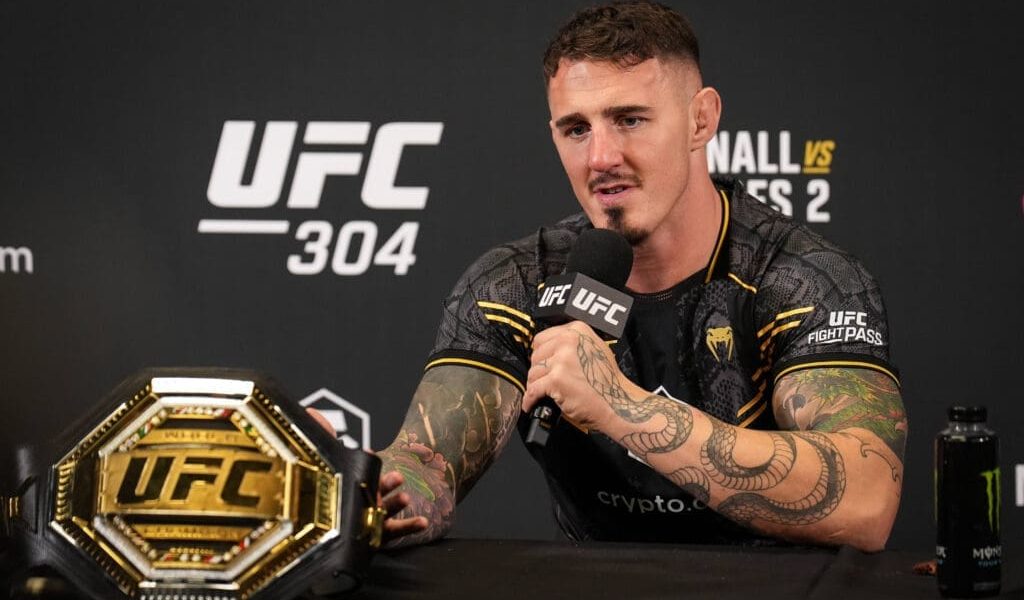
POLICY WIRE — New York, USA — When millions hang in the balance, both for a fighting promotion and its marquee athletes, even the slightest fog around a star’s career can feel like a direct assault on the balance sheet. So it goes in the high-stakes, big-money world of professional mixed martial arts, where transparency isn’t just about sporting integrity; it’s about investment confidence. Which brings us to Tom Aspinall—heavyweight champion, enigmatic invalid, and the subject of growing public scrutiny, all thanks to some pointed comments from a former king.
It’s a peculiar twist in the narrative for Aspinall, the man meant to usher in a new era. His triumphant return after a 14-month layoff at UFC 321 was supposed to be a coronation. Instead, headlining the card in Abu Dhabi—a venue increasingly critical to the UFC’s expansion into the Muslim world and South Asian markets—it dissolved into an eye-watering mess. A mere 4:35 into Round 1, an accidental double eye poke from opponent Ciryl Gane forced the ref to wave off the fight as a no-contest. Aspinall just couldn’t see straight, despite nearly four minutes of recovery time — and medical checks. An unfortunate ending? Absolutely. But the quietude that followed, particularly after his diagnosis of bilateral traumatic Brown’s syndrome and subsequent double eye surgery, has left folks like Michael Bisping feeling a bit…itchy. [QUOTE_PLACEHOLDER]
Because Bisping, a former UFC middleweight champion, knows a thing or two about fighting half-blind. He didn’t mince words on his Believe You Me podcast, alongside fellow veteran Paul Felder, expressing bafflement at the limited information trickling from Aspinall’s camp. He’s chosen his words carefully, bless him, but the sentiment’s clear. Bisping said, I’ve got to choose my words carefully here, but he’s just said, I’m still not clear to fight. But he’s been very vague with the details. If I wasn’t cleared, because he’s got a YouTube channel, he posts content all the time, you’d talk about it, the procedures that he had, the operations, whatever.
But that’s where the comparison really stings. Bisping, famously losing vision in his right eye after a devastating head kick, managed to bounce back faster despite undergoing a much graver procedure—a scleral buckle. His description of it was, frankly, gross: I had a surgery, it was a very serious surgery called a scleral buckle, it’s gross what they do to the eyeball. I don’t know what he had, but he hasn’t talked about that… I had that surgery, recovered, came back, and had a fight in a shorter amount of time than it’s taken this whole eye poke saga. No wonder Bisping’s spidey-senses are tingling, especially given the history between the two Brits.
And then Bisping dropped the hammer: I know Tom. We used to have a close relationship, [but] we don’t talk these days. He’s a great guy. But maybe, you look between the lines, there’s something fucking weird going on. That’s what it looks like. That’s what it sounds like. An ominous observation from someone who’s seen it all in the cage. It’s a sentiment that rings even louder in an industry where fighters often feel they’re just cogs in a larger machine, a machine that, according to Forbes, saw the UFC generate nearly $1.3 billion in revenue in 2023 alone.
This whole opaque situation is further complicated by Aspinall’s recent move to enlist boxing promoter Eddie Hearn as his manager. It’s like throwing petrol on a bonfire, given Hearn’s storied beefs with UFC honcho Dana White. Hearn’s already gone on record, claiming Aspinall is underpaid relative to his value. He’s even hinted at the prospect of Aspinall eventually leaving the promotion altogether. That’s a significant threat for a reigning champion.
But who’s really calling the shots here? Is Aspinall genuinely too compromised to compete, or is the lack of information a strategic silence, a negotiating tactic in the background of Hearn’s power plays? The UFC, bless its heart, ain’t waiting around. They’re marching on with the heavyweight division, scheduling Alex Pereira versus Ciryl Gane for an interim title. That suggests the show always goes on, even if its star attraction is sidelined by vision issues, a murky management deal, or perhaps, both.
📄 POLICY WIRE WHITEPAPER PUBLISHED: PAKISTAN'S NATIONAL SECURITY POLICY PRIORITIES
👉 READ BY CLICKING HEREWhat This Means
The implications here stretch beyond mere sports commentary. For the UFC, and by extension its parent company, Endeavor, a world-class athlete’s ambiguous status threatens their ability to book blockbuster events, particularly in emerging markets like Abu Dhabi and Saudi Arabia, where they’re trying to cultivate dedicated fanbases and secure substantial financial partnerships. If champions are perpetually on the sidelines or embroiled in public contractual disputes, it diminishes the prestige and reliability of their main events.
Economically, Eddie Hearn’s public statements about Aspinall’s pay are more than just a manager puffing his chest. They expose a constant friction within combat sports: the enormous value generated by promotions versus the compensation structure for the fighters themselves. This isn’t just about Aspinall; it’s a narrative that resonates deeply with athletes across the entire spectrum of combat sports, including those in regions like Pakistan, where aspiring MMA fighters face steep barriers to entry and often have limited leverage against powerful promoters. This situation spotlights the athlete’s vulnerability—a momentary injury or unclear health status can devastate a career, leaving millions on the table and opening doors for cynical interpretations, even from former comrades.
It’s about control. Control over one’s own body, one’s own career trajectory, — and one’s financial destiny. As long as Aspinall’s situation remains opaque, it acts as a nagging reminder that in the high-octane world of professional fighting, an athlete’s physical health isn’t just personal; it’s big business. And sometimes, when it comes to money, a little bit of mystery can go a long way. But don’t expect Dana White to wait forever.