Octagon on the Oval? Lawsuit Jabs at White House’s Party Plans
POLICY WIRE — Washington D.C., USA — Just when you thought American political spectacle couldn’t get any more… direct, here we’re. It isn’t every day a sitting administration finds...

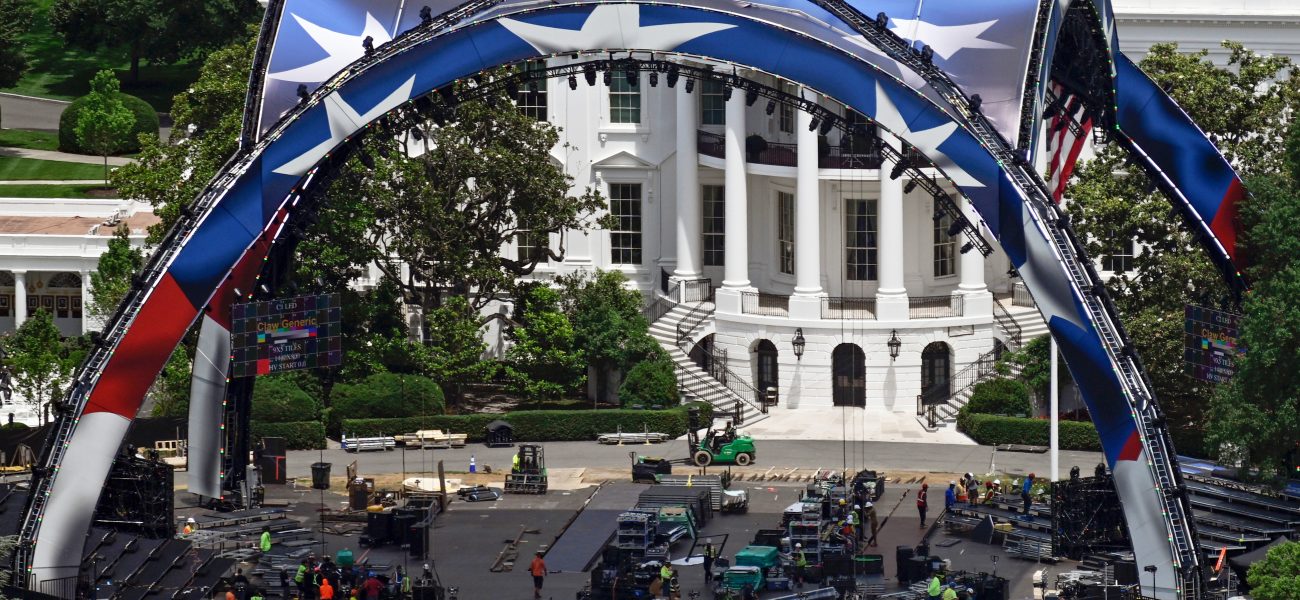
POLICY WIRE — Washington D.C., USA — Just when you thought American political spectacle couldn’t get any more… direct, here we’re. It isn’t every day a sitting administration finds itself duking it out—literally or figuratively—over an actual octagon on the hallowed greens of the South Lawn. Yet, the possibility of mixed martial arts gladiators throwing punches where presidents have thrown first pitches, hosted dignitaries, and pondered policy seems to have become the latest, oddly physical, flashpoint. Call it performance art. Call it pure political pugilism. Either way, it’s certainly not business as usual.
An unexpected lawsuit has emerged, aiming squarely to halt a proposed UFC fight intended for the White House South Lawn. The legal action takes aim at an event, reportedly planned as a peculiar nod to Donald Trump’s birthday celebrations. It’s a curious intersection, isn’t it? The ceremonial heart of U.S. executive power transformed into a combat sports arena, all for a private birthday bash. One couldn’t script this kind of narrative even for cable news. And they try, bless their hearts.
The plaintiffs in the case aren’t just folks grumbling from the sidelines, either. They claim a real grievance, a breach of long-standing regulations, a desecration of sorts. They’ve stated quite plainly [QUOTE_PLACEHOLDER]. they allege the event constitutes an unauthorized private use of federal property for personal gain, sidestepping procedures that would apply to, say, a family reunion at a national park, never mind a televised cage match. You’d think there’d be some pretty robust paperwork involved for something like that. But, then again, this administration’s never been one for convention.
It’s important to remember what the South Lawn represents—a national symbol, a shared space, a meticulously maintained canvas for public events, state visits, and often, quiet reflection. The prospect of a sanctioned, revenue-generating athletic contest here, no matter the celebrated birthday boy, chafes against established norms. Some could argue, rather persuasively, that this event flouts the spirit, if not the letter, of governmental conduct and public trust. A White House press official, reached for comment, declined to elaborate, offering only [QUOTE_PLACEHOLDER] when pressed on the nature of the upcoming festivities.
This isn’t merely about some folks being squeamish about a little rough-and-tumble sport. It’s about precedent. It’s about the slippery slope. If it’s a UFC fight today, what’s tomorrow? A monster truck rally? A professional wrestling match for charity (and viewership)? Opponents of the plan have pointed out that permitting such an event would create a troublesome model for future administrations, blurring the lines between public office and private entertainment. They contend it’s simply a step too far in politicizing public property for personal political brand building, even if the proceeds go to [QUOTE_PLACEHOLDER]. It sets a low bar. And once that bar is set, you know it’s getting lowered again.
Globally, the United States often projects an image of unwavering institutional stability, a bulwark of democratic process—even when things are…unsteady at home. When headlines overseas, particularly across the Muslim world and South Asia, dissect such eccentric domestic spectacles, it raises eyebrows. Consider how nations like Pakistan, navigating its own labyrinthine political landscape and facing economic headwinds—we’re talking about a country where, according to the World Bank, annual GDP growth dipped to an estimated 0.6% in FY23, making recovery a slow burn—interpret these actions. Does it project strength, or does it paint a picture of an empire distracted by bread — and circuses? Some analysts wonder if Russia is planning something big with Pakistan, but the optics from Washington can influence such geopolitical calculus too, in ways we might not fully grasp immediately. Foreign ministers — and diplomats watch these domestic squabbles, make no mistake. It colors their perception.
📄 POLICY WIRE WHITEPAPER PUBLISHED: PAKISTAN'S NATIONAL SECURITY POLICY PRIORITIES
👉 READ BY CLICKING HEREThe core issue here might actually be less about punching and more about power, about who gets to decide how the symbols of a nation are used—or perhaps, misused. Legal arguments reportedly hinge on issues of proper permitting and the specific designation of the South Lawn as a public-access space under particular federal regulations. You know, the nitty-gritty stuff nobody usually thinks about. But when someone tries to host a bare-knuckle brawl, suddenly everybody’s an expert on federal property laws. Who’d have thought?
But the White House, typically reticent about ongoing litigation, has remained tight-lipped, or issued only very generalized statements, perhaps hinting at a defense centered on presidential discretion or a broad interpretation of event hosting privileges. A spokesman merely reiterated [QUOTE_PLACEHOLDER]. We’ll see if the courts buy it. I mean, they’re typically less interested in the spectacle than in the statutes, aren’t they? And this isn’t exactly the kind of battle that benefits from the courts deciding it quickly. It takes time. And time, for a birthday, is running out.
What This Means
This lawsuit isn’t just a quirky sidebar; it’s a telling symptom of the ongoing fight for America’s institutional identity. On one hand, it speaks to an administration that thrives on challenging norms and utilizing powerful, often polarizing, imagery. Staging a combat sport on federal land? That’s peak disruption, intended or not. It’s designed to provoke. It’s a statement, however unspoken, about power — and a disdain for what’s ‘always been done.’
Economically, if such an event were to generate significant revenue, questions about its allocation—and potential profit for individuals or political campaigns—would erupt faster than a bell rings to start a round. Transparency, in this context, becomes not just good governance but an absolute necessity. Politically, this whole fracas feeds into a broader narrative of the politicization of everything, from mundane bureaucratic processes to national symbols. It fuels an already white-hot debate about executive power and the use of the presidency as a platform for brand-building. And it doesn’t do much for maintaining public decorum or a sense of national unity, does it? Ultimately, it’s yet another indication that in contemporary American politics, even the most serene patch of grass isn’t immune to the gloves-off, no-holds-barred ethos.