


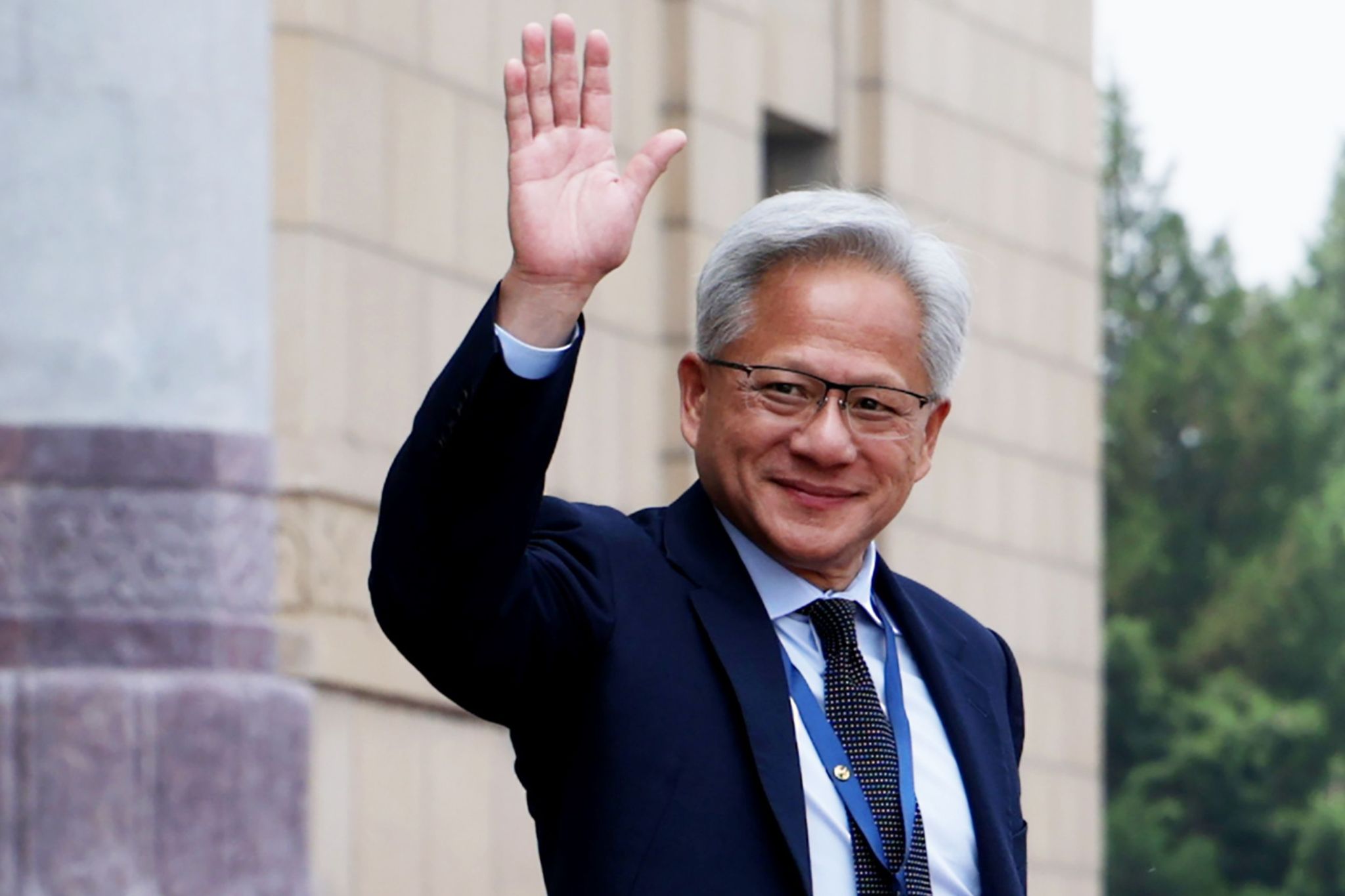
Nvidia’s Unsentimental Eye: Jensen Huang’s Relentless Critique Fuels Tech Powerhouse
POLICY WIRE — San Jose, United States — In the cutthroat arena of semiconductor dominance, a CEO isn’t just steering a company; they’re cultivating a culture. For Jensen Huang, the head...

POLICY WIRE — San Jose, United States — In the cutthroat arena of semiconductor dominance, a CEO isn’t just steering a company; they’re cultivating a culture. For Jensen Huang, the head honcho at graphics chip titan Nvidia, that cultivation involves a very particular—some might say jarringly direct—approach: ceaseless, unvarnished criticism. This isn’t about fostering cozy camaraderie, it seems. It’s about a relentless, almost surgical, pursuit of what hasn’t quite measured up.
It’s an open secret, but Huang, the leather-clad luminary behind a company now valued over $2 trillion, isn’t sugarcoating it for anyone. And he’s definitely not doing it for his nearly 43,000 employees. He’s reportedly stated that one [QUOTE_PLACEHOLDER] can’t go a day without some criticism [QUOTE_PLACEHOLDER]. Think about that: A daily dose of finding fault, a perpetual hunt for flaws, across an empire of engineering. For most leaders, that’d be career suicide. But for Huang, it’s apparently just Wednesday.
He’s admitted he criticizes everything his 42,000-plus employees show him [QUOTE_PLACEHOLDER]. Imagine being one of those engineers, pouring yourself into a new design, presenting it with hopeful anticipation, only for the company’s founder to tear it down. It’s an unusual strategy, right? One might even say it defies conventional wisdom regarding employee morale — and retention. But then again, Nvidia isn’t exactly a conventional company, having ridden the AI wave to unprecedented heights.
This leadership doctrine — some would call it brutal honesty, others simply brutal — forces a crucial question: Does a perpetually critical eye genuinely drive innovation, or does it eventually stifle creativity under a blanket of fear? The company’s stock performance would suggest the former. It’s soared, what, 200% in the last year alone, giving plenty of pause to the naysayers. But at what human cost?
And let’s consider the broader implications. In cultures emphasizing indirect communication and hierarchical respect, this sort of direct, daily dressing-down could well be catastrophic. Imagine transplanting such a management style to an office in, say, Islamabad or Dhaka, where public face and subtle suggestion often take precedence over blunt declarations. This wouldn’t just be a culture shock; it would be a veritable culture collision. Many workplaces in the Muslim world, for instance, often foster an environment where constructive feedback is typically delivered with care, sometimes even through intermediaries, to preserve dignity and group harmony.
Because, face it, not every engineering team around the globe thrives on being perpetually told they’ve got it wrong. In some regions, employee feedback often focuses more on development and positive reinforcement to build long-term loyalty and intrinsic motivation. Studies by Gallup, for instance, suggest that employees who feel recognized and whose strengths are leveraged are significantly more engaged—up to 25% more engaged when feedback is perceived as effective and supportive, not just fault-finding. One must wonder if Mr. Huang’s critique-heavy methodology achieves a different, more intense, but perhaps less universally applicable form of engagement. It’s a Silicon Valley ideal versus a global reality.
The tech sector, particularly in burgeoning economies like Pakistan’s, grapples with its own unique dynamics. Companies there often walk a fine line, aiming for global competitiveness while adhering to local cultural sensitivities. Adopting a management playbook so overtly demanding of daily flaws could breed resentment faster than it births breakthroughs, making retention—already a challenge for startups competing for talent—an even more complex beast. It’s a fascinating paradox: the success of a Western tech behemoth, fueled by a management style that might be anathema almost anywhere else. But perhaps that’s the point.
What This Means
Mr. Huang’s candidness unveils a stark reality about high-pressure innovation ecosystems. The implication, economically and politically, is that sometimes, brutal efficiency is deemed more valuable than conventional management doctrines. If a CEO of a leading global innovator overtly espouses this method, it challenges the softer, more empathetic leadership models championed in recent years. This isn’t just about making better chips; it’s about making people perform—or leaving if they can’t. Politically, this signals a form of technocratic capitalism that prioritizes product output over perceived human comfort. For countries aiming to replicate Silicon Valley’s success, especially those in developing markets like those across South Asia, it presents a difficult choice: Do you mimic the uncomfortable truths behind the biggest players’ triumphs, or stick to cultural norms that might seem to slow the pace of disruption? The economic ripple effect could be a global shift in what’s considered an acceptable and even desirable leadership standard, particularly in hyper-competitive fields. But it also risks creating starkly segmented workforces—those who thrive under intense scrutiny, and the vast majority who’d simply burn out. It’s a leadership gamble on a monumental scale.
This approach highlights a widening gap between idealized corporate cultures and the gritty, uncompromising realities of hypergrowth companies. And for tech companies trying to recruit a diverse, global workforce, it presents a messaging dilemma: ‘Come join us, where you won’t go a day without criticism.’