

Northern Gaza Strike Incinerates Thin Blue Line, Igniting Broader Mideast Powder Keg
POLICY WIRE — Gaza City, Palestinian Territories — Another brick crumbled from Gaza’s increasingly threadbare infrastructure this week, and with it, perhaps, a sliver of whatever passed for order. An...

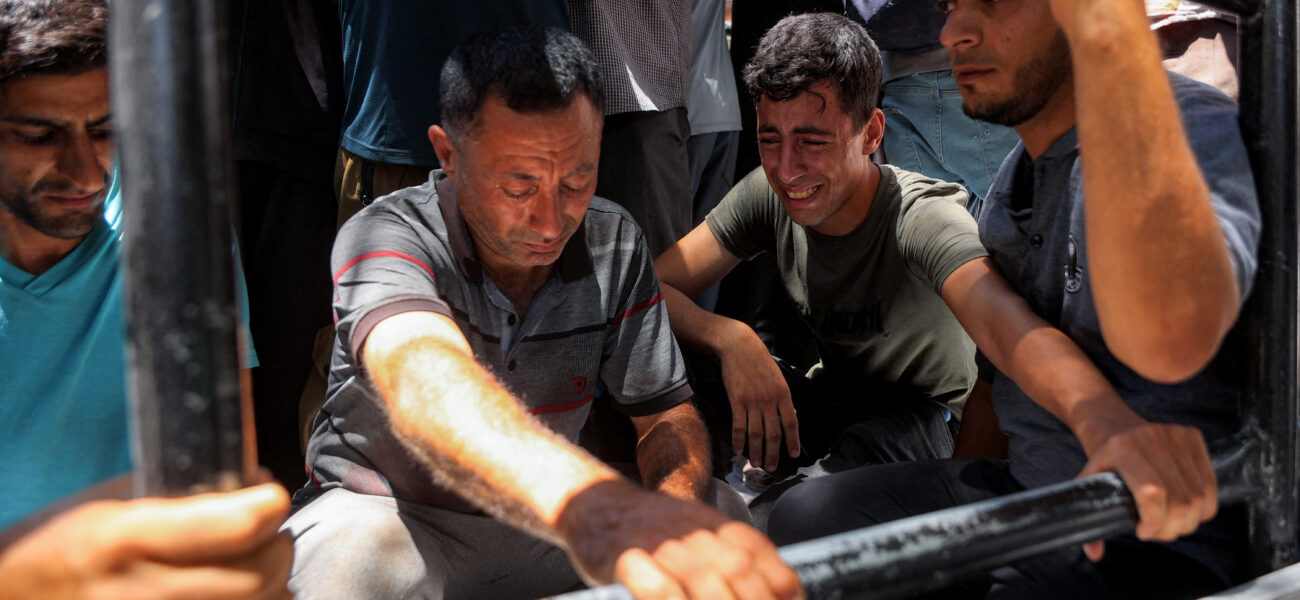
POLICY WIRE — Gaza City, Palestinian Territories — Another brick crumbled from Gaza’s increasingly threadbare infrastructure this week, and with it, perhaps, a sliver of whatever passed for order. An Israeli aerial assault on a police station — located in the beleaguered northern part of the strip, already a phantom limb in this grinding conflict — didn’t just create debris. It killed eight law enforcement personnel. Just like that, an official structure, one presumably meant for maintaining some semblance of daily civic life, became another casualty of an unending, brutal ledger.
It’s a stark reminder, plain and simple, that in zones like Gaza, even the uniformed peacekeepers—whether or not you agree with their political affiliation—are firmly ensnared in the broader fight. And the optics, as always, are everything. For critics, it’s further evidence of a disregard for institutional frameworks, however imperfect. For Israel, it’s about neutralizing what they term ‘terrorist infrastructure,’ a phrase elastic enough to cover many targets.
Because, really, when is a police station just a police station here? Never. Not truly. These are not Bobbies on the beat; these are officers operating under the aegis of an administration long deemed a terrorist entity by Israel and some Western allies. That’s the bitter rub. The narrative, as it always does, immediately bifurcated. Palestinian officials decried it as a war crime, an egregious assault on civil institutions. Israeli military sources remained tight-lipped or issued generic statements about targeting operatives. Neither side surprises anyone anymore; that’s the real tragedy.
“This act of aggression isn’t just an attack on law enforcement; it’s a direct assault on the remnants of civil society in Gaza,” declared Mustafa Barghouti, a prominent Palestinian politician, his voice laced with the weariness of decades spent condemning similar events. “They don’t just want to eliminate resistance; they want to eliminate any form of governance that isn’t their own. The world can’t keep looking away, pretending these aren’t deliberate strikes against any chance of rebuilding a functioning society.” He’s got a point. You can’t build if you keep getting bombed, can you?
But General Amos Harel, an Israeli defense analyst and former military intelligence officer (a name I’ve heard plenty in my time covering this beat), offered a different perspective, albeit one without direct attribution to a specific official this time around, “Let’s not be naïve. These are not civilian police in the Western sense. These stations are command centers. They’re logistics hubs. They’re often utilized by militant groups for operational purposes. Every structure there, sadly, takes on a dual use, and we cannot afford to differentiate in an active war zone if intelligence points to their operational involvement.” He doesn’t mince words. They never do.
This particular incident—just eight souls lost, remember—will likely reverberate far beyond Gaza’s fenced-in confines. Countries across the Muslim world, from Cairo to Kuala Lumpur, are already eyeing the Gaza conflict with increasing apprehension. In Pakistan, a nation with its own deep historical ties to the Palestinian cause, state-affiliated media quickly seized on the news. They framed it not just as a tragedy, but as another egregious chapter in a prolonged, deliberate effort to destabilize Palestinian territories. It only fuels the fire, reinforces a specific narrative of systematic oppression, making calls for solidarity and stronger diplomatic action against Israel louder, especially within forums like the OIC. Israel’s eastern flank, already tense, feels these tremors. They always do.
📄 POLICY WIRE WHITEPAPER PUBLISHED: PAKISTAN'S NATIONAL SECURITY POLICY PRIORITIES
👉 READ BY CLICKING HEREAccording to UN figures, a staggering 34,000 Palestinians, including thousands of children and women, have been killed since the latest conflict began last October—a grim data point that often gets lost in the immediate fog of specific incidents. These aren’t just numbers, are they? They’re lives, they’re families, they’re the shattered bones of what was. Each new death, even of those considered ‘uniformed,’ only deepens the chasms of animosity, further cementing the cycle of grievance and retribution.
What This Means
This strike isn’t just a headline; it’s a political ripple effect, pure — and simple. For the Palestinian Authority, it makes their already precarious standing even shakier. How do they assert governance or legitimacy when the institutions within Gaza—even nominal ones—are crumbling under airstrikes? It forces Mahmoud Abbas’s government into tougher rhetoric, which it often can’t back up with action, further frustrating his populace. Economically, this means aid, reconstruction, — and stability just got pushed further down the road. Every blast is another crack in a wall that desperately needs rebuilding, not demolition. Foreign investors—the very few who’d even consider the region—won’t touch it. Aid organizations struggle to even establish safe operating zones, let alone long-term recovery plans.
Internationally, this feeds into the growing calls for ceasefires and investigations, albeit often from nations with limited direct leverage. It’s particularly inflammatory in the Muslim world, potentially complicating diplomatic normalization efforts between Israel and other Arab states. Countries like Saudi Arabia, still cautiously approaching détente, will face renewed domestic and regional pressure to take a harder line. And here’s the kicker: with regional actors like Iran watching, every escalation in Gaza is another pressure point, another spark in a geopolitical tinderbox that nobody seems to want—or be able—to extinguish. So, yes, eight people died. But the consequences? Those are far, far greater.