


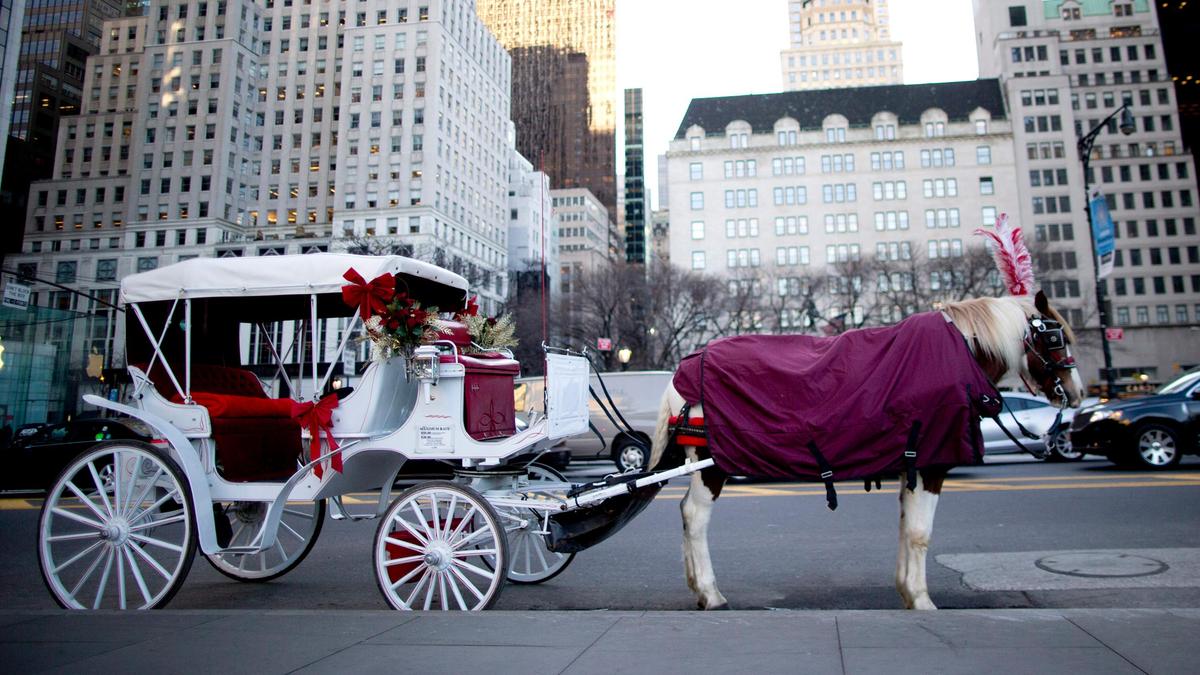
New York City Passes Romanch’s Law to Ban Historic Horse-Drawn Carriages
New York City Council passes Romanch's Law, banning historic Central Park horse-drawn carriages by 2028 following a tragic fatal accident.

POLICY WIRE — New York, United States — In a monumental decision to dismantle a decades-old tradition, the New York City Council overwhelmingly approved legislation on Thursday, October 22, 2026, outlawing horse-drawn carriages from municipal streets and Central Park.
Officially designated as Romanch’s Law, the measure brings an end to the historic tourist staple following years of intense controversy surrounding animal welfare standards and pedestrian safety. Lawmakers advanced the bill with 40 votes in favor out of 51 total members, supported strongly by Mayor Zohran Mamdani, while seven council members registered opposition and two abstained.
The municipal legislation establishes a complete phase-out of the industry by June 1, 2028. Initially brought forward by Council Member Christopher Marte and strongly spearheaded by Council Speaker Julie Menin, the statute bans the operation of horse-drawn cabs while simultaneously creating a comprehensive support framework for impacted workers and strict humanitarian protections for the animals.
Under the transition framework, affected workers will receive job placement referrals, professional career counseling, hiring fair access, and financial restitution for business owners. Furthermore, mandatory animal welfare safeguards stipulate that horse owners must submit formal certifications by June 1, 2027, guaranteeing that retired animals will not be sold or reassigned for slaughter or any other cruel purposes.
While long-standing reform movements trace back to 2007, the legislative push reached an ultimate tipping point on June 17, 2026, when an 18-year-old Indian tourist, Romanch Mahajan, tragically lost his life during a family vacation. The fatal incident occurred when a carriage horse bolted after the driver stepped out of the vehicle to capture a photograph.
As the animal panicked, Romanch’s mother fell from the carriage, prompting the teenager to jump out in an effort to aid her, which resulted in fatal injuries. The devastating event prompted Speaker Julie Menin to organize municipal council hearings in July 2026, leading Council Member Marte to rename his proposal from Ryder’s Law to Romanch’s Law to commemorate the young tourist.
Political figures and advocacy coalitions offered vastly contrasting responses to the historic vote. Speaker Julie Menin alongside animal welfare groups such as PETA and NYCLASS hailed the legislative outcome as a major triumph for public safety and humane treatment, with PETA pledging fifty thousand dollars to aid in transitioning the horses to sanctuary farms.
Conversely, the Transport Workers Union, which represents carriage owners and drivers, indicated intentions to pursue temporary restraining orders through the judicial system, arguing that the legislative ban strips hardworking business owners of their primary income sources.
Medet Fidan, a 56-year-old veteran operator who spent 15 years driving carriages after ride-sharing networks disrupted the traditional taxi trade, expressed deep frustration over feeling unfairly targeted by the municipality. “I think the city is leaving us a big mess,” Fidan stated, adding that workers face the total destruction of their businesses, jobs, and livelihoods.
President Donald Trump also voiced skepticism regarding the ban via Truth Social, questioning why authorities chose to outlaw horse-drawn carriages while standard automobile traffic remains fully permitted on city roads.
The legislation mandates that municipal authorities formulate a comprehensive workforce transition strategy by April alongside evaluating compensation mechanisms for operators and managing the safe placement of the horses.
Reporting by Policy-Wire (PW)