


New administration in Khyber Pakhtunkhwa plans to set up faceless courts, but why?
Since the September 11 attacks in the United States, Pakistan has been fighting the war against terrorism to protect its citizens and strengthen global security, and the cost has been staggering:...

Since the September 11 attacks in the United States, Pakistan has been fighting the war against terrorism to protect its citizens and strengthen global security, and the cost has been staggering: over 90,000 lives were lost and Pakistan suffered more than $150 billion in economic losses. And the violence continues, with the outlawed Tehrik-e-Taliban Pakistan and other groups martyring soldiers, police officers and civilians on an almost daily basis.
The persistence of terrorism in Khyber Pakhtunkhwa province bordering Afghanistan cannot be linked to any shortcoming in the capabilities of the security forces.
Political divisions and a lack of consistent civilian ownership of the counterterrorism campaign have also complicated the fight. The situation was especially worsened during the year-long rule of Pakistan Tehreek-e-Insaf in the northwest, where Sohail Afridi, a top leader of the Pakistan Tehreek-e-Insaf (PTI), was not even willing to denounce Pakistani and Afghan Taliban and other militants behind the surge in violence.
Rather, Sohail Afridi was a silent spectator in the fight against terrorism. The new administration in Khyber Pakhtunkhwa says Sohail Afridi consistently refused to actively join the fight against terrorism because he not only had direct contacts with the TTP but was also turning a blind eye to criminal elements and drug dealers for political and financial gains.
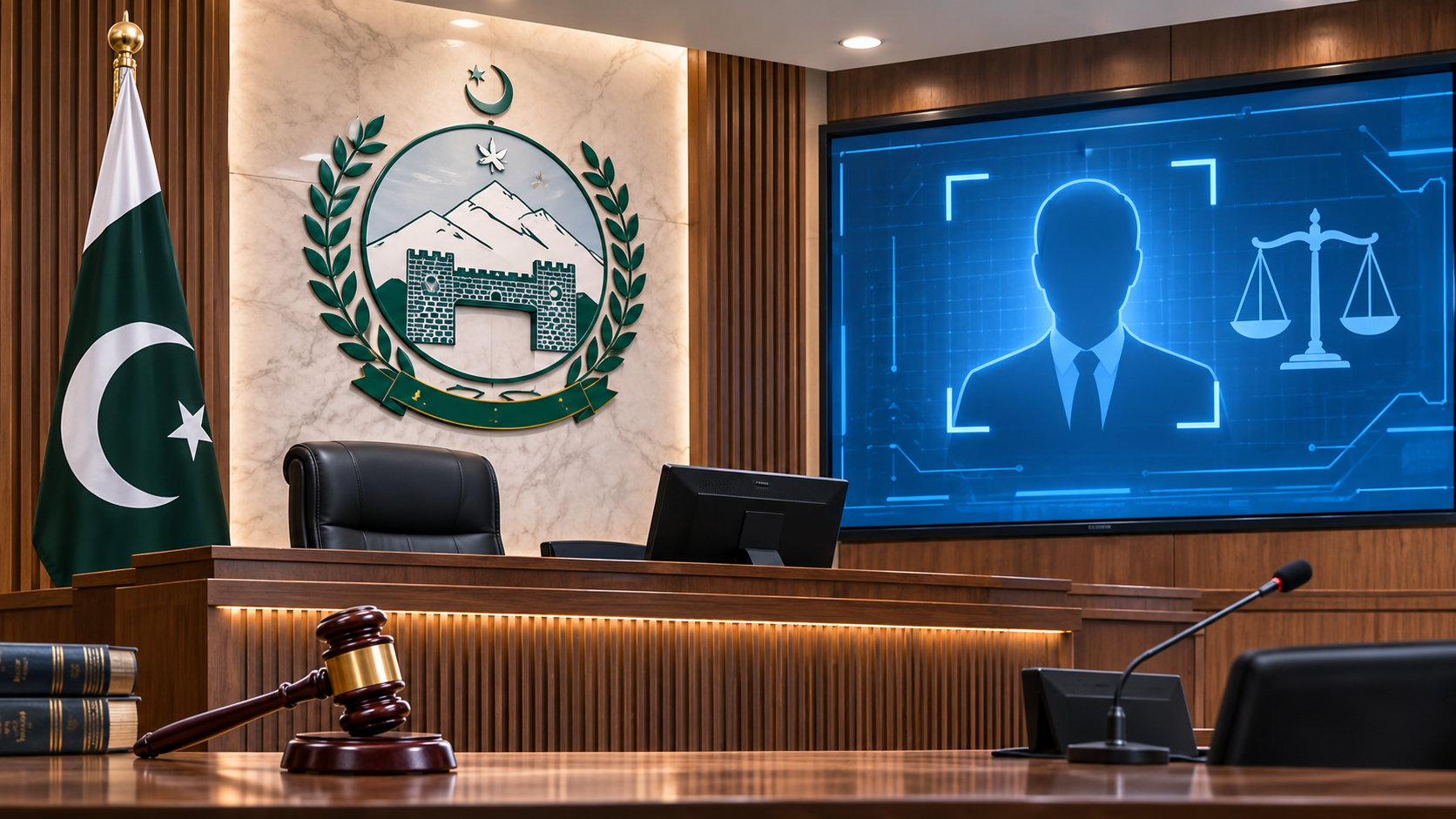
Now that Sohail Afridi’s government is gone, the new administration headed by Governor’s rule in Khyber Pakhtunkhwa province has taken a series of measures and plans to introduce faceless anti-terrorism courts to strengthen the judicial system under the National Action Plan, which was aimed at defeating militancy.
The rationale behind faceless courts is straightforward: terrorism prosecutions cannot succeed through arrests and security operations alone. They require witnesses willing to testify, prosecutors able to present evidence and judges who can deliver verdicts without fear of retaliation.
According to legal experts, threats against judges, lawyers, investigators, and witnesses often affect terrorism cases, as at times witnesses withdraw their statements or change their testimony under pressure from militants, while judges also face intimidation.
As a result, suspects have sometimes been acquitted due to a so-called lack of evidence.
In an effort aimed at addressing this problem, the authorities in Khyber Pakhtunkhwa are making efforts to set up faceless courts, which are sometimes also called anonymous courts. In recent decades, similar judicial systems have been used in countries facing organized-crime networks and militant violence. Italy, for example, faced extraordinary pressure from the Sicilian Mafia, particularly Cosa Nostra.
Colombia also used faceless courts during the 1980s and 1990s, when notorious drug cartels launched campaigns of violence against the country’s institutions, including judges, particularly during disputes over extradition to the United States. Turkey has also employed special judicial arrangements in cases involving terrorism and organized crime.
There is no doubt that a terrorism prosecution does not merely depend on an arrest. To ensure speedy justice, government prosecutors, apart from documentary evidence, also rely heavily on testimony, and even if everything is there, you need a judge who can hear the case without any fear.
It becomes especially necessary when it comes to Khyber Pakhtunkhwa, where in the first nine months of 2026, at least 255 soldiers, 302 police officers and 304 civilians were martyred, though militant attacks have been continuing and Pakistan has lost more than 90,000 lives and suffered economic losses exceeding $150 billion in its struggle against terrorism since the 9/11 attacks in the United States, when Pakistan became an ally of the United States in the war on terror.
It is pertinent to note that the idea of “faceless courts” is not new, as the idea was first conceived and presented during the tenure of the PML-N in 2013, a year that was marked by escalating terrorism incidents in Pakistan.
Can such courts work in Pakistan and why are they necessary?
One of the hurdles in the way of speedy justice is the reluctance on the part of witnesses and prosecutors handling cases against notorious criminals and members of outlawed militant groups, including the TTP and the Baloch Liberation Army or BLA, etc. Once, so-called human rights defender Maharang Baloch, who is in fact a BLA activist, was seen openly taunting a judge who was hearing a case against her. The Balochistan government had to conduct the trial of Maharang Baloch inside a jail for security reasons, but the judge who later announced the verdict against her has constantly been threatened, and several judges have been either harassed, attacked or abducted in Balochistan only because they handled cases against the BLA. So, no state can allow terrorists such as members of the BLA, the TTP and other groups to exercise a veto over the administration of justice by threatening judges.
In a country where militants openly issue threats against judges, witnesses and prosecutors and, more importantly, against police officers investigating their cases, the necessity of faceless anti-terrorism courts also becomes important, regardless of the arguments and criticism regarding the fairness of the trial and functioning of the justice system.
Pakistan’s experience with terrorism is enough to argue in support of these courts, as judges, prosecutors, investigators, and witnesses involved in sensitive terrorism-related cases have faced extraordinary security threats from the TTP, BLA and other groups, which now have deep-rooted connections with criminals. This week, 10 police officers were martyred in Kohat when the officers were returning after conducting raids against criminals involved in illegal gold mining in areas near Kohat. The attack was yet another example of collusion between militants and criminals. In such circumstances, protecting judicial officers is not simply a matter of personal security. It is a matter of safeguarding the independence and functioning of the justice system itself.
Ultimately, faceless courts cannot substitute for political consensus, effective policing, credible investigations or judicial reform. Nor can they succeed without public confidence in the fairness of the legal system.
Khyber Pakhtunkhwa needs a criminal justice system in which judges can decide cases, witnesses can testify and prosecutors can do their jobs without looking over their shoulders. If properly designed, subject to constitutional safeguards and independently supervised, faceless courts could help close one of the most dangerous gaps in Pakistan’s fight against terrorism. The challenge is to protect justice without making justice itself faceless.