


Nepal Flood Rescue Efforts: Hope Amidst Tragedy as 4,200 Remain Missing
POLICY WIRE — Kathmandu, Nepal — Five days following the catastrophic collapse of a rocky mountainside and its supporting glacier near Nepal’s border with Tibet, rescue teams continue their...

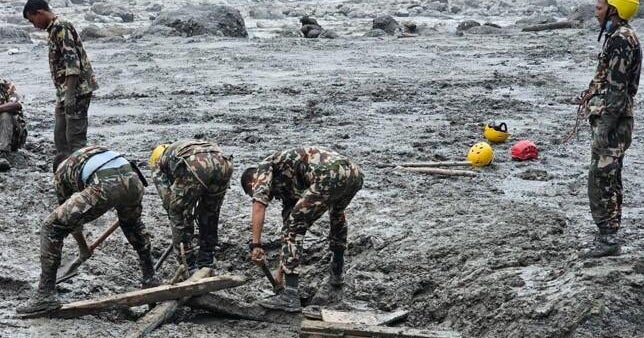
POLICY WIRE — Kathmandu, Nepal — Five days following the catastrophic collapse of a rocky mountainside and its supporting glacier near Nepal’s border with Tibet, rescue teams continue their relentless search for survivors amidst the devastation caused by flash floods, mud, and debris.
A glimmer of hope emerged over the weekend when a 6-year-old girl was miraculously rescued from the mud-covered wreckage, raising hopes that more of the 4,200 individuals still unaccounted for might be found alive.
Nepal’s national disaster agency reported on Monday that the confirmed death toll stands at 903, with fears that the number will rise as recovery operations persist in the flood-ravaged areas.
The situation remains perilous, as the sacred Trishuli River surged again on Monday due to heavy monsoon rains, prompting search and rescue teams to accelerate their efforts to locate any survivors trapped in the ruins.
Samarth Srivastav is among the thousands anxiously awaiting news of their loved ones buried under layers of thick mud and rubble in the Himalayan valleys. His father, Vivek, was stationed at the Nepal-Tibet border when the disaster struck.
In their last conversation, Vivek humorously remarked about the steepness of the river valley walls, unaware of the imminent danger. Hours later, a torrent of glacial ice, water, and mud obliterated Tibet’s immigration checkpoint on the border, and Vivek has not been heard from since.
Samarth recounted the escalating anxiety within his family as the number of missing persons grew and the severity of the situation became apparent through social media videos of the disaster.
📄 POLICY WIRE WHITEPAPER PUBLISHED: PAKISTAN’S NATIONAL SECURITY POLICY PRIORITIES
Despite the uncertainty, Samarth clings to the hope that his father might still be safe, though the lack of information is deeply unsettling.
The floodwaters, laden with debris, reached as far as 150 miles away into neighboring India. At Nepal’s largest hospital in Kathmandu, walls are adorned with posters of recovered bodies, while another nearby wall is gradually filling with images of the missing, serving as a haunting reminder of the ongoing tragedy.
Desperate family members scour these walls, seeking any information about their loved ones, despite the disturbing nature of the images.
In Georgia, Samarth attempts to maintain composure amidst the lack of official information from Nepal or the U.S. government, resorting to prayer in the face of uncertainty.
Reporting by Policy-Wire (PW)