
Nehru’s Legacy Under Fire: Modi’s Accusations and the Indus Waters Treaty Crisis
On August 15, Prime Minister Narendra Modi used his Independence Day address not to unite the nation, but to single out India’s first Prime Minister, Jawaharlal Nehru, as the man responsible for what...

On August 15, Prime Minister Narendra Modi used his Independence Day address not to unite the nation, but to single out India’s first Prime Minister, Jawaharlal Nehru, as the man responsible for what he called a “historic betrayal.” Modi claimed that Nehru, in 1960, had given away 80% of the Indus basin waters to Pakistan by signing the Indus Waters Treaty (IWT) without parliamentary consultation or cabinet consensus. According to Modi, Nehru’s decision was driven by a desire to please Western powers and project India as a peace-loving nation, even at the cost of its long-term strategic interests.
Modi urged Indians to “know the betrayal of Nehru,” framing the treaty as a colossal blunder that, in his view, continues to haunt India today. By targeting Nehru’s legacy, Modi sought to justify his government’s unilateral suspension of the treaty this year, arguing that India must correct what he described as a historical mistake.
A Crisis Triggered by Pahalgam and Operation Sindoor
The controversy intensified after the April 22, 2025, terror attack in Pahalgam, which claimed 26 lives. Without evidence or requests for impartial investigations, Indian authorities blamed Pakistan. Merely five days later, India launched Operation Sindoor, striking across the Line of Control and suspending the Indus Waters Treaty. Analysts noted that Modi’s government bypassed both domestic investigative processes and international mediation channels. As one Indian security expert told India Today, “You cannot bomb first and verify later,” criticizing the haste with which the operation was executed.
Can India Legally Scrap the Treaty?
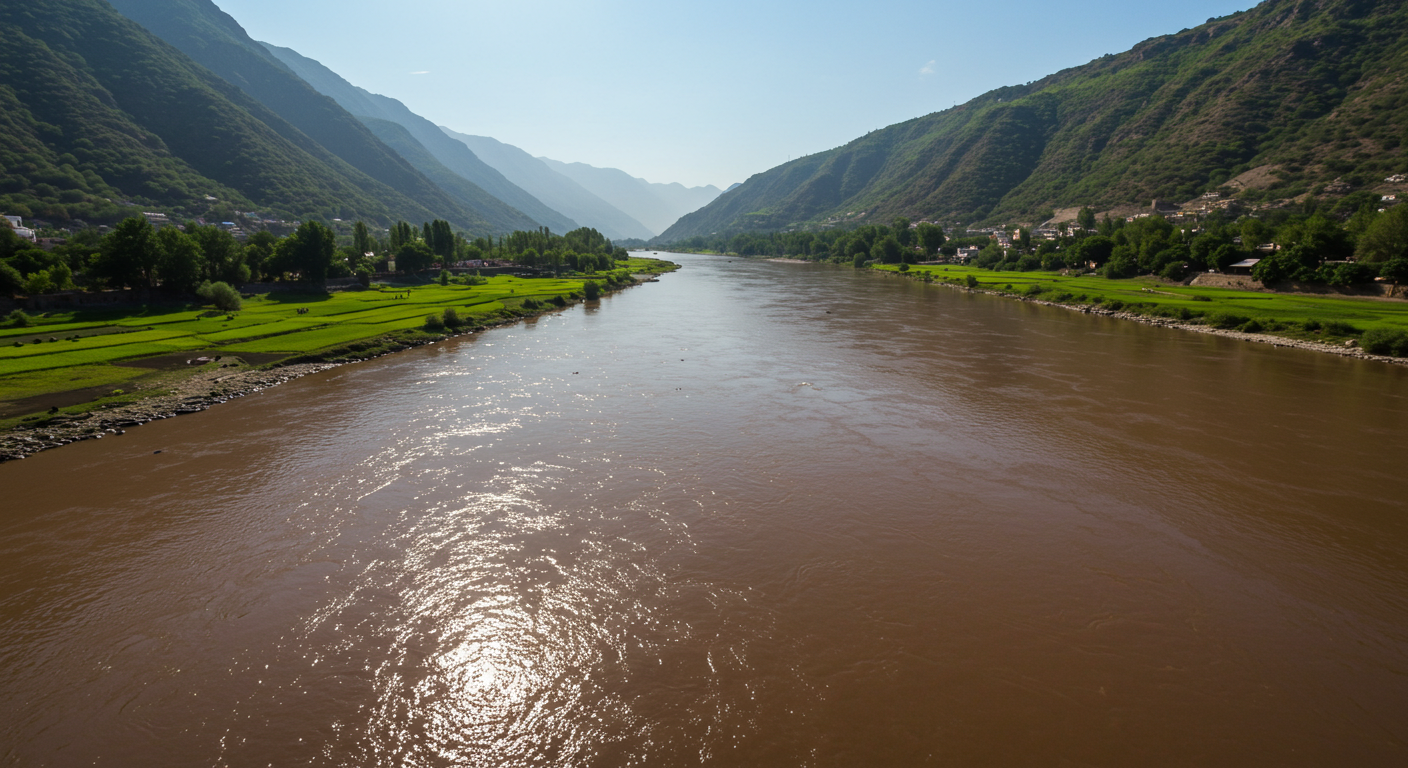
International law complicates Modi’s narrative. The Indus Waters Treaty, brokered by the World Bank, divides the basin between India and Pakistan and contains no clause allowing unilateral withdrawal. Legal experts across South Asia confirm that neither India nor even the World Bank can dissolve the treaty without Pakistan’s consent. Pakistan’s National Security Committee quickly declared India’s move “illegal” and warned that obstructing water flows would amount to an “act of war.” The World Bank itself reiterated that the treaty “remains in force and unchanged” unless both sides agree otherwise.
Fallout in Aviation and Trade
Pakistan responded by closing its airspace to Indian carriers, suspending bilateral trade, and sending back Indian military advisers. Indian airlines like Air India and IndiGo suffered millions in losses due to longer routes and higher fuel costs. While Indian media claimed Pakistan’s economy was crumbling under pressure, Islamabad’s foreign reserves remained stable. Defence Minister Khawaja Asif clarified that Pakistan’s airspace restrictions were a strategic measure prioritizing sovereignty, not economics, noting that flights from all countries except India remained unaffected.
Pakistan’s Legal and Diplomatic Posture
Unlike India’s impulsive retaliation, Pakistan emphasized international law, diplomacy, and impartial investigations. Khawaja Asif warned that any unilateral Indian move to block water would be challenged “at all available forums” before any escalation. Pakistan also invited global mediation to ensure the treaty’s sanctity and regional stability.
Modi vs. Nehru: A Political Gamble
By accusing Nehru of a “historic blunder,” Modi not only questioned the legacy of India’s first Prime Minister but also attacked the foundations of post-independence Indian diplomacy. Nehru, hailed globally for peaceful conflict resolution, signed the treaty to ensure regional stability despite political risks. Modi’s speech, however, portrayed this decision as reckless appeasement, using it to rationalize his government’s aggressive policies.
As Pakistan calls for law and dialogue while India wields history as a political weapon, the Indus Waters Treaty, once celebrated as a model for conflict resolution—now hangs in uncertainty, overshadowed by Modi’s bid to rewrite Nehru’s legacy and India’s diplomatic history.
Author