


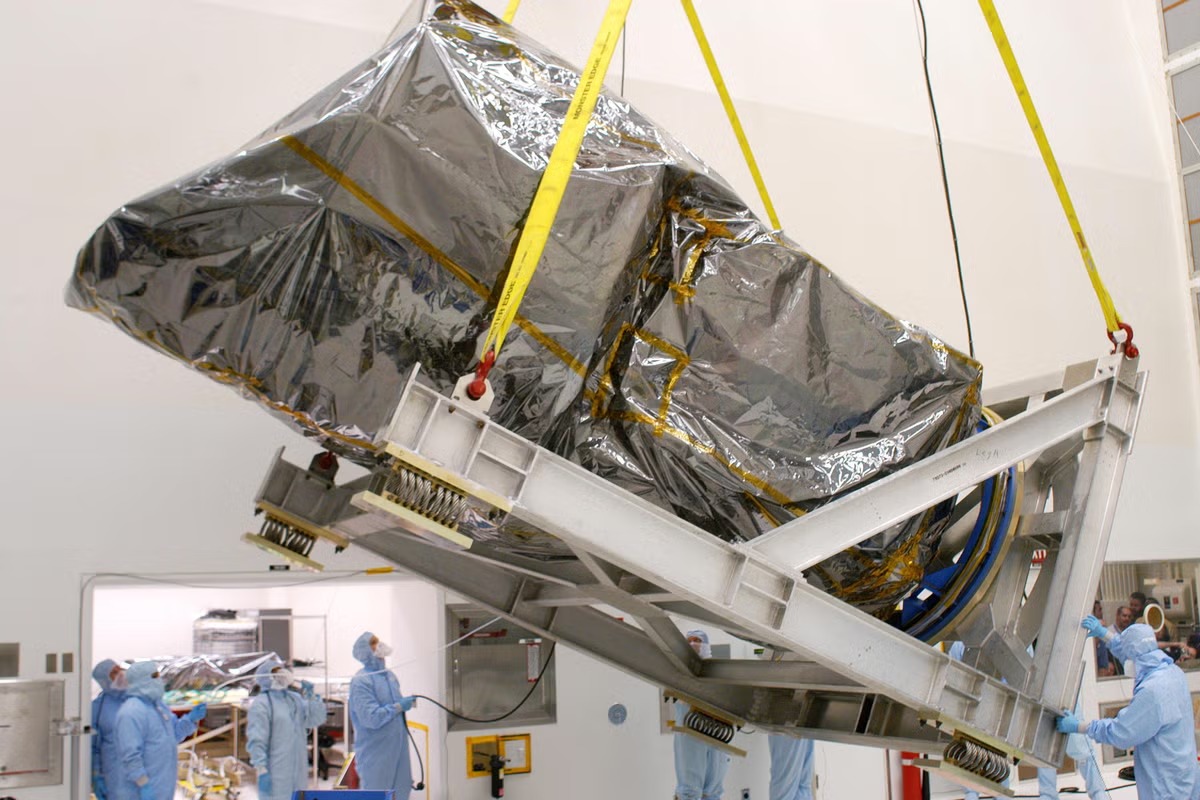
NASA’s Neil Gehrels Swift Observatory Set for Reentry After Failed Rescue Mission
The 1.5-ton Neil Gehrels Swift Observatory is expected to crash to Earth this week after 22 years of tracking powerful cosmic explosions.

POLICY WIRE — Washington, USA — A veteran NASA telescope that has spent decades studying space is scheduled to return to Earth’s surface within the coming days.
The U.S. Space Force anticipates the 1.5-ton Neil Gehrels Swift Observatory will likely crash on or around Friday, following an unsuccessful attempt to salvage the hardware.
Brad Cenko, mission’s chief scientist at NASA, noted that while the majority of the craft will incinerate during atmospheric entry, denser components and specific mirrored sections could potentially survive the heat of re-entry.
The potential debris path includes regions across Africa, Australia, India, Southeast Asia, and both Central and South America. However, Cenko informed the Associated Press that any surviving fragments are most likely to land in the open ocean.
Since its launch on November 20, 2004, the Swift observatory has operated in orbit for 22 years.
The primary mission of the telescope involved the detection of supernovas and gamma-ray bursts, which represent the most violent explosions in the known universe.
John Nousek, an astronomer at Pennsylvania State University who worked on the project, told the AP that the end of the mission was inevitable. He remarked that objects in low-Earth orbit eventually face a catastrophic conclusion.
Space Force officials are currently monitoring the trajectory of the falling satellite as it descends toward the planet.
Reports from Space.com indicate that the observatory’s orbit decayed faster than expected because of high levels of solar activity in recent years.
Although NASA attempted a rescue operation last year to extend the mission’s life, the telescope continued its work until its altitude dropped to 171 miles above the Earth.
Throughout its two-decade career, the Swift instrument identified more than 2,000 gamma-ray bursts and approximately 1,400 exploding stars.
While the exact moment and location of the impact remain uncertain, experts maintain that the reentry event will occur around Friday.
Reporting by Policy-Wire (PW)