


NASA Launches Daring Robotic Mission to Resurrect Fading Swift Telescope
POLICY WIRE — Cape Canaveral, USA — In a testament to the increasing ingenuity and financial commitment demanded by orbital upkeep, NASA has initiated a high-st...

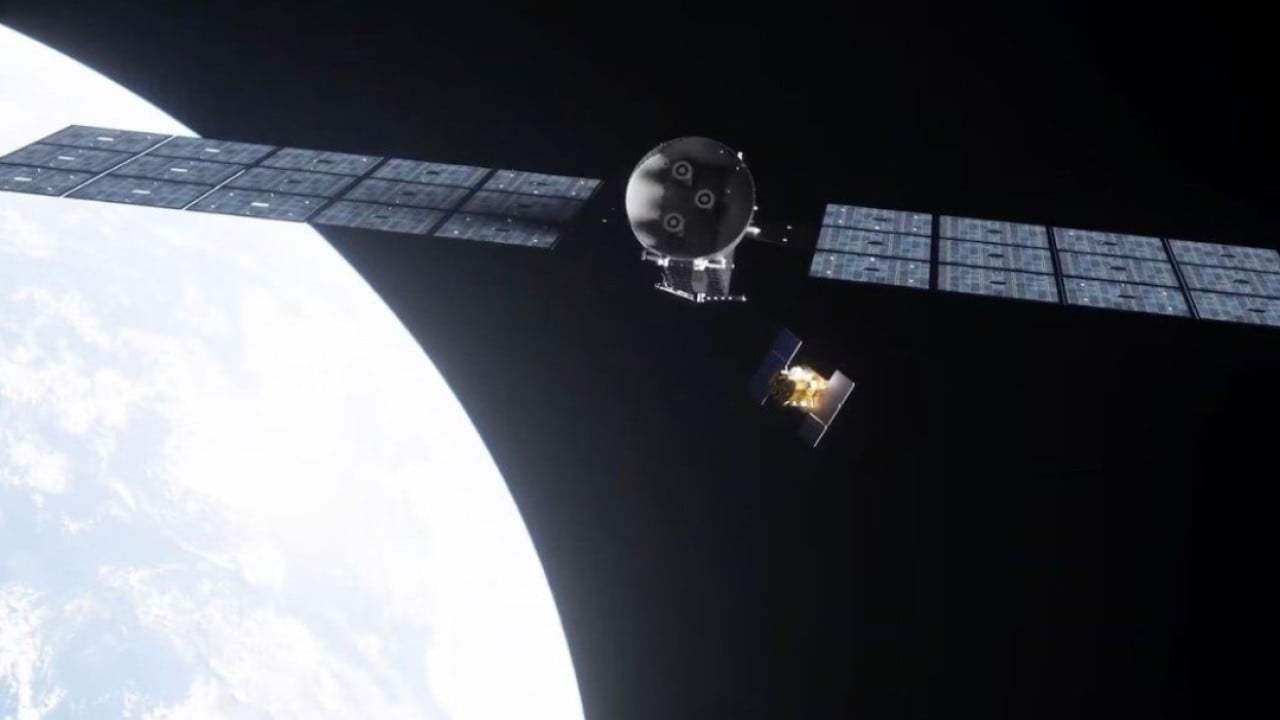
POLICY WIRE — Cape Canaveral, USA — In a testament to the increasing ingenuity and financial commitment demanded by orbital upkeep, NASA has initiated a high-stakes, US$30 million operation to save a critical, ageing telescope from an uncontrolled descent back to Earth. This daring salvage mission hinges on a robotic spacecraft, purpose-built for the task, which began its journey this week.
The target of this ambitious endeavour is the Swift Observatory, a scientific workhorse that has diligently scouted the cosmos for some of the universe’s most energetic and ephemeral events. To extend its operational life, the mission objective is clear: boost Swift into a higher, more stable orbit, thus staving off the atmospheric drag that threatens to prematurely end its mission.
Behind the audacious plan is Katalyst Space Technologies, a start-up that NASA has contracted for this intricate space tow. Katalyst has engineered a specialised, three-armed robotic craft designed to intercept Swift. The launch of this robotic saviour is reported to originate from an atoll, adding a logistical layer to an already complex undertaking.
The Swift Observatory, launched in 2004, has been a cornerstone of multi-wavelength astrophysics, particularly renowned for its rapid response to gamma-ray bursts (GRBs) – the most powerful explosions in the universe. Its instruments, including X-ray and ultraviolet/optical telescopes, provide crucial insights into these phenomena and their aftermath. (Reporting based on wire reports)
For any spacecraft in low Earth orbit, the slow but persistent pull of residual atmosphere inevitably leads to orbital decay. Over time, drag causes the satellite to lose altitude, and without periodic re-boosts, it will eventually plunge back to Earth. While smaller objects often burn up harmlessly, larger ones can pose a re-entry risk, underscoring the imperative for controlled de-orbiting or, in this case, orbital maintenance.
This mission exemplifies a burgeoning trend in space operations: in-orbit servicing. Historically, a satellite’s lifespan was largely determined by its fuel reserves or the degradation of its components, with little recourse for repair or repositioning once launched. However, advancements in robotics — and precise navigation are making such interventions increasingly feasible. The ability to repair, refuel, or even reposition satellites could dramatically alter the economics of space, reducing the need for costly replacements and extending the utility of valuable assets.
The partnership with Katalyst Space Technologies also highlights the growing reliance on commercial entities for specialised space services. Private companies are not just launching satellites but are now actively participating in the complex logistics of managing an increasingly crowded orbital environment. This collaborative model allows NASA and other agencies to tap into agile innovation, albeit with the inherent risks associated with frontier technology and novel operational paradigms.
Successfully extending Swift’s mission means preserving a source of critical data that helps astronomers unravel mysteries ranging from the evolution of stars and galaxies to the fundamental physics of extreme environments. Losing such an asset prematurely would represent a significant setback, making the US$30 million investment a pragmatic choice against the cost of developing and launching an entirely new, comparably capable observatory.
What This Means
This mission, if successful, carries significant implications for the future of space operations. It underscores a strategic pivot towards resource optimisation — and sustainability in orbit. As the cost of launching continues to be substantial, and the threat of space debris grows, prolonging the life of existing, valuable assets through robotic intervention could become a standard operating procedure.
It also represents a significant validation for the commercial space sector’s capability in delivering highly technical and precision-demanding services beyond just launch and satellite manufacturing. This trend could accelerate investment in robotics, autonomous systems, and advanced rendezvous and proximity operations, transforming how orbital infrastructure is managed. The question then becomes how widely applicable such costly interventions will be, and whether the economic calculus will always favour salvage over replacement for every ageing satellite.