

Moscow’s Pump Price Jitters: Regulator Demands Answers on 19% Fuel Hike
POLICY WIRE — Moscow, Russia — For anyone navigating the bustling, often confounding thoroughfares of Moscow, the price at the pump usually feels like a bedrock certainty—controlled, predictable,...

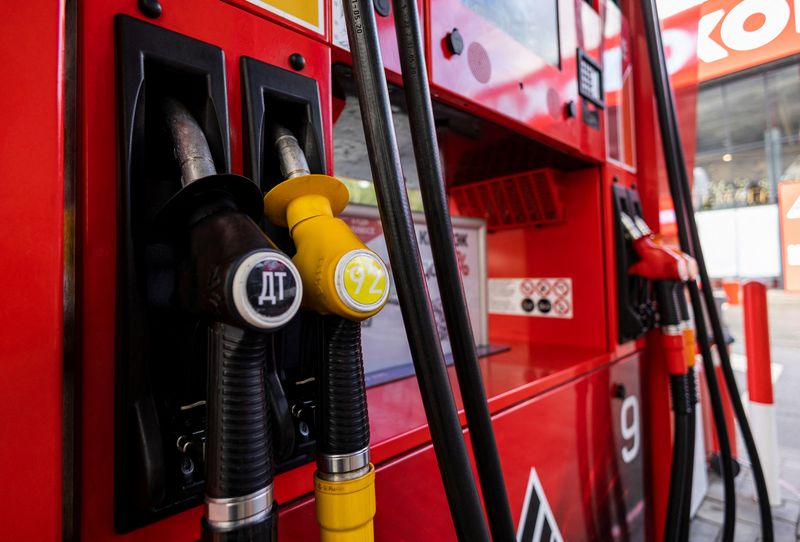
POLICY WIRE — Moscow, Russia — For anyone navigating the bustling, often confounding thoroughfares of Moscow, the price at the pump usually feels like a bedrock certainty—controlled, predictable, almost immutable. But last week, that veneer cracked, perhaps just a little. Not with a bang, but with an eye-watering hike in petrol costs at one significant retailer, prompting the kind of swift, public rebuke from federal authorities that typically signals discomfort higher up the chain.
It wasn’t a slow creep, mind you; we’re talking about an instantaneous jolt. One particular petrol station chain within the capital’s orbit evidently decided that a roughly one-fifth price increase was perfectly reasonable. That’s a “hikes prices by 19%” surge for the uninitiated, enough to make a casual driver choke on their morning coffee. The Federal Anti-monopoly Service (FAS)—Moscow’s designated economic enforcer—didn’t wait around, swiftly stepping in, asking for explanations, maybe even a solemn confession. But you know, this isn’t just about a single station or a few rubles more for a tank of fuel. Not really. It’s about optics, and about control, in a country where economic stability is as much a political statement as a financial reality. (Awaiting official quote)
The incident, minor as it might seem to a detached observer, pulls back the curtain on Russia’s tightly managed economy. It’s a system where market forces often take a backseat to state directive, particularly when consumer sentiment—or more importantly, popular discontent—could bubble to the surface. A 19% jump, however localized, sends a ripple of uncertainty through the daily lives of citizens. And for the Kremlin, an angry populace filling their cars isn’t just an inconvenience; it’s a potential vulnerability. It means someone, somewhere, made a decision that wasn’t approved by the grand narrative of stable pricing. What’s even more fascinating is the public nature of the FAS’s inquiry—a clear message that someone’s out of line.
Because, you see, the Russian state has consistently portrayed an image of economic resilience, especially given the continuous, multi-front barrage of sanctions. But things like this—unexplained, significant price jumps—poke holes in that narrative. The common Muscovite isn’t analyzing GDP figures; they’re feeling it directly in their wallets. That kind of real-world impact cuts through official pronouncements far more effectively than any abstract economic indicator. One might think a country so rich in hydrocarbons wouldn’t have to worry about the domestic price of fuel. But then, it’s never been that simple, has it? This isn’t merely a blip on a pricing chart; it’s a signal about the underlying tension between global energy markets and domestic political stability.
The careful choreography of energy pricing isn’t unique to Russia. Consider Pakistan, for instance, where petrol price adjustments are often subject to intense public debate and government intervention. Like Moscow, Islamabad walks a tightrope, trying to balance international crude prices, taxation, and subsidies against the very real financial strain on its population. These decisions are not merely economic; they’re political firestorms waiting to ignite. While Pakistan deals with its own complex web of financial pressures, often compounded by IMF mandates, the principle remains: unchecked price volatility can unravel social contracts faster than most anything else. You might think about the broader implications for global oil markets too, particularly how geopolitical flashpoints consistently disrupt predictability.
And then there’s the broader context. Russia’s economy, while ostensibly resilient, is still deeply intertwined with its primary exports—oil and gas. Fluctuations in global energy prices directly impact federal revenues, creating an imperative to extract maximum value from those resources. But if those global values lead to internal domestic price shocks, you’ve got a problem. It’s a tricky line to toe, selling expensive oil abroad for state coffers while simultaneously keeping pump prices affordable enough to quell domestic grumbling. Data from the Russian statistical agency Rosstat, though often viewed with a critical eye by Western analysts, indicated a nationwide consumer inflation rate of 7.4% year-on-year in January—a figure that undoubtedly makes a sudden 19% localized fuel increase sting even more.
But the irony, oh the delicious irony, isn’t lost on observers. A regulator, a state body designed to ensure fair competition and protect consumers, now finds itself demanding an explanation for price hikes from one of its own energy sector players. It’s almost theatrical. It’s less about a genuine quest for understanding — and more about reasserting the state’s omnipresent hand. Someone dared to deviate from the script, — and now they’ve got to face the music. It’s a very Soviet approach to a market economy—the invisible hand is definitely wearing a big, imposing glove.
What This Means
This localized fuel price increase and the subsequent regulatory crackdown signals a continued, almost desperate, need for the Kremlin to maintain an image of economic control and stability. Politically, even minor consumer price shocks can erode confidence in the government’s ability to manage daily life, something critical during a prolonged conflict and heightened international isolation. This isn’t just about profiteering; it’s about the state asserting its authority over key economic sectors. Any perceived weakness or inability to control basic living costs directly contradicts the narrative of a robust, sanctions-proof economy. It suggests that even in a highly controlled environment, inflationary pressures and individual actors can—and do—challenge central authority, forcing public shows of force.
Economically, it underscores the inherent contradictions of a managed market that operates within global parameters. Russia wants the benefit of high international oil prices but struggles to insulate its citizens from the domestic reflection of those prices or from the actions of profit-motivated enterprises. It’s a balancing act that’s becoming increasingly precarious, particularly as global commodity markets remain volatile. For foreign entities—or even domestic ones—eyeing investment, it’s a stark reminder that regulatory certainty is often an illusion, subject to political whim and the demands of social cohesion. This isn’t just market intervention; it’s a profound display of state power attempting to calm the restless waves of everyday economic reality. This delicate tightrope walking isn’t confined to energy—you see it reflected in diplomatic maneuvers across Europe as well.