


Moscow’s Achilles’ Heel: Drone Strikes Jolt Fuel Markets as Capital Tastes Conflict’s Edge
POLICY WIRE — Moscow, Russia — You might think the sprawling, seemingly impenetrable heart of a global power would be immune to the ground-level anxieties that grip a nation at war. But, as residents...

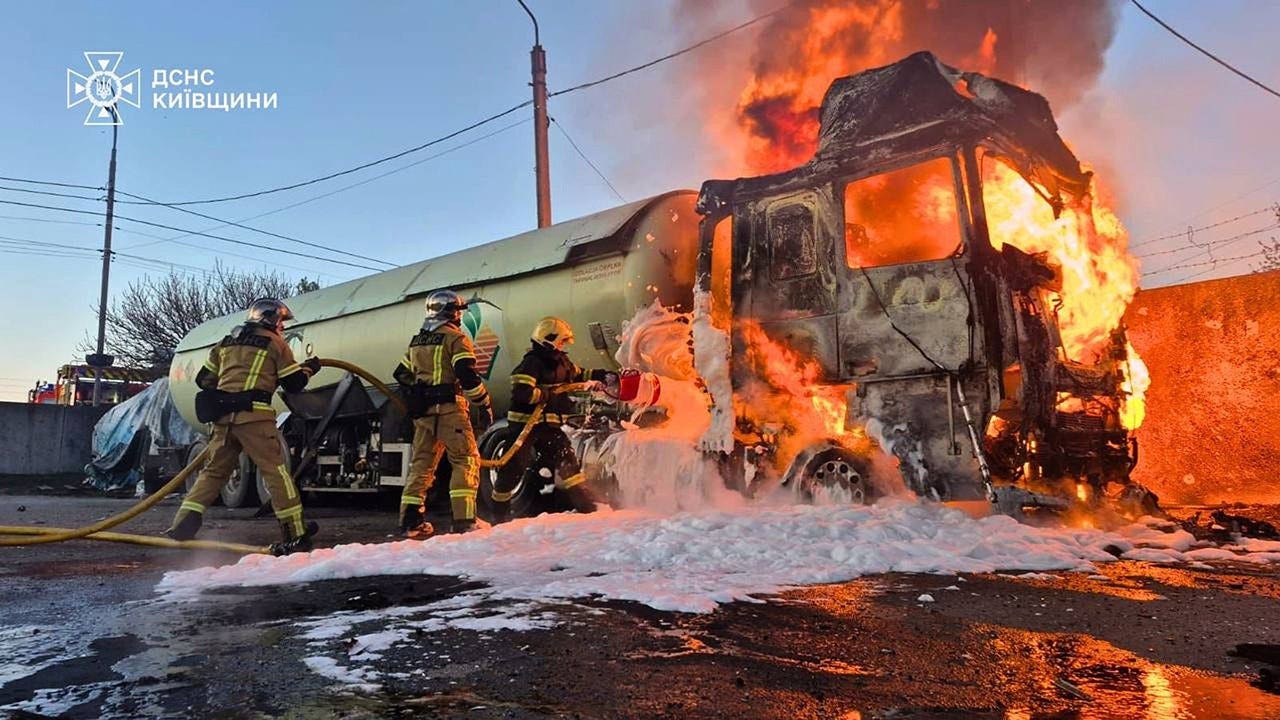
POLICY WIRE — Moscow, Russia — You might think the sprawling, seemingly impenetrable heart of a global power would be immune to the ground-level anxieties that grip a nation at war. But, as residents of Russia’s capital recently discovered, even grand, historic cities—bastions of a top-down state—can feel the heat of distant conflicts, quite literally. A recent drone attack on a major oil refinery on the outskirts of Moscow ripped through that illusion, not only with fire and smoke but also with the unsettling implication that the conflict has come home.
This wasn’t just a random act; it was a carefully aimed blow at the arteries supplying fuel to Moscow, threatening its very ability to function smoothly. The facility in question, an instrumental part of the regional energy supply chain, suffered hits that immediately set alarm bells ringing in the city’s boardrooms and at its gas pumps. Russian state media confirmed the incident, yet details remained frustratingly scant—as is often the way with these things. (Awaiting official quote)
Ukrainian authorities, whilst rarely claiming direct ownership of every drone sent packing over the border, have consistently implied that such actions are an appropriate response to the larger aggression. The targeting of infrastructure, like refineries, has become a grim, tactical play in this grinding conflict. But it also serves a psychological function, reminding ordinary Russians that the cost of their government’s actions isn’t always paid solely by others, thousands of miles away.
It’s not just about the booms — and the blazes, is it? It’s about what happens next. Consider this: according to a report from Reuters in May, Russian fuel prices have experienced a volatile year, with diesel surging as much as 19% in parts of the country due to maintenance, attacks, and export restrictions. This latest incident could — it really could — exacerbate an already strained market, potentially forcing Moscow residents to contend with pump price jitters unseen since perhaps a prior regulatory inquiry into the capital’s gas hikes. When fuel becomes a weapon, even indirectly, every driver feels it.
And let’s be frank, these sorts of attacks ripple outward, beyond immediate geographical borders. The international oil market is a skittish beast, you see, quick to react to any tremor in a major producing nation, however localized. Because Russia’s oil and gas exports are inextricably linked to global energy stability—or instability—a strike on a Moscow refinery, even if relatively minor in global terms, feeds into a narrative of escalating risk. It’s the butterfly effect, but with crude oil — and geopolitics. For nations like Pakistan, which relies heavily on imported oil to fuel its developing economy, this global instability translates directly into domestic price pressures, exacerbating inflation and impacting household budgets. Any disruption in Russian supply, real or perceived, creates ripple effects through complex trading networks that can make even distant economies feel the pinch, impacting trade balances and foreign exchange reserves.
Because frankly, Moscow hasn’t experienced the grinding daily reality of conflict in the same way some other areas have. But these drone sorties? They pierce that comfortable bubble. It’s a psychological blow, showing the world—and crucially, the Kremlin’s own populace—that no city is entirely insulated. For a leadership that prizes stability and control above almost all else, such brazen incursions must rankle, demanding a response or, at least, a heightened defense posture.
But what does it really mean for the larger game? Well, the calculus changes, doesn’t it? As Ukraine hones its long-range strike capabilities, the logistical vulnerabilities within Russia itself come starkly into focus. We’re witnessing an evolution in asymmetric warfare, where smaller, nimbler forces leverage technology to challenge an adversary of vastly greater conventional might. And we’ve seen, time — and again, that these events don’t just happen in a vacuum. Every strike, every reaction, molds the diplomatic landscape. It’s not just a physical target that’s hit; it’s an entire system of assumptions that gets rattled.
This incident also forces a re-evaluation of Western strategies. While officially distanced from such attacks, Western support for Ukraine indirectly facilitates their capabilities. This delicate balance—providing aid without directly provoking a wider conflict—becomes incredibly difficult when the lines of engagement blur, when the battlefield moves closer to civilian centers of power. The ramifications for diplomatic engagements, like potential peace deals, are immense, affecting everyone from Riyadh to Islamabad, as global power brokers seek to temper, or at least understand, the deepening complexities of this conflict. For example, recent moves toward dialogue between the US and Iran, a development Pakistan played a significant role in facilitating, show just how critical de-escalation across multiple axes has become, even if unrelated directly to the immediate conflict. (More here on that crucial progress.)
What This Means
This latest incident underscores a profound shift in the conflict’s geography — and psychology. Politically, it presents a challenge to the Kremlin’s narrative of unchallenged control within its own borders, forcing officials to balance claims of invulnerability with the stark reality of air defense gaps. It puts pressure on domestic messaging and could, in the long run, subtly erode public complacency about the war’s distant nature.
Economically, targeting essential infrastructure like oil refineries isn’t just about explosions; it’s about sowing uncertainty. Futures markets respond to such incidents, often pushing up crude prices as risk premiums increase. For an economy heavily reliant on hydrocarbon exports, any perceived instability in its energy infrastructure sends worrying signals globally. Locally, it can create supply bottlenecks, driving up consumer prices and potentially impacting everything from transportation costs to manufacturing. You see, an immediate, localized spike in gasoline prices—even in Moscow—has a cascading effect that extends far beyond individual car owners. It ripples through the supply chains of consumer goods, inflates business operational costs, and ultimately pinches the wallets of everyday citizens. It’s an inconvenient truth that governments can’t simply wish away, especially not in a sprawling metropolis dependent on its constant hum of commerce and movement.
From a broader geopolitical perspective, these drone attacks showcase an ongoing tactical innovation by Ukraine. It’s an asymmetric advantage in action. They don’t have to match Russia tank for tank; they simply need to consistently remind Moscow of the war’s proximity and cost. And it certainly affects how other nations—from South Asia to the Persian Gulf—view Russia’s long-term stability and military capabilities. A seemingly strong nation suddenly appearing vulnerable at its core makes everyone reassess. That re-evaluation of perceived strength? It’s not an overnight thing. It’s a slow burn, impacting everything from foreign policy alignment to defense spending choices in capitals far and wide.
The message is simple, really: War’s brutal tendrils extend further than anyone expects, even to a capital once thought impregnable. (It’s not unlike the strategic considerations of airspace control in South Asia.)