


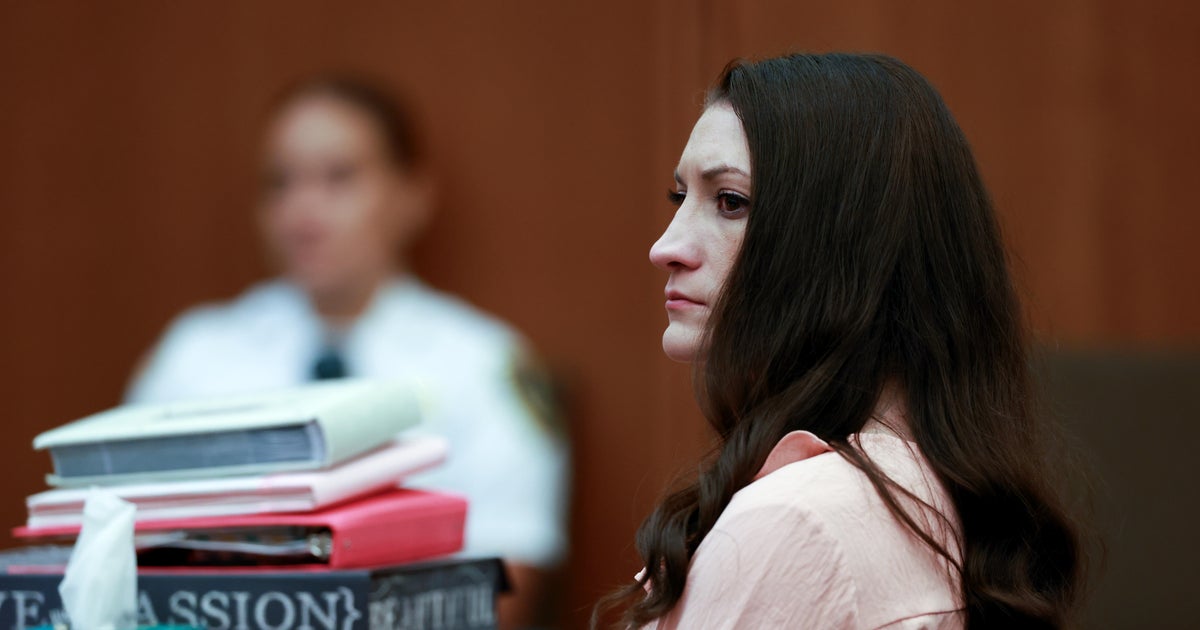
Mistrial Declared in Lindsay Clancy Child Murder Case: What Happens Now?
POLICY WIRE — Massachusetts, USA — A jury has failed to reach a unanimous verdict in the murder trial of Lindsay Clancy, leading Judge William Sullivan to declare a mistrial on Friday. The decision...

POLICY WIRE — Massachusetts, USA — A jury has failed to reach a unanimous verdict in the murder trial of Lindsay Clancy, leading Judge William Sullivan to declare a mistrial on Friday.
The decision came after seven days of deliberations regarding whether Clancy was criminally liable for the January 2023 killings of her three young children at her home.
The 12-person panel repeatedly informed the court they were deadlocked. A note from the foreperson revealed that a single juror remained a holdout despite multiple directives from Judge Sullivan to continue deliberating.
The legal stakes of the trial were stark: a verdict of not guilty by reason of insanity would have meant indefinite confinement in a mental health facility, while a conviction would have resulted in prison time.
The next steps now rest with Plymouth County District Attorney Timothy Cruz. He must determine if the state will seek a new trial for first-degree murder, pursue a lesser charge, negotiate a plea agreement, or drop the case entirely.
Defense attorney Kevin Reddington stated on Tuesday that while he is prepared to return to court if required, he believes his client is not emotionally ready for a second trial.
Reddington has previously voiced criticism over the first-degree murder charges, noting that such a charge mandates a jury trial. He suggested that a lesser charge could have allowed for a plea deal or a bench trial before a judge.
Legal expert Polisi noted that prosecutors often pursue retrials after hung juries, citing the 2024 Karen Read case—which ended in an acquittal after a second trial—as a precedent.
Polisi suggested that a second trial could see a refined prosecution strategy. This might include moving away from the argument that Clancy faked a suicide attempt and instead focusing on whether she could distinguish right from wrong while suffering from severe depression.
Another expert, Levinson, noted that a retrial is possible because jury compositions can vary wildly between trials, or the prosecution could choose to bring a more streamlined case or a plea bargain.
Jennifer Roman, a legal analyst for WBZ-TV, observed that it is human nature for both legal teams to analyze their performance and adjust their cross-examinations and strategies for a potential second round.
Polisi added that a retrial could benefit the prosecution by removing the element of surprise from the defense and allowing the state to correct previous missteps to build a stronger case.
The specific cause of the deadlock remains unknown due to the secrecy of jury deliberations. The jurors were tasked with choosing from five options: first-degree murder, second-degree murder, manslaughter, not guilty, or not guilty by reason of insanity.
The central conflict of the case focused on Clancy’s mental state. While both sides acknowledged her mental illness, the prosecution argued she planned the crimes and understood their wrongfulness, whereas the defense claimed she was suffering from postpartum psychosis and overmedication.
The jury’s decision followed weeks of emotional testimony from 85 witnesses and the review of more than 200 pieces of evidence.
The trial became a flashpoint for public debate, drawing protesters and supporters to the courthouse. Polisi suggested the jury’s inability to agree mirrors the deep divisions seen among the public.
Expert Niemi noted that jurors were required to synthesize conflicting medical diagnoses and evidence into a single, coherent narrative to reach a verdict.
Reporting by Policy-Wire (PW)