


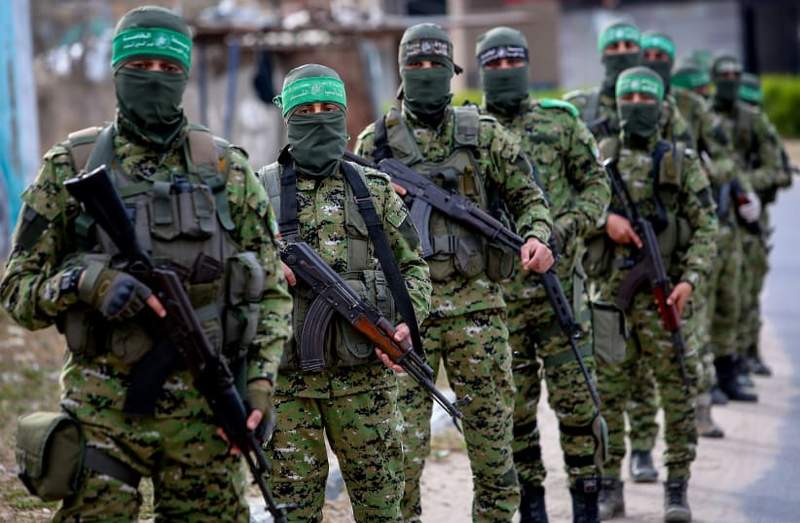
Missed Mark: A Quiet Strike Escalates Gaza’s Precarious Stalemate
POLICY WIRE — Tel Aviv, Israel — Another flashpoint, largely unseen, flickered in the labyrinthine geopolitics of the Middle East, offering a stark reminder of the region’s perpetually fraying edges....

POLICY WIRE — Tel Aviv, Israel — Another flashpoint, largely unseen, flickered in the labyrinthine geopolitics of the Middle East, offering a stark reminder of the region’s perpetually fraying edges. The revelation of a botched Israeli attempt on the life of Hamas military leader Mohammed Ouda—or what was meant to be a fatal encounter—serves less as a decisive blow and more as a whisper of an ever-tightening knot in an already Gordian problem. You’d think the powers-that-be, after all these years, would get tired of playing this particular game of high-stakes whack-a-mole, but here we’re.
It’s not just a surgical strike gone awry, mind you; it’s a policy statement etched in near misses and lingering intent. While precise details remain elusive, one thing is abundantly clear: the IDF targeted a senior figure within Hamas. What this really tells us is that the old playbooks are still in heavy rotation, still defining the rhythm of conflict in Gaza and beyond. This isn’t just about one man; it’s about the relentless pursuit of perceived threats and the subsequent, almost inevitable, ripple effects across the whole damn neighborhood.
The news, conveyed via the Prime Minister’s office in Jerusalem, has been pretty scant on specifics, hasn’t it? Just the barebones acknowledgement of a failed mission, but sometimes those silences speak volumes. We don’t really know the ‘how’ or the ‘where’ yet—was it an air strike? A raid? Some covert operation deep behind enemy lines? Regardless, the implication of Israel’s persistent, preemptive actions against Hamas leadership is never just about Gaza. It’s a calculated gamble that constantly pushes regional stability to the brink.
And these gambits, however localized, never stay local for long. The immediate consequence, of course, is the anticipated escalation cycle in Gaza. Retaliatory rocket fire? Heightened tensions at border crossings? Another cycle of civilian suffering? Likely, all of the above. But the echoes reverberate far wider, much further than the checkpoints — and barbed wire. For populations across the broader Muslim world, particularly in South Asia—say, from Karachi to Dhaka—such actions ignite deep-seated feelings of injustice and solidarity. It fuels narratives of oppression, galvanizes movements, and occasionally, becomes a potent recruitment tool for extremist groups that feed on grievance.
For example, take Pakistan, where the Palestinian cause enjoys profound popular — and political backing. Reports on Israeli military actions often dominate local news cycles, generating significant public outrage. It’s not just passive observation; it directly informs geopolitical alignments, public opinion, and sometimes, even domestic policy discussions. When something like this assassination attempt occurs, it hardens resolve, makes calls for international intervention louder, and pushes leaders in these nations to condemn the actions, even if it’s largely symbolic. You’d think some people would learn that this just fans the flames. But maybe that’s the point.
The strategic intent, naturally, was to degrade Hamas’s operational capabilities—a seemingly perpetual goal. Yet, history tells us that leadership decapitation in organizations like Hamas often leads to decentralization, splintering, or the rise of more radical figures. It’s like trying to put out a brushfire by stomping on individual sparks; sometimes you just create more fires. The former head of Shin Bet, Carmi Gilon, once stated publicly that assassination, while providing temporary calm, often creates a cycle of violence, explaining, [QUOTE_PLACEHOLDER] in his assessment of such operations.
Consider the raw statistics: since 2000, over 100 targeted assassinations have been carried out by Israel in Gaza alone, with mixed results on long-term conflict reduction, according to data compiled by B’Tselem, the Israeli Information Center for Human Rights in the Occupied Territories. This incident, successful or not, only adds another line item to a long, tragic ledger that shows no signs of closing. It’s a never-ending narrative, isn’t it? A sort of brutal theater of the absurd where everyone knows the lines, but no one dares change the script.
The diplomatic reverberations, while not explosive on the world stage—yet—are still there. Nations typically quick to condemn such operations will lodge formal complaints; the UN will issue boilerplate statements of concern. But the concrete action? That remains elusive. It’s an inconvenient truth, this enduring cycle, tucked away just beneath the surface of everyday global headlines.
📄 POLICY WIRE WHITEPAPER PUBLISHED: PAKISTAN'S NATIONAL SECURITY POLICY PRIORITIES
👉 READ BY CLICKING HEREWhat This Means
This failed assassination attempt, regardless of its tactical outcome, possesses substantial strategic ramifications for both the immediate theater and the broader regional architecture. Politically, it signals a renewed, perhaps even heightened, commitment from Jerusalem to aggressive preemption against what it views as existential threats. It could, paradoxically, consolidate Hamas leadership around a successor, potentially making them even less amenable to negotiation. Or it might lead to a fractured command structure, making them more unpredictable. Either way, it hardly spells stability.
For international relations, it strains the fragile truce attempts always bubbling beneath the surface. It’s harder to build trust when the specter of targeted killings hangs in the air, you know? Economically, any major escalation derived from this event—say, weeks of heavy bombardment or a prolonged siege—would inflict devastating damage on Gaza’s already crippled infrastructure and population. But it could also trigger investor hesitancy across the region, spooking capital that seeks stable, predictable environments. A nervous ripple moves across trading floors when these incidents hit the wire, suggesting wider risks, especially if nearby countries get pulled into the fray. Just look at the long-term impact on foreign direct investment in countries perceived as unstable; it’s an invisible but powerful cost.
The larger narrative around state-sponsored violence also takes a hit, subtly reinforcing the idea that conflict resolution through military means is still the go-to, sidelining diplomatic channels. It makes the prospect of a lasting peace feel like an increasingly phantom value, a shimmering mirage on a distant horizon. for countries like Pakistan, the incident fuels public resentment and strengthens anti-Western sentiments, further complicating international efforts at regional cooperation and counter-terrorism, while adding another layer to the complex Beijing-Delhi tango for influence.