


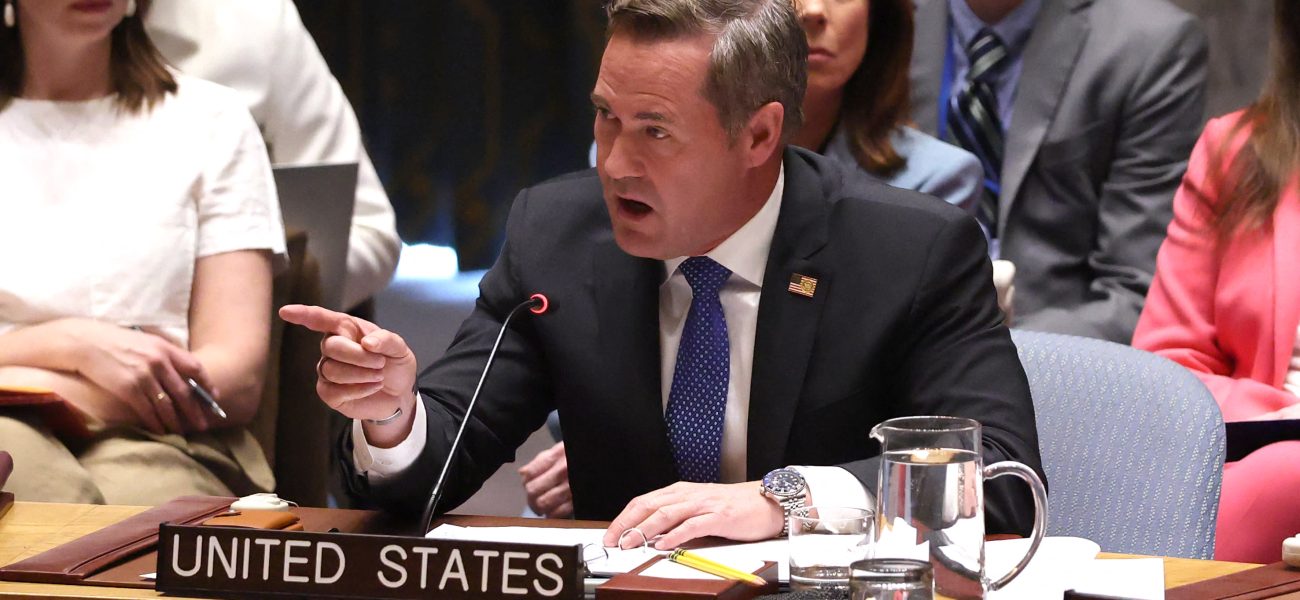
Mike Waltz: Bombing Iran Infrastructure Not a War Crime, Says Former Trump UN Envoy
POLICY WIRE — Washington D.C., USA — A former high-ranking official from the Trump administration, Mike Waltz, has articulated a controversial viewpoint, suggesting that targeting essential...

POLICY WIRE — Washington D.C., USA — A former high-ranking official from the Trump administration, Mike Waltz, has articulated a controversial viewpoint, suggesting that targeting essential infrastructure in Iran, such as bridges and power plants, would not be considered a war crime.
Waltz, who served as an advisor to the Trump White House and later as the U.S. Representative for Florida’s 6th congressional district, asserted that these specific actions would fall outside the legal definition of war crimes, provided they were executed with appropriate military intent.
The Controversial Stance on Iran
The Republican congressman’s remarks underscore a particular hardline perspective on potential military engagements with Iran. His argument differentiates between infrastructure vital for military operations and those purely serving civilian populations, a distinction often debated in the context of international humanitarian law.
He clarified that his statement was conditional, emphasizing that such strikes would need to be aimed at military objectives and not deliberately at civilians or civilian-exclusive targets to avoid the classification of war crimes. This nuanced, yet contentious, position brings to the forefront discussions about modern warfare’s legal boundaries.
International Law and Conflict
Under international humanitarian law, particularly the Geneva Conventions and their Additional Protocols, attacks must be directed solely against military objectives. Extensive damage to civilian infrastructure, especially if it leads to disproportionate harm to civilians or civilian objects, can be deemed a war crime.
Legal scholars and international bodies often scrutinize the principle of proportionality and the distinction between military and civilian targets in armed conflict. Waltz’s comments inevitably spark debate on how these principles apply to a potential conflict scenario with Iran.
📄 POLICY WIRE WHITEPAPER PUBLISHED: PAKISTAN'S NATIONAL SECURITY POLICY PRIORITIES
👉 READ BY CLICKING HERE“Striking purely civilian infrastructure without military justification, causing widespread destruction and suffering, is a clear violation of international law. However, if infrastructure directly supports military capability, the line becomes more complex, requiring careful legal assessment.” — International Law Expert
Geopolitical Ramifications
Such military actions, if undertaken, carry significant geopolitical and economic ramifications. Concerns about an intensifying Middle East conflict have already led to revised global growth forecasts by international financial institutions.
These remarks also highlight ongoing debates within international policy circles regarding acceptable conduct in modern warfare and the implications for global stability, which are constantly influenced by broader global shifts in alliances and technology. The discourse surrounding Iran’s nuclear program and regional influence continues to shape these discussions.