


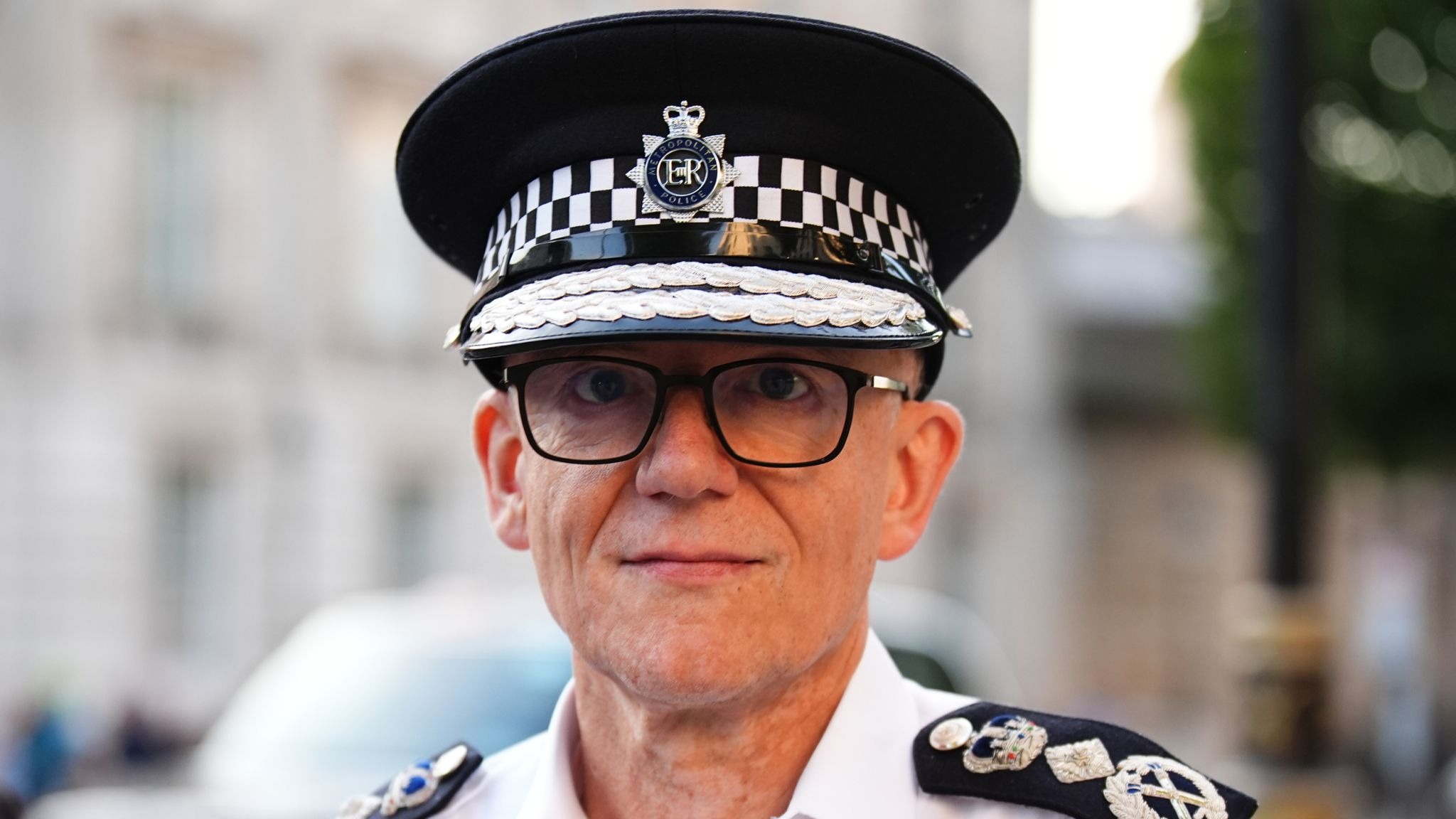
Met Police Chief Demands Radical Overhaul to Prevent Systemic Failure
Sir Mark Rowley proposes a massive restructuring of England and Wales police forces to combat modern crime and address critical funding gaps.

POLICY WIRE — London, UK — — The leader of the Metropolitan Police is set to warn that the policing framework across England and Wales is on a trajectory toward failure unless immediate reforms are implemented.
In an upcoming address scheduled for Friday, Sir Mark Rowley will argue that the current model is no longer equipped to handle the increasingly sophisticated tactics used by contemporary criminals.
The proposal envisions the most significant transformation of the service since the 1960s, suggesting the creation of eight to ten regional forces. These would be bolstered by numerous local commands and a newly established National Police Service.
The proposed three-tier structure would dismantle the existing 43-force system in favor of local teams focused on neighborhood-level issues, regional entities sharing specialized equipment, and a National Police Service dedicated to the most severe criminal activities.
Sir Mark noted that organized crime, cyber-criminals, fraud networks, and online child abuse traffickers frequently operate across international and regional borders, while police organizations remain anchored to local jurisdictions.
He asserted that the current infrastructure is struggling to match with rapidly evolving threats, stating: “We have 43 overstretched forces trying to do too much, with too little.”
The Met chief believes that consolidating these forces could eliminate administrative duplication, potentially allowing thousands of staff positions to be reallocated to front-line duties.
These recommendations emerge from a formal consultation process initiated by Home Secretary Shabana Mahmood in January, which explored the possibility of a National Police Service for complex crimes and the merger of the 43 forces into smaller numbers of larger units.
However, the plan has faced resistance from some rural police and crime commissioners, who have characterized the moves as political maneuvering by larger forces seeking to favor their own interests.
The Association of Police and Crime Commissioners (APCC) also expressed doubt regarding whether mergers are the optimal path for improvement. The group stated that while the need for modernization and a National Police Service is clear, the logic for reducing 43 forces to nine regional ‘mega-forces’ is not.
A spokesperson for the Home Office defended the strategy, asserting that the current model has remained unchanged since the 1960s and is no longer fit for purpose. Prime Minister Andy Burnham has not yet issued a comment on the matter.
Sir Mark also highlighted severe financial constraints, noting that policing spending has dropped from approximately 0.9% of GDP to 0.7% since 2010.
He argued that years of underfunding have forced forces to use outdated technology while diverting officers away from neighborhood patrols to manage social care and mental health demands.
Furthermore, he pointed to declining performance, observing that positive outcomes are currently less than half what they were a dozen years ago, while public confidence has dipped by 9 percent.
Reporting by Policy-Wire (PW)