


Malaysia Welcomes Field Marshal Asim Munir to Its Military Hall of Fame: What It Means for Pakistan
Malaysia’s induction of Field Marshal Asim Munir into the MTAT Military Hall of Fame highlights the expanding reach of Pakistan’s military diplomacy, strategic partnerships in Southeast Asia, and...

International recognition carries significance beyond the individual being honoured. It also reflects the institutions, professional traditions and national contributions associated with that individual. Field Marshal Syed Asim Munir’s induction into the Hall of Fame of Malaysia’s Armed Forces Staff College (MTAT) marks an important development in Pakistan’s international military engagement. By becoming its 21st member, Pakistan’s Chief of Defence Forces and Chief of Army Staff has joined a distinguished group of senior military leaders recognised by a Malaysian defence institution.
The significance of this recognition becomes clearer when considered in the context of the institution’s history, its previous inductees and the circumstances surrounding Field Marshal Asim Munir’s inclusion. Together, these elements offer a broader understanding of what the honour represents for Pakistan.
The Institution Behind the Recognition
The Malaysian Armed Forces Staff College, known by its Malay abbreviation MTAT, is a professional military education institution responsible for developing officers from Malaysia’s three armed services: the army, navy and air force. Established in 1972, the college prepares officers for senior command and staff responsibilities through professional military education, strategic studies and operational planning.
An important aspect of its development was the expansion of its programmes to foreign military officers, reflecting Malaysia’s interest in international defence education and professional exchange. Over time, the institution became a platform for bringing together military professionals from different countries and developing a shared understanding of regional and international security challenges.
Its Hall of Fame, established in 2004, serves a complementary purpose. It recognises distinguished military officers who have attained the highest positions in their respective services or held equivalent responsibilities in other organisations. Rather than simply acknowledging participation in a training programme, it highlights exceptional professional careers and achievements in military service.
A Tradition of Recognising Distinguished Military Leaders
The MTAT Hall of Fame has recognised senior military figures, including Malaysian service chiefs and foreign military leaders. Its membership reflects the institution’s emphasis on professional achievement and international military engagement.
One notable example is General Tan Sri Zamrose Mohd Zain, former Chief of the Malaysian Army, who was inducted as the 15th member in November 2022. The ceremony took place at the National Defence Studies Centre (PUSPAHANAS) in Putrajaya. Zamrose had served in the Malaysian Army for more than four decades and was also an MTAT alumnus, having completed its course in 1996.
Another prominent inductee was General Rodolph Haykal, Commander-in-Chief of the Lebanese Armed Forces, who became the Hall of Fame’s 18th member in May 2025. Haykal had previously attended the Malaysian Armed Forces Staff College in 2016. His induction reflected the institution’s recognition of his professional career, dedication and military leadership.
These examples demonstrate that the Hall of Fame is not restricted to Malaysian military officials. It also recognises senior commanders from other countries who have attained distinguished positions in their respective armed forces. Field Marshal Asim Munir’s inclusion as the 21st member continues this international tradition.
Why Asim Munir’s Induction Matters
Field Marshal Asim Munir’s induction comes at a significant point in Pakistan’s regional and international engagement. His military leadership has received considerable domestic attention, particularly following the May 2025 confrontation between Pakistan and India, which Pakistan officially referred to as Marka-e-Haq.
Prime Minister Shehbaz Sharif, while congratulating Field Marshal Asim Munir on November 24, linked the recognition to his leadership during Marka-e-Haq, commitment to national defence, contributions to promoting peace and efforts to enhance Pakistan’s international standing. He also described the honour as a reflection of the sacrifices and dedication of Pakistan’s armed forces and the resilience of its people.
Beyond this official interpretation, the induction can be viewed in the context of the wider responsibilities associated with senior military leadership. Modern military command involves considerably more than operational decision-making. It requires strategic planning, institutional coordination, defence preparedness and the ability to engage with international counterparts on evolving security challenges.
The recognition therefore highlights the professional dimension of Pakistan’s military leadership. Its significance also lies in the fact that a foreign defence institution has included a serving Pakistani military chief among a select group of internationally recognised military figures.
Military Diplomacy and Pakistan-Malaysia Relations
The recognition also coincides with renewed engagement between Pakistan and Malaysia in defence and security affairs, placing the honour within a broader diplomatic context.
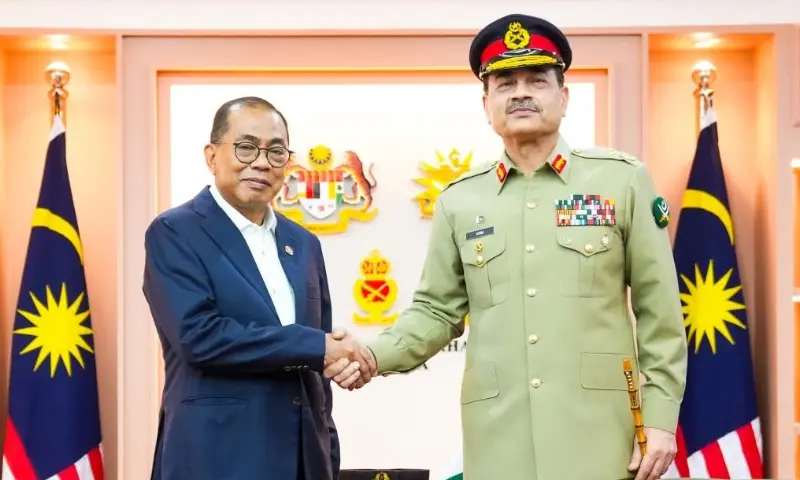
During his official visit to Malaysia on November 23, 2026, Field Marshal Asim Munir met Malaysian Prime Minister Anwar Ibrahim in Putrajaya. Their discussions focused on bilateral relations, defence cooperation and evolving regional and international security developments.
Anwar Ibrahim congratulated Asim Munir on his induction into the MTAT Hall of Fame and reaffirmed Malaysia’s commitment to strengthening defence and security cooperation with Pakistan.
The discussions also explored potential trilateral cooperation involving Türkiye, alongside opportunities for collaboration in maritime security and counterterrorism. Both sides exchanged views on regional developments, including tensions in West Asia and the importance of global maritime security.
These engagements demonstrate how defence diplomacy has evolved beyond conventional military agreements and equipment procurement. Professional exchanges, institutional partnerships, strategic consultations and cooperation on shared security challenges have become increasingly important components of bilateral relations.
Pakistan and Malaysia have maintained longstanding diplomatic relations founded on political engagement and mutual cooperation. Their renewed emphasis on defence and security provides an opportunity to translate this relationship into more practical areas of collaboration. Field Marshal Asim Munir’s visit should therefore be understood not as an isolated ceremonial engagement, but as part of a wider effort to strengthen bilateral defence ties.
Beyond an Individual Honour
For Pakistan, the recognition carries significance at both institutional and diplomatic levels. International military institutions provide countries with opportunities to develop professional relationships, exchange strategic perspectives and build mutual confidence.
Pakistan’s security relationships have traditionally been discussed largely through its immediate regional environment and established strategic partnerships. Its engagement with Southeast Asian countries, particularly Malaysia, demonstrates the importance of expanding diplomatic and defence relationships beyond these traditional geographical frameworks.
This is particularly relevant at a time when regional security increasingly involves interconnected concerns, including maritime stability, counterterrorism and geopolitical competition. Pakistan’s engagement with Southeast Asian defence institutions can contribute to greater international visibility while creating opportunities for sustained institutional cooperation.
A Recognition With Wider Implications
As regional security challenges become increasingly interconnected, military diplomacy and professional institutional partnerships will remain important instruments of international engagement. Pakistan’s relationship with Malaysia illustrates how defence education, strategic consultations and bilateral cooperation can complement broader diplomatic ties.
Ultimately, Field Marshal Asim Munir’s induction extends beyond an individual distinction. It offers an opportunity to highlight Pakistan’s participation in wider international military networks and the growing importance of its engagement with Southeast Asia.