


Empire State Proposal: Daredevils Face Felony Charges
Daredevils' Empire State Building proposal leads to felony charges. Explore the security flaws, policy challenges, and global impact of this audacious urban climb.

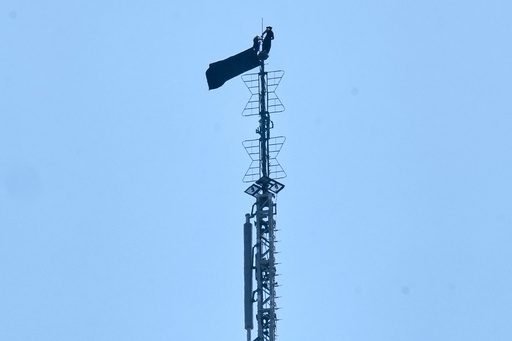
POLICY WIRE — New York, United States — For some, grand gestures involve a dozen roses or maybe a flash mob in Times Square. For Angela Nikolau and Ivan Beerkus, professional daredevils with a penchant for vertigo, a marriage proposal necessitated something a little more… vertical. Specifically, the antenna of the Empire State Building. Their romantic ascent didn’t quite go unnoticed by the authorities, leading swiftly from an alleged celebration of enduring love to a rather less romantic trip through New York’s criminal justice system, complete with felony charges.
It’s a peculiar narrative, isn’t it? The saga began not with a ring presented over a candlelit dinner, but with an unauthorized infiltration and a risky climb up an iconic skyscraper. This couple, previously documented in a 2024 Netflix feature, Skywalkers: A Love Story, which showcased their rather niche brand of roof-topping, made headlines again, this time with a banner declaring, [QUOTE_PLACEHOLDER] A noble sentiment, no doubt, but one authorities, we’d guess, found slightly ironic as they coordinated an Emergency Services Unit deployment.
Law enforcement officials recounted how the two, identified formally as Angelina Nikolau and Ivan Kuznetsov in court documents, not only navigated security – reportedly breaking a lock on a restricted-access 104th-floor door – but then ascended to the broadcast antenna. Authorities recorded their final ascent point at a dizzying 1,454 feet (443 meters) above midtown Manhattan. Officers eventually intercepted them on their way down, climbing approximately 1,250 feet (381 meters) themselves—a fact that shouldn’t be casually glossed over, as the danger to responding personnel was very real, an unnecessary burden brought on by someone else’s grandiose affection.
The pair walked out of court without bail, a testament perhaps to New York’s recent judicial reforms that limit when cash bail can be imposed. When asked about their rather spectacular method of engagement, Beerkus offered the succinct, “We believe in love.” Their attorney, Jason Krinsky, even gave them a peculiar sort of credit. “What a way to propose — something you can only dream of,” he said. And he followed up with, “So you’ve got to, you know, give him some credit for that.” Well, one can credit the audaciousness, certainly; the judgment, not so much.
This incident, far from an isolated act of romantic lunacy, plays into a broader, increasingly visible subculture of urban exploration and ‘rooftopping.’ It’s a global phenomenon. You see similar daredevilry cropping up, sometimes less artfully, in bustling, vertical cities across the globe. Take the rapidly expanding urban landscapes of Pakistan and the wider South Asia and Muslim world—places like Karachi or Dubai, where new skyscrapers scrape the heavens with a sense of boundless ambition. Such structures, symbols of national pride and economic prowess, often become targets for similar forms of audacious self-expression, from professional photographers seeking unheard-of angles to, yes, occasional rogue climbers looking to make their mark.
📄 POLICY WIRE WHITEPAPER PUBLISHED: PAKISTAN'S NATIONAL SECURITY POLICY PRIORITIES
👉 READ BY CLICKING HEREIt’s not hard to imagine a duo pulling a similar stunt atop a newly minted tower in Lahore, chasing viral fame or perhaps delivering a more pointed, less romantic, political message. And because these are often environments where state control and surveillance are ever-present, but sometimes also surprisingly permeable, the stakes can feel different—even higher, culturally speaking. Such events force a spotlight onto security vulnerabilities not just in iconic Western landmarks, but on burgeoning global centers too, making these ‘love stunts’ resonate beyond mere tabloid fodder, often impacting how societies grapple with public space, individual expression, and the ubiquitous challenge of modern urban security.
What This Means
This incident, though couched in the language of love — and a daring proposal, isn’t just a quirky news item. Its implications are both practical and symbolic, nudging policy makers to reconsider urban security in an era of social media-fueled spectacles. Economically, the cost of responding to such an “unauthorized” intrusion isn’t trivial. Deploying the Emergency Services Unit, the disruption to surrounding areas, and the subsequent legal proceedings represent real expenditure, diverted resources that could otherwise address more pressing concerns. And let’s not forget the potential blow to the Empire State Building’s perceived impenetrability—an invaluable asset for an iconic tourist destination and a crucial part of New York City’s appeal. Who’s covering the bill for bolstering security protocols after this?
Politically, the handling of Nikolau — and Beerkus raises questions about deterrents and the nature of felony charges. On one hand, you’ve got the law enforcement imperative to maintain public order and safety; on the other, the perhaps unintended consequence of granting fame to those who intentionally flout those very norms. Washington grapples with crypto cache in similar ethical grey areas, balancing innovation with regulation. The couple’s release without bail, while legal under current New York statutes, will undoubtedly prompt chatter among security experts and some political factions who’d prefer harsher, more immediate consequences for such high-profile security breaches. Does it embolden others? Or does the weight of a felony charge serve as a sufficient warning? That’s the gamble policymakers constantly face, especially when an act of audacious romance spills into serious criminality, challenging not just skylines but the very fabric of urban security governance. The incident’s global virality ensures the message, whatever it’s, travels far.