

Liberals Triumph in Canadian Special Elections Amid Trade Tensions with Trump
POLICY WIRE — Ottawa, Canada — Canada’s ruling Liberals have emerged victorious in three special elections held on Monday, significantly strengthening Prime Minister Mark Carney’s position amid...

POLICY WIRE — Ottawa, Canada — Canada’s ruling Liberals have emerged victorious in three special elections held on Monday, significantly strengthening Prime Minister Mark Carney’s position amid escalating trade tensions with U.S. President Donald Trump.
The Liberal Party secured wins in Chicoutimi-Le Fjord in Quebec, Beaches-East York in Toronto, and North Vancouver-Capilano in British Columbia. This outcome marks a notable shift, especially in Quebec where a Liberal candidate defeated a Conservative for the first time since 2018.
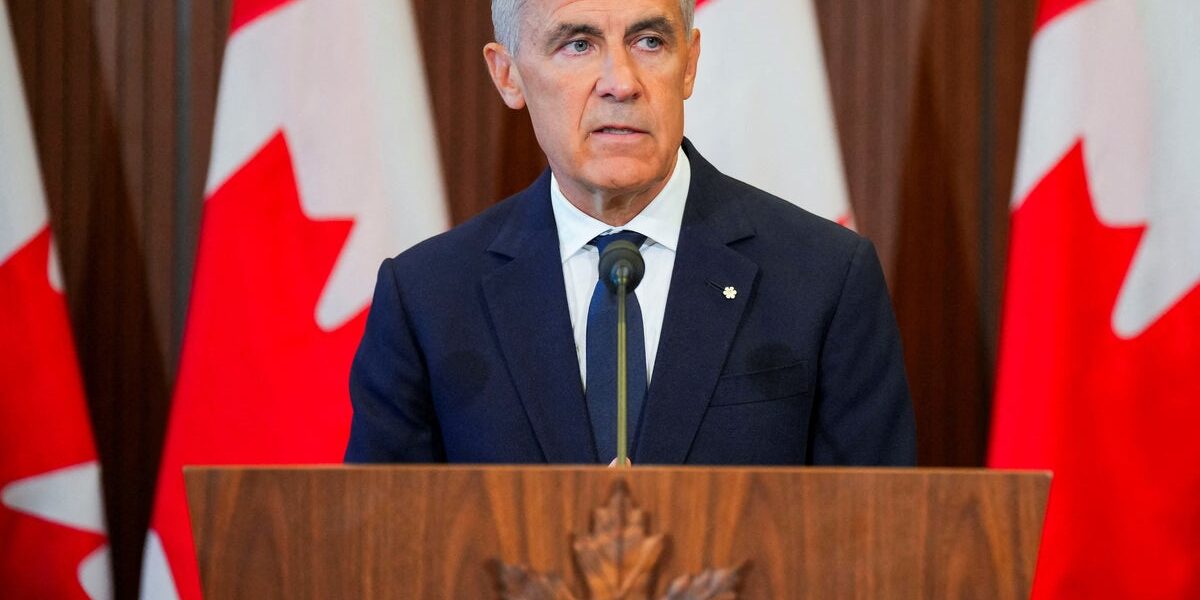
Carney interpreted the election results as a strong endorsement of his government’s policies. In this critical moment for Canada, voters have expressed their confidence in our government’s strategy, he stated.
The most significant change was observed in Quebec, where Liberal candidate Daniel Gobeil achieved a decisive victory in Chicoutimi-Le Fjord. This district, previously held by the Conservatives since 2018, saw the opposition party drop to third place. The local economy, heavily reliant on aluminum production and dairy farming, has been notably impacted by the ongoing trade conflict.
Nelson Wiseman, a political science professor at the University of Toronto, highlighted Carney’s higher approval ratings in Quebec, attributing it to Trump’s controversial remarks about potential annexation. Quebecers stand to lose the most in a scenario where the U.S. absorbs Canada, leading to the potential disappearance of the French language’s status, Wiseman explained.
The Liberals retained control in the other two districts. In British Columbia, Braeden Caley, a former deputy chief of staff to Carney, won in North Vancouver-Capilano. Tonight, the United States is receiving a clear message. Our leader enjoys the support of the Canadian populace, declared Liberal lawmaker Hedy Fry in an interview with the Canadian Broadcasting Corp.
The cross-border trade negotiations collapsed on August 21 after failing to reach a compromise, prompting Trump to impose 50% tariffs on around $20 billion of Canadian exports. In response, Canada announced plans for retaliatory tariffs on U.S. goods.
📄 POLICY WIRE WHITEPAPER PUBLISHED: PAKISTAN’S NATIONAL SECURITY POLICY PRIORITIES
Trump has since intensified his attacks, including renaming Lake Ontario “Lake America” through an executive order. U.S. Treasury Secretary Scott Bessent commented that Canada holds limited leverage due to the U.S. economy being approximately 13 times larger.
Carney has accelerated efforts to forge stronger trade alliances with Europe and other global partners in light of these developments. The three election victories have increased the Liberal caucus’s seats to 173 in the 343-seat House of Commons, enhancing the party’s parliamentary standing. These special elections were necessitated by lawmaker resignations earlier this year.
Daniel Béland, a political science professor at McGill University, attributed the Liberal’s strong performance in Chicoutimi-Le Fjord partly to local support for Carney’s decision on August 21 to terminate trade negotiations with the White House. Béland noted that the Conservatives’ significant decline poses challenges for party leader Pierre Poilievre. The Conservatives, who secured the riding with 34% of the vote last year, saw their support plummet to about 13% on Monday. These figures are indeed concerning, Béland remarked.
Carney assumed office last year following widespread public outrage over Trump’s annexation rhetoric, vowing to reduce Canada’s economic dependence on its southern neighbor.
Reporting by Policy-Wire (PW)