

Legal Whirlwind: New Mexico’s Immigration Quagmire Leaves State and Counties Battling Over ICE
POLICY WIRE — ALBUQUERQUE, N.M. — It’s a distinctly American brand of political theater, really, when one branch of government sues another branch of its own, only to find itself sued by a bigger,...

POLICY WIRE — ALBUQUERQUE, N.M. — It’s a distinctly American brand of political theater, really, when one branch of government sues another branch of its own, only to find itself sued by a bigger, badder branch. Forget coherence; New Mexico’s immigration policy just plunged into a hall of mirrors, leaving local sheriffs, state officials, and federal agents to sort out a mess of their own making. It’s not just a jurisdictional squabble, mind you—it’s a bare-knuckle brawl over who gets to call the shots on immigration within the state’s sun-baked borders.
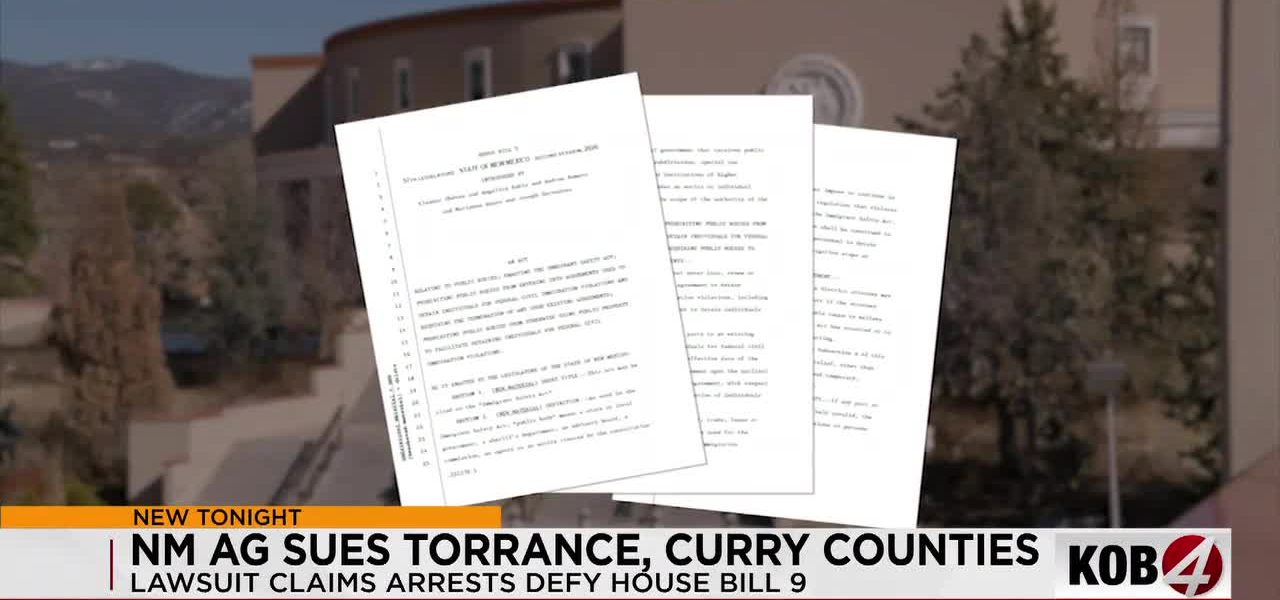
Attorney General Raúl Torrez, a man not prone to subtlety, threw the first punch, metaphorically speaking, by launching legal action against Torrance and Curry counties. His contention? They’ve been playing fast and loose with state law, specifically the Immigrant Safety Act—House Bill 9—that took effect May 20. But get this: that same state law, the very one Torrez is upholding, is the reason Uncle Sam, through the U.S. Department of Justice, decided to sue the State of New Mexico — and the city of Albuquerque. And Torrez himself? He’s named in that federal complaint too. It’s an ouroboros of litigation, really, the kind that ties governments—and the taxpayers who fund them—in ever-tighter knots. [QUOTE_PLACEHOLDER]
The counties’ alleged sin is maintaining agreements with U.S. Immigration — and Customs Enforcement, better known as ICE. These agreements supposedly empower local law enforcement to serve ICE warrants on individuals already in their jails. It’s a practice Torrez asserts goes against House Bill 9. This law, remember, was designed to limit cooperation between local police — and federal immigration agents. You couldn’t make this up. It’s like watching three-card Monte, but with legal documents instead of queens and aces.
The stakes here aren’t just about who wins in court; they’re about defining the very perimeter of state sovereignty versus federal authority on a matter as charged as immigration. Such internal wrangling over law, its interpretation, and its enforcement isn’t unique to the Land of Enchantment, or even to the United States. In countries from Pakistan to Morocco, governments grapple with myriad interpretations of how local customs and regional laws should coexist—or collide—with national statutes and international accords, especially when managing diverse populations or border integrity. It’s an age-old tension, now playing out in the American Southwest.
And because the policy decisions impact real people, it’s not some abstract debate for the law review journals. Every ripple in immigration policy, every legal precedent set, reverberates far beyond courthouse walls. Families with ties across borders, including those from South Asia and the Muslim world who form a significant part of global migratory flows, find their lives tangibly affected by these very disputes. For instance, data from the Pew Research Center indicates that in 2020, about 3.85 million Muslims resided in the U.S., representing over 1% of the total population, many navigating these very complexities.
When the agreements let law enforcement serve ICE warrants on people held in local jails, it essentially turns county employees into extensions of the federal government’s deportation machinery, at least in the eyes of state legislators. But it’s not as simple as drawing a neat line between state — and federal. These counties, Torrance — and Curry, have their own constituencies and concerns. Perhaps they see a practical benefit, or believe they’re simply following established protocol, regardless of House Bill 9. It’s not just defiance; it’s a difference of philosophical—and very pragmatic—opinion on local governance and safety.
📄 POLICY WIRE WHITEPAPER PUBLISHED: PAKISTAN'S NATIONAL SECURITY POLICY PRIORITIES
👉 READ BY CLICKING HEREIt gets pretty dicey because earlier this month, the U.S. Department of Justice filed a lawsuit against the state of New Mexico and the City of Albuquerque for passing House Bill 9. They aren’t kidding around. This isn’t just a slap on the wrist; it’s a full-on legal offensive. And then to have Torrez turn around and sue counties for *not* adhering to a law that the feds are trying to strike down? Well, that just shows you how tangled a web gets spun when legal theories hit ground reality.
The entire situation reeks of political posturing mixed with genuine legal quandaries. Everyone’s got a narrative, right? The Attorney General pushing for immigrant safety. The counties arguably wanting to maintain ties with federal partners. The feds asserting national supremacy. It’s a recipe for protracted legal battles that do little but consume public funds and create massive uncertainty for residents and law enforcement alike. That’s America, for you. It never changes, does it?
What This Means
This ongoing legal skirmish in New Mexico isn’t merely local bureaucracy run amok; it’s a microcosm of the larger national debate over immigration enforcement and federalism. Politically, Torrez is walking a tightrope. He’s upholding a state law, sure, but in doing so, he’s found himself entangled in a federal lawsuit that could effectively invalidate that very law he’s enforcing. This could diminish the AG’s influence, suggesting a state attorney general’s powers might be constrained when federal interests, particularly those pertaining to national immigration policy, come knocking. It implies a deeper erosion of local control, or at least a stark reassertion of federal supremacy in these matters.
Economically, prolonged legal battles drain resources. Taxpayer money, meant for public services, gets diverted to pay for high-stakes litigation, rather than, say, fixing infrastructure or boosting local economies. There’s also an intangible cost: the chilling effect on communities. When legal landscapes shift so dramatically, and authorities at various levels appear at cross-purposes, trust in governance erodes. People become hesitant to interact with law enforcement, fearing unintended consequences. For migrant communities, particularly, this climate of legal ambiguity fosters apprehension, potentially leading to underground economies or a reluctance to seek services—economic activities or civic engagement that could otherwise contribute positively to the state. It’s a mess, plain — and simple, that benefits precisely no one in the long run, except, perhaps, the lawyers.