


Kyiv’s Shadow Play: New Retaliations Signal Deeper Global Ripples
POLICY WIRE — Kyiv, Ukraine — Forget the battlefield; a conflict siphons off more than just materiel. It bleeds away the very air of diplomatic civility, replaced by a charged, almost palpable static...

POLICY WIRE — Kyiv, Ukraine — Forget the battlefield; a conflict siphons off more than just materiel. It bleeds away the very air of diplomatic civility, replaced by a charged, almost palpable static that warns of the next thunderclap. What’s often overlooked amidst the grinding attrition of distant front lines is the seismic shudder felt by seemingly unconnected corners of the world, a ripple effect that starts with an utterance, a declared intent.
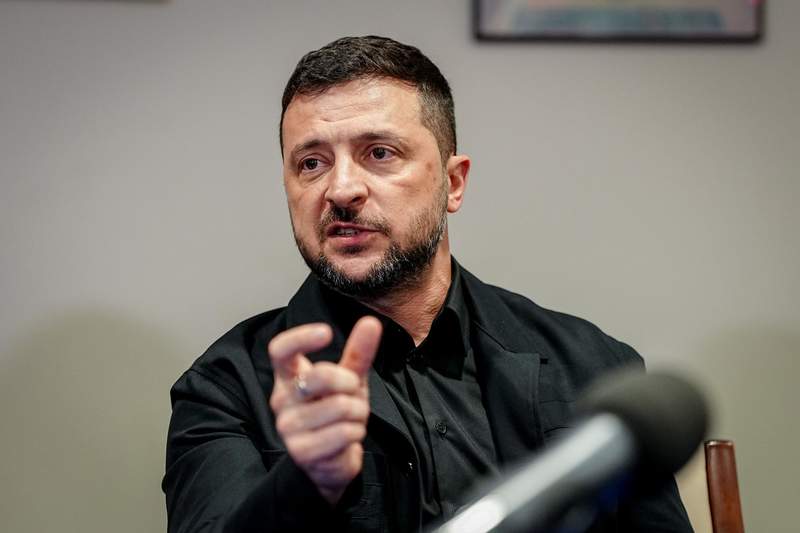
President Volodymyr Zelensky recently made waves with his assertions regarding intensifying military operations that could see Ukrainian forces conducting more frequent and more damaging actions inside Russia’s recognized borders. It isn’t a fresh tactic, certainly not; previous incidents have proven that Ukrainian assets possess such reach. But there’s a distinction between clandestine strikes—deniable operations—and an explicit, public contemplation of such a strategy. It’s a verbal escalation, an implicit redrawing of operational boundaries that, once voiced, becomes a promise.
And what a promise it’s. [QUOTE_PLACEHOLDER], sources indicated, suggesting a broadened scope for these preemptive or retaliatory missions. This isn’t just about tactical gains; it’s about shifting the psychological landscape of the conflict. It’s about taking the fight, quite literally, to the adversary’s doorstep in a way that, until recently, Kyiv mostly handled with plausible deniability. We’re past that now, aren’t we? The mask has slipped, or perhaps it was torn off in frustration.
But the consequences extend far beyond the immediate theaters of war. Because for every escalation, every drone crossing a border, the fragile balance of global commodities shivers. Consider the far-off economic vulnerabilities, particularly in regions like South Asia. Nations like Pakistan, already navigating turbulent financial waters, find themselves exposed to these distant squalls. Their food and energy security, which were already stretched thin by the lingering effects of the pandemic and localized political instability, are directly correlated to the stability of Eastern European grain and oil routes.
Indeed, the Food and Agriculture Organization (FAO) noted that global food commodity prices reached near-record highs in 2022 following the full-scale invasion, climbing over 14% from the prior year. This wasn’t some abstract market fluctuation; it hit dinner tables hard from Dacca to Djibouti, deepening hunger and stoking public discontent. A renewed campaign of cross-border strikes, particularly if they target infrastructure, could trigger yet another inflationary spiral. Pakistan, heavily reliant on imported wheat and fuel, isn’t just watching this conflict from afar; it’s feeling every price surge in its bazaars.
It’s an uneasy dance, this international diplomacy. Western partners, having provided significant military aid, including advanced weaponry, typically attach conditions — often tacit, sometimes explicit — that these systems shouldn’t be used for offensive actions deep inside Russia. Zelensky’s declaration, therefore, isn’t just a challenge to Moscow; it’s a test for Washington — and Brussels too. Will the rhetorical line in the sand hold, or will the urgency of war erase it? It makes you wonder, doesn’t it?
And then there’s the broader Muslim world. These nations, many of them members of the Organization of Islamic Cooperation, maintain complex relationships with both Russia and the West. An overt policy of internal strikes against Russia places them in a bind, forcing an even greater geopolitical tightrope walk. Their energy deals, their trade routes, their diaspora—all are caught in the crosshairs of a war that shows no sign of yielding to neat categorizations or easy solutions. It makes their foreign policy incredibly tricky, a nuanced performance under constant pressure.
📄 POLICY WIRE WHITEPAPER PUBLISHED: PAKISTAN'S NATIONAL SECURITY POLICY PRIORITIES
👉 READ BY CLICKING HEREBut this isn’t simply a matter of economics or diplomacy. It’s about perception. Russia’s narrative often paints itself as the besieged defender. Escalatory actions by Ukraine, particularly if widely publicized and declared, could—perversely, perhaps—play into Moscow’s domestic propaganda, solidifying support among a populace told it’s under attack. It’s a dangerous game, one that risks cementing narratives that are difficult, if not impossible, to dismantle later. It transforms a perceived external struggle into a battle for national survival within Russia’s own borders, a powerful and potentially destabilizing shift.
What This Means
Zelensky’s clear, if unquoted, intent to take the fight directly to Russia’s interior isn’t merely a tactical pronouncement; it’s a profound strategic gamble. Politically, it signals a move away from the implicit red lines previously observed, pushing the envelope on what Western allies might stomach while also attempting to create domestic unrest within Russia. It represents a calculation that direct pressure on Russian territory, not just the occupied regions, is the most effective means of disrupting their war machine and compelling a change in strategy.
Economically, this strategy portends increased volatility. The global energy markets, already jumpy, could see renewed price spikes if strikes impede Russian infrastructure or if insurance premiums for shipping through volatile regions rise further. Food security for import-dependent nations, particularly in the Middle East — and South Asia, stands to degrade further. We’ve seen how Kyiv signals escalation can directly influence global supply chains.
The immediate implication for international relations is a deepening strain between those Western nations advocating for caution and Kyiv’s increasing desperation for decisive action. There’s a potential for alliance fractures if Kyiv’s actions are perceived as overtly provocative. the delicate diplomatic maneuvering by states like Pakistan, caught between their historical non-alignment and their economic dependencies, will become exponentially harder. They’re not just spectators anymore; they’re in the blast radius of market disruption. And as the West considers China’s Electric Avalanche, another major geopolitical shift, the bandwidth for addressing the nuances of this conflict may diminish, leaving countries in critical regions to fend more for themselves.
The calculus is simple, really. Escalation begets escalation. How deep does Kyiv intend to go, and what’s the appetite—and indeed, the strategic capability—for Moscow’s retort? This latest posturing by Ukraine’s leadership suggests a new, perhaps more perilous, phase of the conflict. One thing’s for sure: it won’t be confined to just Eastern Europe.