


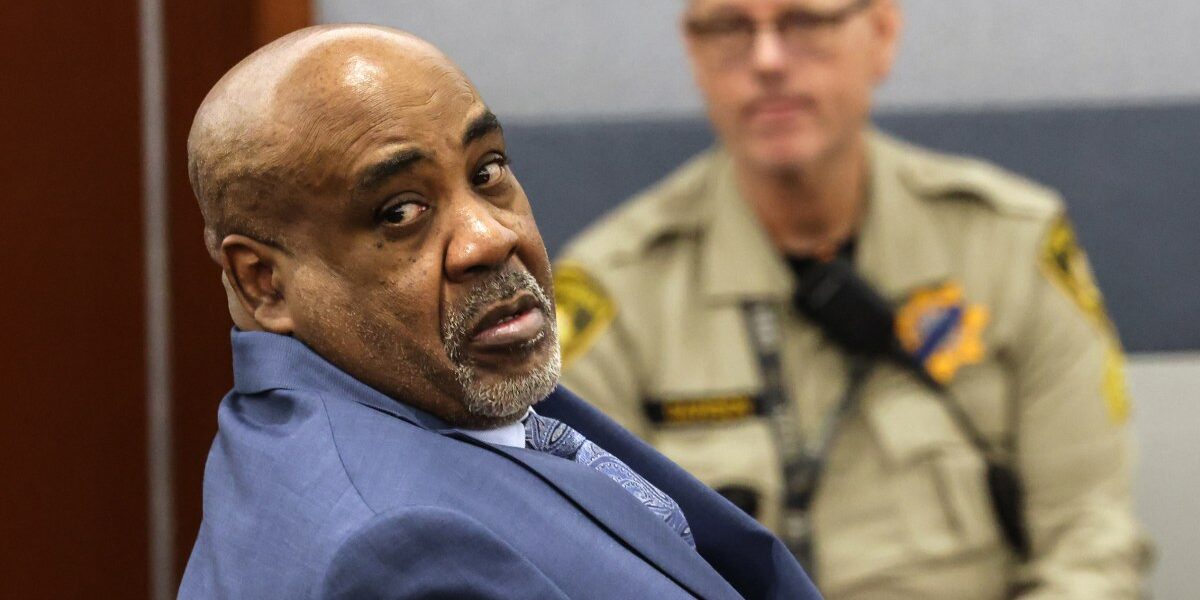
Justice Served: Duane ‘Keffe D’ Davis Convicted in Tupac Shakur’s 1996 Murder
POLICY WIRE — Las Vegas, USA — Duane ‘Keffe D’ Davis, the man accused of orchestrating the 1996 murder of rapper Tupac Shakur, has been convicted of first-degree murder with the use of a...

POLICY WIRE — Las Vegas, USA — Duane ‘Keffe D’ Davis, the man accused of orchestrating the 1996 murder of rapper Tupac Shakur, has been convicted of first-degree murder with the use of a deadly weapon. The verdict was delivered in Las Vegas, nearly 30 years after the crime.
Prosecutors in Clark County spent two weeks presenting their case, asserting that Davis, now 63, was a former leader of the South Side Compton Crips in Los Angeles. They argued that he sought revenge against Shakur after the rapper assaulted his nephew.
Davis was not charged with pulling the trigger but was convicted under Nevada law, which allows for the conviction of those who aid in committing murder. He is the only surviving person who was in the car with the shooter during the incident.
The trial has partially resolved a long-standing mystery that has captivated hip-hop fans, true crime enthusiasts, and conspiracy theorists for years. Shakur, who was 25 at the time of his death, is remembered as one of the most influential rappers of all time.
Chief Deputy District Attorney Binu Palal stated in his closing argument that Davis pursued Shakur and Marion ‘Suge’ Knight, co-founder of Death Row Records, after they were seen assaulting Orlando ‘Baby Lane’ Anderson at the MGM Grand Hotel in Las Vegas. Anderson, known as the ‘prince’ of Compton due to his relation to Davis, was reportedly targeted in the drive-by shooting that wounded Shakur and Knight. Shakur succumbed to his injuries six days later.
The jury reviewed VHS security footage and heard testimonies from former law enforcement officers about the altercation that preceded the shooting. Davis had previously entered into an agreement with federal investigators in 2008, which he believed granted him immunity. However, this did not protect him from prosecution if he confessed to involvement in Shakur’s murder.
Davis’s memoir, ‘Compton Street Legend,’ published in 2019, provided crucial evidence. In the book, Davis admitted to playing a role in Shakur’s murder, leading to a renewed investigation into the case.
The trial featured nearly two weeks of testimony from numerous former investigators and law enforcement officers. The case took Las Vegas detectives on a journey from the Strip to Compton, where rival gangs were engaged in violent conflict following Shakur’s shooting.
Defense attorney Michael Sanft argued that Davis fabricated or exaggerated his accounts for financial gain and fame, and that investigators failed to independently verify his claims. Sanft highlighted the lack of physical evidence linking his client to the crime scene.
Reporting by Policy-Wire (PW)