


Gorsuch Targets Precedent: Civil Liberties Debate
Justice Gorsuch targets agency deference & qualified immunity, sparking debate on civil liberties and government accountability. Understand the stakes.

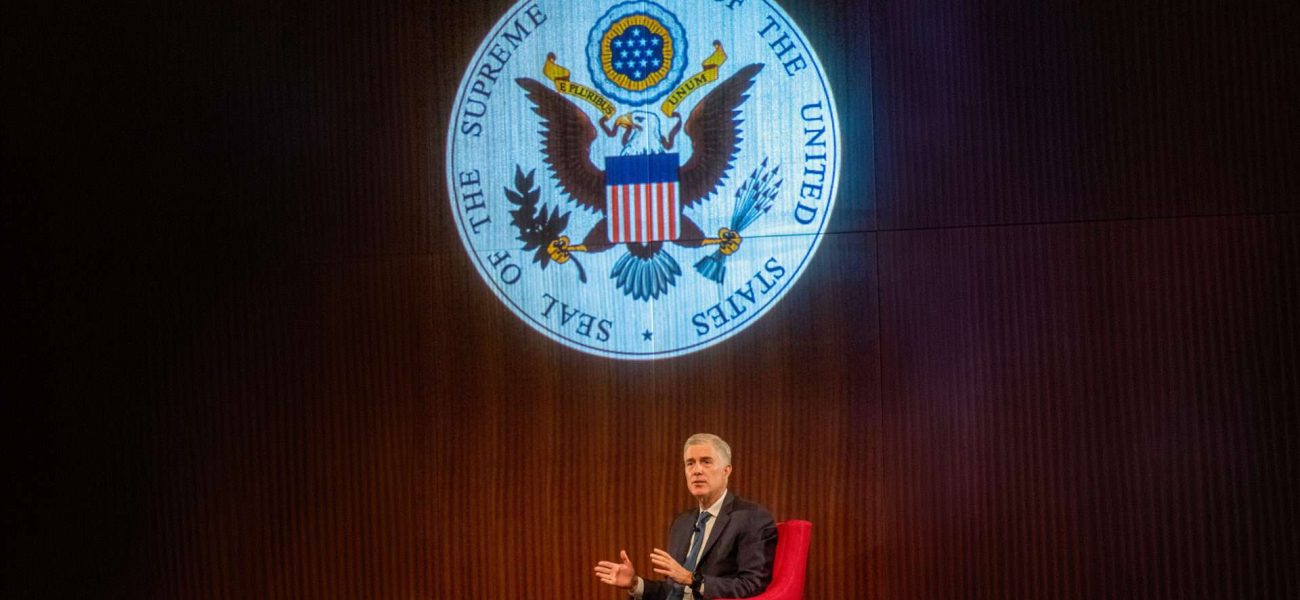
POLICY WIRE — Washington D.C., USA — The marble halls of the Supreme Court can feel a long way from the lived experience of ordinary citizens, a grand institution of arcane argument. But even there, a single voice can chip away at bedrock, prompting questions that echo far beyond its austere chambers. Justice Neil Gorsuch, known for his commitment to originalism and a certain skeptical squint at administrative power, has made it abundantly clear he thinks the Court’s taken a couple of genuinely bad detours over the years, ones that he says really ding civil liberties.
It’s not just a casual academic musing from a high-bench jurist; it’s a direct challenge, and it’s aimed at doctrines that’ve been guiding federal policy for what feels like eons. Think of it—like a particularly seasoned gardener who, after decades, decides a couple of those mighty oak trees planted by his predecessors are actually choking out the younger, healthier growth. He’s talking about agency deference and qualified immunity, the sorts of legal esoterica that typically make eyes glaze over until, you know, they affect your actual life.
Agency deference, in simple terms, often lets federal agencies like the EPA or the SEC interpret ambiguous statutes themselves, granting them significant sway in policymaking without much judicial check. And that’s a big deal. For decades, it’s meant that bureaucratic bodies, not just Congress or the courts, effectively shape law. Gorsuch—he isn’t keen on that. He’s suggested this particular path veers too far from how the framers (and for that matter, a lot of folks nowadays) pictured a government of checks and balances. The idea that unelected officials can make calls impacting businesses or personal freedoms without much pushback? Well, it’s an idea many find unsettling.
Then there’s qualified immunity. Now this one hits home for a lot more people, a protection shield that often keeps government officials—police officers, say, or prison guards—from being held liable for civil rights violations unless their conduct clearly violated established statutory or constitutional rights. It means getting accountability for government misdeeds? It’s harder than pulling teeth sometimes. We’ve seen case after case, harrowing tales from communities right across the country, where victims found themselves unable to seek redress. But the problem isn’t confined to American shores; globally, societies grappling with state overreach and the need for government accountability often look to such legal frameworks as potential safeguards or, conversely, as barriers to justice.
Because these doctrines effectively broaden the scope of state power while narrowing individual protections. But you’ve got to understand, they didn’t just pop up yesterday. These precedents are woven deep into the federal legal fabric, they’ve shaped administrative law for — wait for it — a significant chunk of time, with judicial review of agency actions occurring in over 8,000 cases since 1984 alone, according to Cornell Law School’s Legal Information Institute. Overturning them wouldn’t be like snipping a stray thread; it’d be unraveling a fair bit of the garment. It’s a heavy lift, certainly, to convince fellow justices to discard something that’s been part of the system for so long, something that countless lower court judges and agencies have relied on.
📄 POLICY WIRE WHITEPAPER PUBLISHED: PAKISTAN'S NATIONAL SECURITY POLICY PRIORITIES
👉 READ BY CLICKING HEREThink about a nation like Pakistan, where public trust in governmental institutions—including law enforcement and bureaucracy—often wavers, due in part to perceptions of unaccountability and arbitrary power. A robust legal framework that unequivocally prioritizes civil liberties over governmental discretion, while holding state actors truly accountable, becomes incredibly significant. The debates Gorsuch sparks about transparency, due process, and official liability aren’t just academic exercises for the American context; they resonate wherever the struggle for effective governance and citizen protection is ongoing, which is to say, everywhere. What happens in Washington sometimes has a funny way of inspiring thought—or concern—in Islamabad.
It’s an aggressive posture, really. He’s not just dissenting on the margins; he’s suggesting fundamental shifts to how the federal government operates, to how much power its non-elected arms can wield. And, let’s be frank, that sends shivers down a lot of spines in agency conference rooms. But it’s a position that’s getting more airtime on the right, and sometimes, even the left finds common cause in wanting less government opacity, or more individual protection from unchecked state action. It’s an ideological battle, to be sure, but one with incredibly tangible outcomes for you, me, and our constitutional setup.
What This Means
If Justice Gorsuch manages to persuade a majority to revisit, let alone overturn, either Chevron deference or qualified immunity, it’d be a tectonic shift. Politically, we’d see a substantial rebalancing of power between the judiciary and the executive branch’s administrative agencies. Congressional power might surge as legislation would need to be far more specific, leaving less room for agency interpretation. Economically, this could mean more uncertainty for businesses that rely on stable, expert-driven regulatory environments. Suddenly, rules they thought were set could become subject to broader judicial challenge. For instance, environmental regulations on industries or banking compliance measures might face more vigorous court tests, potentially creating a less predictable operational landscape. It would certainly shake up how the regulatory state functions, an administrative upheaval on par with [QUOTE_PLACEHOLDER]. From a civil liberties perspective, rolling back qualified immunity could embolden more individuals to seek legal recourse against official misconduct, theoretically fostering greater accountability, but possibly leading to an explosion of litigation that would swamp our courts. Conversely, chipping away at agency deference would curtail the regulatory reach of bodies intended to safeguard public interests, from food safety to consumer protection. This isn’t just legal nitpicking; it’s a profound debate about where the actual levers of power lie in modern governance, and who, ultimately, holds the state accountable.