


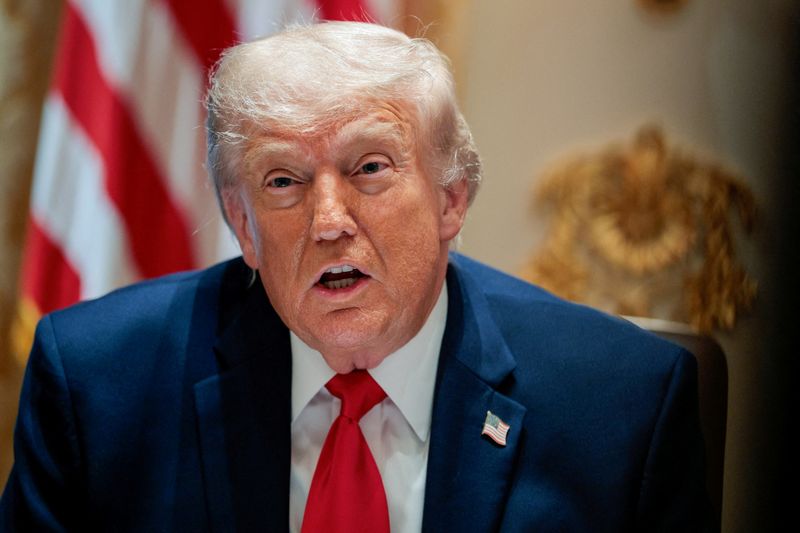
Legal Grandstanding: Trump’s Renewed $10 Billion Media Battle Echoes a Broader Fight
POLICY WIRE — New York, USA — Another day, another high-stakes legal volley. It seems some battles, even after an initial retreat, just can’t stay off the docket. The former occupant of the Oval...

POLICY WIRE — New York, USA — Another day, another high-stakes legal volley. It seems some battles, even after an initial retreat, just can’t stay off the docket. The former occupant of the Oval Office isn’t one to let a perceived slight go—or for that matter, a financial claim evaporate into the ether of forgotten news cycles. You see, the whole thing’s gotten a fresh filing, again.
It’s a peculiar ritual, this modern media jousting. It isn’t about just settling scores; it’s a public spectacle, often costing both parties millions before a judgment, if one ever arrives. The former President has now, once again, squared off against The Wall Street Journal. Why? Because the original complaint, lobbed against the publication, wasn’t quite sticky enough the first time around—the courts dismissed it, plain and simple.
And so, here we’re. It’s an act familiar to anyone who’s watched the public figure navigate the choppy waters of legal contention. The specific contention at hand? A cool, utterly astounding sum: [QUOTE_PLACEHOLDER] for a [QUOTE_PLACEHOLDER] about [QUOTE_PLACEHOLDER]. That’s the sort of money that could buy a small country’s annual budget, or perhaps fund an extensive political campaign for a good few cycles. Or pay for lawyers for many, many years, as is often the case with these kinds of suits. But is it really about the money, or something else entirely?
This particular go-around concerns a story tying him, the former President, to the late Jeffrey Epstein—a name synonymous with appalling acts and the elite circles he once corrupted. Such associations, true or false, can linger. They can stain. The media, of course, has a job to report. But the powerful, they’ve got deep pockets — and sharper elbows when they feel maligned. It’s a fundamental tension in societies that claim to value both free speech — and personal reputation. It’s a dynamic that gets played out everywhere, not just in the gleaming courts of Manhattan.
Refiling the case—a legal maneuver common to dogged litigators, you’ll find—comes with an implicit message. It’s a declaration that the issue isn’t resolved. That the public conversation, which the publication arguably ignited, is far from over. It’s saying, essentially, that the fight isn’t done — and someone, somewhere, is going to pay. Even after the initial dismissal, it seems the appetite for legal retribution hasn’t diminished a jot. Legal experts might view it as a second bite at the apple; political observers might call it strategic persistence. Call it what you will, it’s certainly consistent with the man’s public playbook.
The stakes here aren’t just the alleged $10 billion. They’re about setting a precedent, about chilling effects on journalism—or bolstering public confidence in media accountability, depending on your perspective. Legal battles like these are draining, incredibly so, not just financially but psychologically. They absorb colossal amounts of bandwidth from all parties involved. Think about the hours, the depositions, the discovery. It’s truly monumental, all for a perceived slight in a news article. For a major media institution, these are just the cost of doing business, perhaps. But for smaller outfits, it’s a crushing threat.
Because, let’s be real, while this saga unfolds in the United States, its implications don’t stay neatly within national borders. Around the globe, leaders watch. In nations like Pakistan, where press freedoms are often tenuous and defamation laws frequently employed by powerful figures, such high-profile suits serve as both a cautionary tale and, at times, an unfortunate inspiration. When a prominent figure, no matter his prior office, uses litigation as a bludgeon against a major media outlet, it sends ripples. It validates the tactic. Statistics from various watchdog groups, including Reporters Without Borders, show that defamation lawsuits initiated by government officials globally have seen an uptick of approximately 15% in the last five years, specifically aimed at restricting investigative journalism. It suggests a growing worldwide trend. And for journalists working under far more restrictive conditions, it’s certainly not a good sign.
What This Means
This renewed legal offensive isn’t merely about correcting a perceived factual error or recouping losses. It’s political theater, expertly executed in the courtroom. It reinforces a particular narrative that often characterizes mainstream media as untrustworthy or biased—a narrative many political figures leverage to their advantage. For The Wall Street Journal, it’s another prolonged, expensive defense of its journalistic integrity. The cost alone, win or lose, serves a purpose. The prolonged legal entanglement itself creates a form of attrition.
Economically, this kind of suit is fascinatingly distortive. A lawsuit of this magnitude doesn’t just hit balance sheets; it allocates significant intellectual capital, too. Think about the legal teams, the PR professionals, the executives whose attention is diverted from core business operations. It’s a resource drain, plain — and simple, for what often ends up being a protracted, inconclusive slugfest. From a purely cynical perspective, it’s an effective strategy to keep an issue alive, to perpetuate a grievance, and perhaps—just perhaps—to deter future critical reporting. After all, if every story could trigger a ten-billion-dollar headache, who’d dare to print anything truly investigative? This isn’t just a localized spat; it’s a lesson in power dynamics for anyone watching from abroad, particularly those navigating delicate relationships between state power and an often-fragile press, from Islamabad to Cairo. The fight for information control takes many forms.