



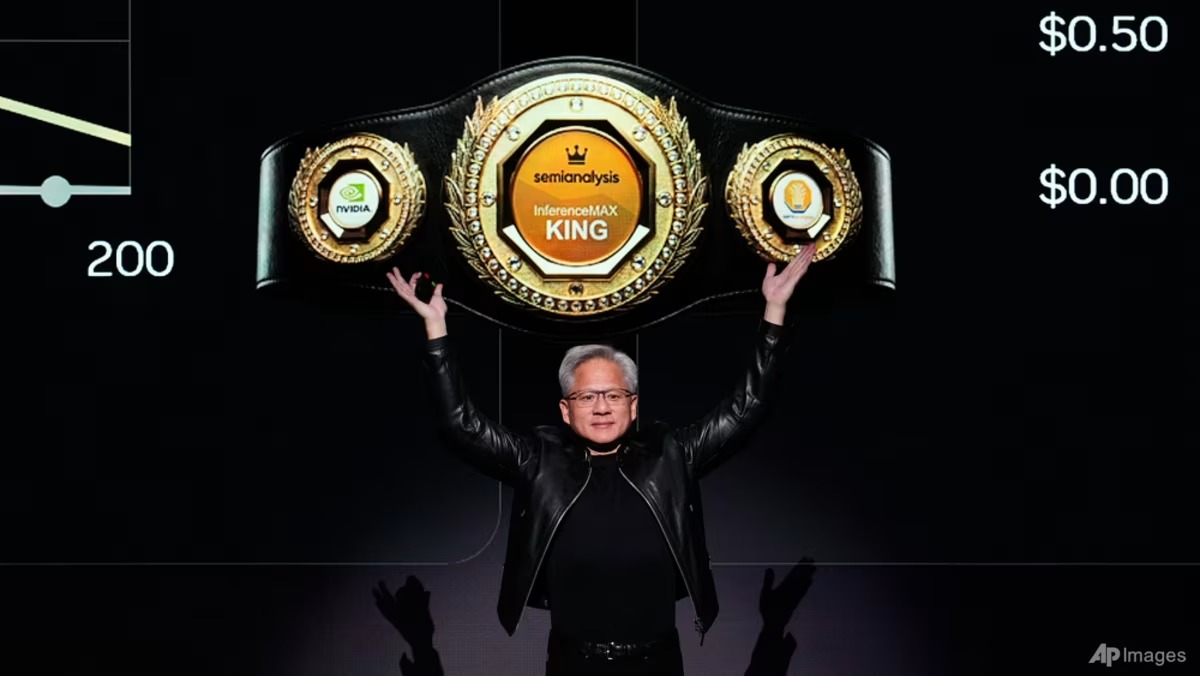
Jensen Huang’s Return Reignites ‘Jensanity’ as Taiwan Tech Stock Soars 9 Percent
Nvidia CEO Jensen Huang's return eases market uncertainty in Taiwan. Discover how his comeback sparked a 9% stock surge and renewed 'Jensanity' among local i...

POLICY WIRE — Taipei, Taiwan — The island of Taiwan woke up to a significant shift in its technological landscape on Tuesday, November 24, as Jensen Huang returned to the helm of Nvidia.
Huang, a native of the region and the co-founder of the AI chip giant, resumed his role less than two weeks after being forced to step down.
The island serves as the global epicenter for AI hardware manufacturing, housing TSMC, the world’s largest contract chipmaker.
Huang’s influence in Taiwan is profound, a cultural phenomenon that local media has labeled “Jensanity” due to the massive crowds he attracts upon visiting.
The initial shock of his resignation stemmed from revelations regarding his personal life and suspicions that he may have been a target of foreign intelligence activities.
Despite the turmoil, many in the local community remained confident that a comeback was possible.
Venus Chang, a 51-year-old finance professional in Taipei, expressed relief at the news.
She noted that the sharp decline in Taiwan’s stock market in the days following his departure highlighted the severity of the situation.
For Chang, Huang’s return is seen as essential for maintaining the nation’s economic stability.
“For Taiwan, I think this is very good news … You only have to look at how sharply Taiwan’s stock market fell in the days after he stepped down,” Chang stated.
She added that his contribution to the region has been enormous, making his return a source of genuine delight.
Gary Wu, a 31-year-old engineer, immediately connected the news to financial opportunities.
Wu’s primary concern was the potential impact on the broader market.
By the following morning, his optimism was vindicated as the market hit its daily limit-up.
“Sure enough, by this morning I could see it had hit the daily limit-up,” Wu said, noting that this meant financial security for many.
The positive sentiment was reflected in official market data, with Taiwan’s benchmark index closing up 9 percent on Tuesday.
This marked a strong rebound after the index had previously dropped to an eight-month low.
Local business owners also felt the positive ripple effect of the announcement.
Jane Kuo, 50, who operates Flower Restaurant in Taipei, had never doubted Huang would return.
“I always felt he would come back,” Kuo said, referring to Huang as a customer who frequently visited her establishment.
Kuo noted that Huang often brought colleagues and family to the restaurant, sometimes even ordering takeaway for his private jet.
She expressed readiness to welcome him back on his next visit.
The celebration extended beyond individual businesses to public displays of support.
Last week, prominent figures from the tech industry orchestrated a two-night light display on the Taipei 101 skyscraper.
The illuminated messages included phrases like “Taiwan Loves Jensen” and Thrive Together.
These displays underscored the deep personal ties Huang has maintained with Taiwan’s tech leadership over the years.
Huang’s decades of relationship-building were instrumental in forming the supplier network that underpins Nvidia’s dominance in AI computing.
During his visits, he hosted gatherings with executives from major suppliers including TSMC, Foxconn, Wistron, and Quanta Computer.
Local media referred to these events as “trillion-dollar dinners” due to the combined market value of the participating companies.
In May, Huang had described Taiwan as the “epicentre” of the AI revolution.
He stated that Nvidia planned to invest approximately US$150 billion annually in the island.
Financial leaders have publicly welcomed the CEO’s return to ensure continued growth.
Lee Chang-ken, president of Cathay Financial, confirmed that the return was well-received.
“Of course Taiwan really welcomes Jensen Huang’s return,” Lee said.
He emphasized the importance of continued AI development for the supply chain companies’ profitability.
Reporting by Policy-Wire (PW)