
Italian Author’s Conviction: The Steep Cost of Taking a Stand for Israel
POLICY WIRE — Rome, Italy — There’s a curious theater playing out on Europe’s intellectual stage, where personal conviction now carries a staggering price tag. Nobody knows this quite as...

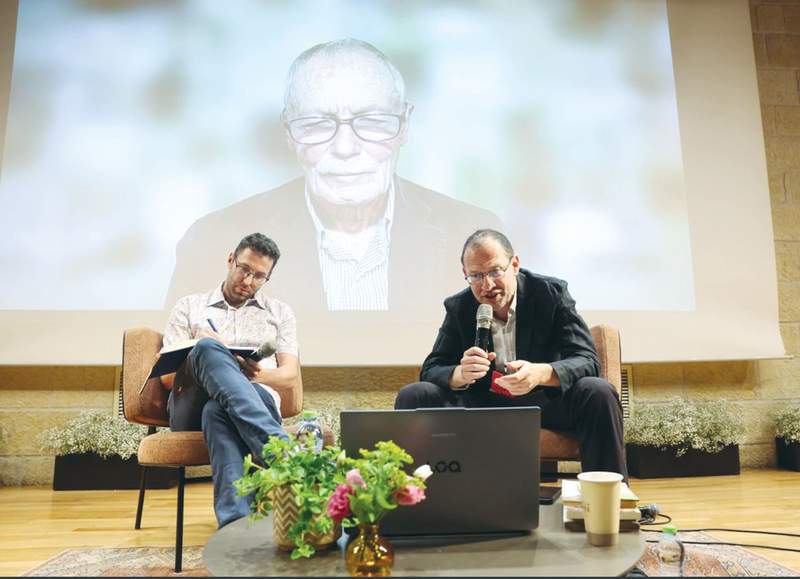
POLICY WIRE — Rome, Italy — There’s a curious theater playing out on Europe’s intellectual stage, where personal conviction now carries a staggering price tag. Nobody knows this quite as acutely right now as Erri De Luca, the celebrated Italian author — and poet. He’s an icon, a man whose words usually weave narratives of grace — and rebellion. But now, his carefully cultivated legacy faces something harsher: the blunt-force impact of a geopolitical firestorm. It’s a tricky tightrope, advocating for Israel in today’s hypersensitive cultural landscape, and he knows it, seemingly—maybe even defiantly—ready to tumble.
De Luca isn’t just an occasional op-ed writer; he’s a literary titan, once prosecuted for allegedly inciting sabotage against a high-speed rail line. The man’s not shy, never has been. But even for a veteran contrarian, his explicit, unwavering support for Israel post-October 7th feels like a distinct shift, a line drawn with heavy, indelible ink. It’s prompted not just raised eyebrows, but actual threats to his career, his book sales, his very standing among the European intelligentsia. One wonders, in these polarized times, if there’s any room left for nuance, for positions that buck the popular tide.
But the former factory worker, once dubbed ‘the writer of the century’ by George Steiner, seems completely unfazed. “My conscience isn’t for sale, nor is it subject to prevailing winds,” De Luca recently stated, his voice a gravelly reflection of years lived and convictions hardened. “If speaking truth to what I believe is right, — and that means my books gather dust, then let them. One’s integrity is not to be traded for popularity, certainly not when human lives—and historical injustices—are on the table.” It’s a bold assertion, a statement of defiance in an era where public figures often prevaricate for fear of cancellation.
And his isn’t just some abstract philosophical stand; it’s had tangible repercussions. Some publishers are reportedly hesitant, speaking in hushed tones about ‘market sensitivity’ and ‘editorial considerations.’ Literary festivals—those bastions of free thought, right?—have suddenly found scheduling conflicts. The usual suspects in European cultural circles are notably quieter than usual when his name comes up, opting for strategic silences over condemnation, or—God forbid—support. Because, in this climate, open solidarity with Israel is a grenade thrown into the party.
“Art shouldn’t be political, some say. But politics, unfortunately, often finds its way into art and its creators,” observed Roberto D’Alessio, Italy’s Undersecretary for Culture, in a recent, somewhat uncomfortable interview. “We navigate a challenging terrain, trying to respect free speech while managing sensitivities both at home — and abroad. It’s an ongoing calibration.” His words, measured as they were, couldn’t quite mask the palpable discomfort surrounding figures like De Luca. It’s less about governmental censorship, more about social pressure. That pressure can be insidious.
It’s important, of course, to see this beyond the confines of European discourse. The implications of Western intellectuals taking firm, often unshakeable, positions on the Israeli-Palestinian conflict resonate far beyond the salons of Rome or Paris. For many in the Muslim world, from Lahore to Cairo, such pronouncements are often perceived as either naive at best, or willfully ignorant at worst. They reinforce narratives of Western hypocrisy, feeding into a deeper distrust of Western media and intellectual impartiality. And in places like Pakistan, where public sympathy for Palestinians runs deep and widespread protests aren’t uncommon, a Western author backing Israel might just vanish from shelves entirely. It’s not just about boycotts; it’s about the very validity of a viewpoint from a specific cultural lens.
A recent EU-wide poll found that only 29% of respondents believe Israel is justified in its actions in Gaza, reflecting a sharp decline in public sympathy compared to prior years. So, De Luca isn’t exactly riding a wave of popular support. He’s swimming against a particularly strong current, defying an increasingly prevalent sentiment among his contemporaries and much of the public.
What This Means
De Luca’s defiance isn’t just a personal story of conviction; it’s a stark bellwether for the intellectual battles ahead. This whole saga strips bare the uncomfortable truth that genuine free expression often comes with real, concrete penalties in highly politicized environments. When an author of his stature faces quiet professional sidelining, it creates a chilling effect, doesn’t it? Others, perhaps less established or less stubborn, might simply self-censor. For the cultural sphere, this isn’t just about book sales; it’s about whose voices are deemed acceptable, whose perspectives are allowed to enter the mainstream without immediate, often crushing, blowback. Economically, we’re likely to see a tightening of criteria for publicly funded artistic endeavors, leaning away from anything overtly controversial. It also reinforces the global fracture, with divergent narratives hardened by unyielding personal stances.
his stance, however isolated, complicates efforts for broader understanding. When artists take such defined sides, they deepen the trenches of public opinion, making it tougher to find common ground or even listen across divides. The global discourse, already fraught, becomes even more fragmented, pushing moderate voices further into silence. For Policy Wire, it signals a period where public intellectualism isn’t merely about ideas—it’s about survival, a grim arithmetic of risk and reward in an ever-more tribal world. One could almost feel the gears grinding in diplomatic circles—like those observed when dissecting how Mayor Johnson’s Rome sojourn masks deeper global fissures. And let’s not forget the nuanced, yet critical, role that perception plays, akin to how Israel’s covert innovations redefine Mideast power play; these aren’t just isolated events but interconnected threads in a much larger, global tapestry of influence and opinion. Ultimately, De Luca is choosing integrity over commodity—a rarity these days—and it leaves you wondering if others have the fortitude to follow.