
Islamabad Talks Signal Strategic Shift in Afghanistan-Pakistan Relations
In a regional climate often fraught with uncertainty and mistrust, a cautious but critical diplomatic milestone unfolded in Islamabad on July 7, 2025. Afghanistan and Pakistan inaugurated their newly...

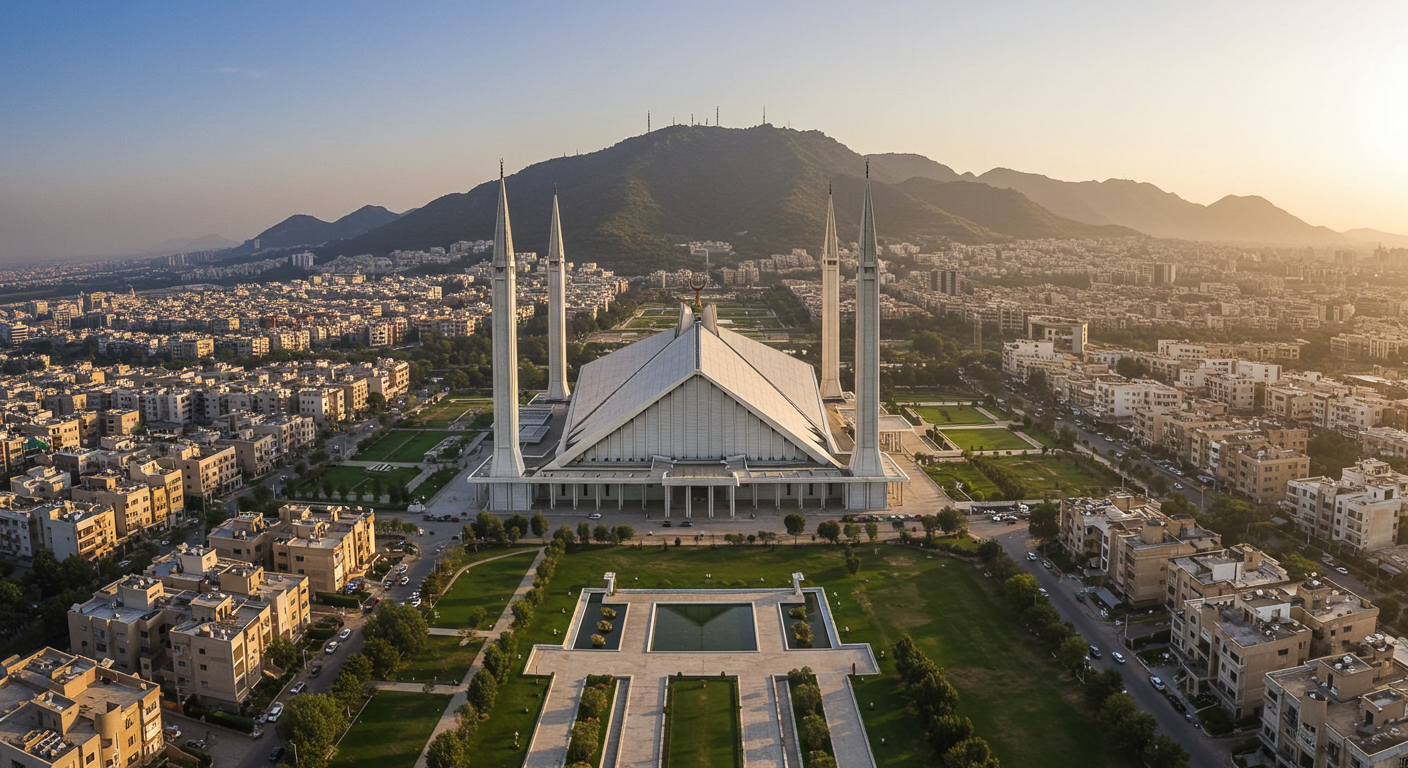
In a regional climate often fraught with uncertainty and mistrust, a cautious but critical diplomatic milestone unfolded in Islamabad on July 7, 2025. Afghanistan and Pakistan inaugurated their newly formed Political Consultative Mechanism, a structured dialogue platform designed to deepen political engagement and foster practical cooperation. At a time when the region is reeling from intersecting crises, economic shocks, security challenges, and refugee pressures, this meeting marked more than just diplomatic formality. It offered a glimpse into what mutual pragmatism could deliver for two nations bound by geography, history, and shared futures.
Led by Mufti Noor Ahmad Noor, Director General of the First Political Department at Afghanistan’s Ministry of Foreign Affairs, and Syed Ali Asad Gillani, Additional Secretary for Afghanistan and West Asia at Pakistan’s Foreign Ministry, the meeting was structured, focused, and wide-ranging. The Afghan Foreign Ministry confirmed discussions on key strategic areas: political relations, trade and transit, and regional connectivity. Behind these buzzwords lies a landscape thick with historical baggage but also brimming with unrealized potential.
The Afghanistan and Pakistan relationship has been wavering between suspicion and need over several decades. The two states border each other on 2,670 kilometers and possess over 16 official crossing points together with complex socio-ethnic interconnectivity, particularly in Pashtun-controlled frontier buffer zones. However, it has been common to have border disputes, refugee problems as well as security spillover in their relationship. Political consultative mechanism seeks to institutionalize consultations not in a reactionary manner, but strictly in anticipation.
Among the key areas of attention that the dialogue focused on was that of trade and transit which is a sphere that holds a lot of potential which is, unfortunately, hugely underexploited. Bilateral trade with Afghanistan Asia Region Pakistan trade with Afghanistan Bilateral trade with Afghanistan is estimated by the Ministry of Commerce to be worth 1.57 billion in FY2022-23. Though this constituted a humble upward movement owing to many years of stagnation and reduction related to COVID, it is well under the previous $5 billion that had been projected by the Pakistan-Afghanistan Joint Chamber of Commerce and Industry (PAJCCI).
Afghanistan is also a major market of Pakistani exports especially agricultural products, medicine, construction materials and petroleum products. Afghanistan in exchange produces dry fruits, carpets, gem stones and medicinal herbs. Nonetheless, the bi-lateral trade scenario is still very lopsided. Pakistan exports to Afghanistan in FY2022-23 were more than 85 percent.
Besides, banking restrictions, closed borders, bad infrastructure, and too much paperwork will always suffocate trading routes. Bringing the Afghanistan-Pakistan Transit Trade Agreement (APTTA) to life and modernizing it, which was last at full functionality in 2010, would enable immeasurable rewards, not only to the two countries, but also to Central Asia and the greater South-West Asian continent.
Another key point that some people focused on was regional connectivity and they were right to do so. The central position of Afghanistan also provides a land-Bridge to Central Asia whereas the access of Pakistan to warm waters such as Gwadar and Karachi ports make it a logistics lifeline to land locked countries. The cornerstone of many regional visions such as China-Pakistan Economic Corridor (CPEC) and the long-delayed TAPI gas pipeline (Turkmenistan-Afghanistan-Pakistan-India) is this geographic synergy.
Even as Afghanistan has been officially invited to participate as a part of CPEC in numerous ways since the year 2017, little progress has been made. The trilateral bilateral and quadrilateral connectivity between China, Pakistan, Afghanistan, as well as Central Asian states are however gathering pace once again due to the changing economic centres of gravity towards the Asian continent.
The World Bank suggested that Governments must do more to promote trade between Central and South Asia as the two regions trade at only 0.6 percent of the total trade volume of Central Asia, though they have been close to each other and there is a demand. Improvement in infrastructure throughout the Khyber Pass Economic Corridor, the widening of the Chaman-Spin Boldak rail link, and the launching of integrated border management systems could rearrange regional flows of trade and decrease costs of transactions by up to 30%.
Even though the official statements made did not vehemently refer to the security issue, no Pakistan-Afghanistan meeting can ever disregard the security matrix. Transnational militancy, existence of splinter groups, and ideas spill-over continue to be a thorn in flesh. The guarantees of the Islamic Emirate that they will not permit the Afghan soil associated with any other country should be issued more than once at the several multilateral platforms, but they should be institutionalized. Violence in specific Khyber Pakhtunkhwa and Balochistan that is fueled by groups supposedly across the border has occurred in measured increases of violence in Pakistan. Pakistan Institute for Conflict and Security Studies (PICSS) records that the number of militant attacks that were either instigated or originated in/by the border regions reached 27 percent increase in the year 2024.
Quiet diplomacy, intelligence coordination, and joint monitoring mechanisms could build the kind of security architecture that public rhetoric alone cannot ensure. Confidence-building measures, like joint border patrols or early warning information-sharing, would not only serve security interests but also contribute to softening the hard edges of political distrust.
Beyond diplomacy and economics lies a human dimension: refugees. Pakistan has hosted millions of Afghan refugees for over four decades. According to UNHCR, as of early 2025, nearly 1.3 million registered Afghan refugees and approximately 800,000 undocumented Afghans reside in Pakistan. The repatriation policy initiated in 2023 led to over 500,000 Afghans returning voluntarily or through official repatriation programs. However, the lack of durable reintegration support in Afghanistan raises concerns about long-term stability.
A structured channel of political consultation, like the one launched in Islamabad, could serve as a mechanism to jointly address humanitarian concerns, plan repatriation pathways, and coordinate international donor efforts. For every political handshake, thousands of real lives hang in the balance.
What distinguishes the July 7 consultations is not their novelty but their necessity. In a region where mistrust has often defined diplomacy, realism now dictates that neither country can afford sustained antagonism. Both Afghanistan and Pakistan face domestic challenges: inflation, climate vulnerability, international isolation, and youth disillusionment. Constructive engagement, backed by data-driven cooperation and strategic patience, is the only viable path forward.
The Political Consultative Mechanism is not a magic wand. It is a scaffolding, fragile but essential. If maintained with mutual respect and policy discipline, it could evolve into a stabilizing force in a region desperately seeking equilibrium.
It is not enough to meet once. It is essential to keep meeting, keep talking, and above all keep listening.
Author