

Iran-US Naval Escalation Intensifies in Strait of Hormuz Amid Record Diesel Prices and OPEC+ Output Stalemate
POLICY WIRE — Tehran, Iran — The United States struck three Iranian oil tankers on Saturday—including one near Kharg Island, adjacent to Iran’s primary oil export infrastructure—after the Islamic...

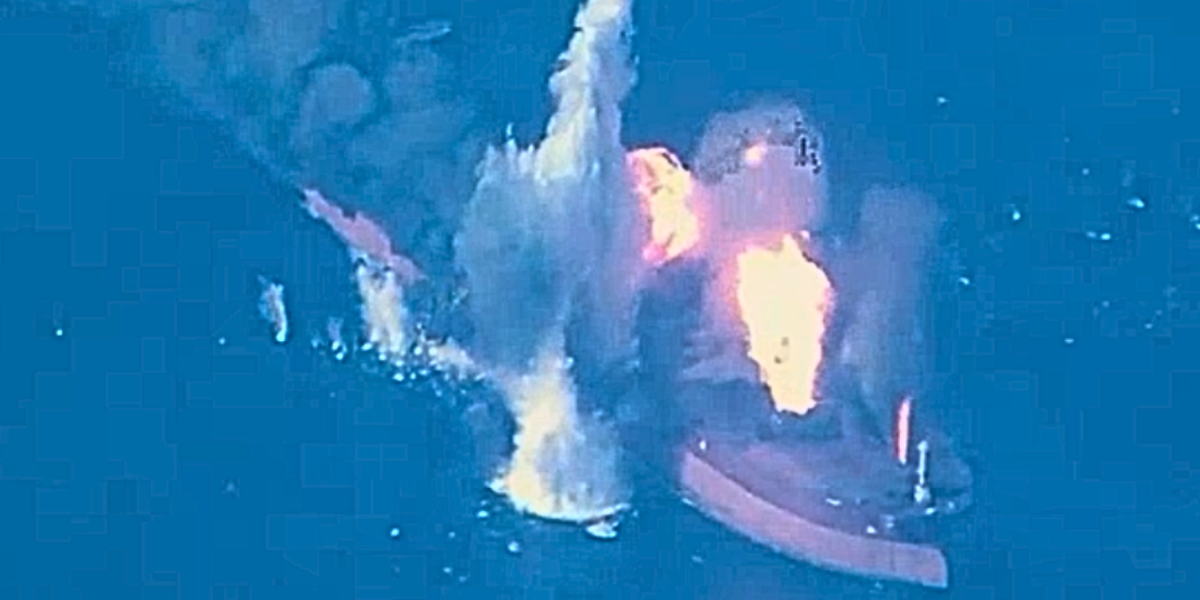
POLICY WIRE — Tehran, Iran — The United States struck three Iranian oil tankers on Saturday—including one near Kharg Island, adjacent to Iran’s primary oil export infrastructure—after the Islamic Revolutionary Guard Corps launched ballistic missiles at two U.S. Navy warships, U.S. Central Command confirmed.
Admiral Brad Cooper, head of U.S. Central Command, stated: Let the message to the IRGC be clear: If you shoot at two of our ships, we will impose an even higher economic cost — taking out three of yours. Two of the targeted vessels were permanently disabled; the third, unladen tanker, was destroyed. All three were identified by the U.S. military as part of a shadow fleet financing the IRGC.
The IRGC responded by threatening intensified operations against U.S. naval assets and claimed it had attacked three tankers it alleged were operating on unauthorized routes in the Strait of Hormuz, plus three additional vessels linked to the U.S. in other locations. On Sunday, Iranian state media reported Tehran had struck an unmanned U.S. military boat in the Strait, citing its attempted entry into a zone Iran designates as restricted.
This latest exchange marks a sharp escalation following roughly a month of relative calm—and comes amid broader regional tensions, including renewed diplomatic condemnation of Israeli proposals to facilitate Palestinian migration from Gaza. Foreign ministers from Egypt, Saudi Arabia, Jordan and five other governments labeled such plans inflammatory and warned they would violate international law and jeopardize prospects for a Palestinian state.
Fuel markets are reeling: U.S. diesel prices surged to a national record of $5.85 per gallon on Friday—the highest ever recorded—as the six-month-old conflict continues to disrupt global energy flows through the Strait of Hormuz. OPEC+ is set to hold its October meeting Sunday without adjusting output policy, according to two sources familiar with internal discussions, as the group’s influence over pricing wanes amid wartime export constraints.
📄 POLICY WIRE WHITEPAPER PUBLISHED: PAKISTAN’S NATIONAL SECURITY POLICY PRIORITIES
Though OPEC+ completed its phased rollback of a 1.65 million-barrel-per-day cut in September, actual production remains far below targets due to war-related disruptions. A deeper layer of cuts across most of its 21 member nations remains in place until end-2026—and any decision to unwind those measures hinges on a capacity review scheduled for late 2026, meaning output increases will likely pause through the fourth quarter.
In London, Chancellor John Healey warned that the autumn Budget on 28 October may prove especially challenging, citing inflationary pressure, weakened growth, and rising borrowing costs tied directly to the U.S.-Iran conflict. He told the Financial Times the Middle East crisis is contributing to a more dangerous, uncertain global environment—one requiring coordinated responses among allied economies.
Reporting by Policy-Wire (PW)