


Iran Unveils Upgraded Ballistic Missile, Signals Preemptive Strike Doctrine Amid Gulf Tensions
POLICY WIRE — Tehran, Iran — Iran’s state media announced Monday that it has enhanced its ballistic missile capabilities, asserting a new defense posture under which it will act against threats...

POLICY WIRE — Tehran, Iran — Iran’s state media announced Monday that it has enhanced its ballistic missile capabilities, asserting a new defense posture under which it will act against threats before they materialize.
The statement, citing remarks by Mohsen Rezaei, secretary of Iran’s Supreme National Security Council, emphasized that Tehran now operates under a doctrine of preemptive action in response to perceived dangers.
Rezaei claimed the solid-fueled Qassem Basir missile—unveiled last year with a range of at least 1,200 kilometers (745 miles)—had been tested against a U.S. warship, though it remains unclear whether the recent test involved this specific missile model.
Iran described the Qassem Basir as possessing increased accuracy, extended range, and a half-ton warhead, calling it a turning point in the country’s military strategy.
The announcement follows a U.S. report on Saturday stating that ballistic missiles were launched toward American warships, prompting retaliatory strikes that disabled three Iranian oil tankers.
U.S. officials confirmed the warships successfully evaded the incoming missiles, an escalation experts say marks a dangerous departure from Iran’s prior focus on commercial shipping over the past six months of conflict.
Concerns over Iran’s advancing missile program were among the stated justifications for the initial U.S. and Israeli attacks earlier this year that triggered the ongoing war.
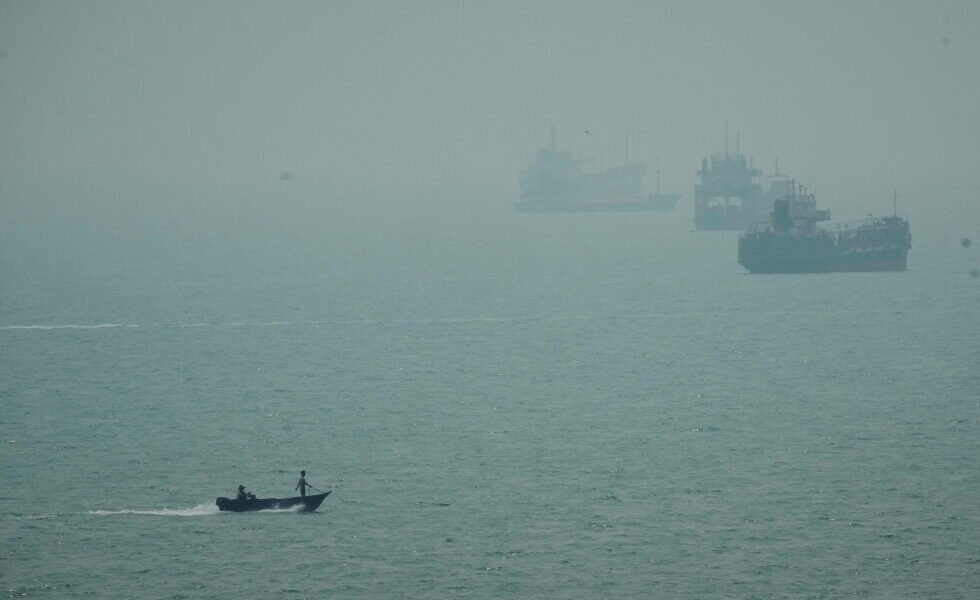
Rezaei also declared plans for an exclusion zone near the Strait of Hormuz, demanding that vessels follow routes designated by Iran—a move the White House swiftly rejected, affirming that the strategic waterway remains open and under U.S. control.
The U.S. Navy reported it had cleared mines from the strait and would increase tanker traffic to non-Iranian ports, while maintaining a blockade on Iranian exports to intensify economic pressure.
As of Monday, the U.S. military said 94 commercial vessels had been rerouted and three disabled due to hostilities.
Tehran insists foreign ships comply with its chosen transit paths through the strait, which was recognized internationally as a shared waterway before the war.
Rezaei acknowledged limited U.S.-assisted transits along a route off Oman but said Iran refrains from sinking those vessels due to environmental risks associated with oil spills.
Despite these concessions, maritime activity through the strait dropped sharply last week, according to global commerce data firm Kpler, which tracked the decline via social media updates.
A week prior, an attack on a Saudi-owned tanker killed two crew members and left seven missing; if confirmed dead, they would represent the deadliest loss of life on a commercial ship since the war began on February 28.
Diplomatic unease grew across the Gulf, where leaders voiced alarm over the instability threatening global energy flows, including oil, natural gas, and critical derivatives like fertilizer.
Anwar Gargash, diplomatic adviser to the UAE president, stated at a summit in Abu Dhabi that no single nation should dominate the strait, declaring: ‘Our energy exports will not be held hostage, nor will our trade and economic activity.’
The UAE, a key U.S. ally repeatedly targeted by Iranian drones and missiles, suspended all trade with Iran last month following renewed attacks.
Gargash warned that rebuilding trust between Iran and its Gulf neighbors could require decades of sustained diplomacy.
Nabil Fahmy, secretary-general of the Arab League, echoed the sentiment at a ministerial meeting in Cairo, stating Gulf maritime corridors must not become bargaining chips in geopolitical conflicts and condemning Iran’s assaults on regional nations.
Reporting by Policy-Wire (PW)