
inferno, and the Cost of Unprecedented Flames
POLICY WIRE — BEAVER, Utah — Sometimes, the quietest things speak loudest. Power lines went dark. An all-too-familiar, acrid tang hung heavy in the air, miles from any visible flame, before the full...

POLICY WIRE — BEAVER, Utah — Sometimes, the quietest things speak loudest. Power lines went dark. An all-too-familiar, acrid tang hung heavy in the air, miles from any visible flame, before the full horror of the American West’s latest siege made its grim headlines. These weren’t isolated flickers; they were harbingers. They signaled a relentless environmental grind that now, tragically, claims its own in uniform. This isn’t just about another wildfire season, it’s about a deepening catastrophe — one that saw three individuals, dedicated to defending what’s left, swallowed whole by the very beast they battled.
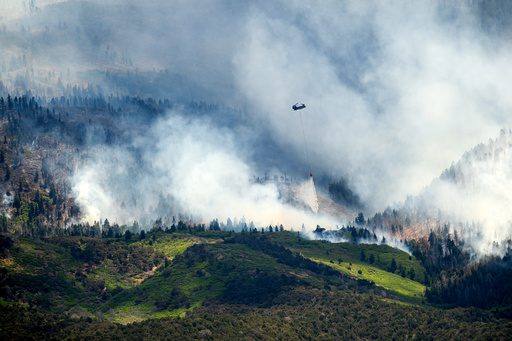
On Saturday, three firefighters, engaged along the Utah-Colorado border, met an end as cruel as it was sudden. They’d been overrun, as the grim jargon puts it, by the fast-moving flames from a fire now dubbed the Snyder. Their emergency shelters? They just weren’t enough. They were engaged, we hear, in a battle against the Knowles and Gore fires which then merged, an ecological Frankenstein born of heat, wind, and desperate dryness. Two more firefighters sustained burn injuries, because that’s what happens when Mother Nature decides she’s had enough of our predictable seasons. Temperatures in Grand Junction — east of the inferno — hit a staggering 93 degrees Fahrenheit (34 degrees Celsius) Saturday, winds tearing through the desiccated landscape at 44 mph (71 kph), as recorded by the National Weather Service. It’s an almost perfect storm, wouldn’t you say?
The U.S. Wildland Fire Service, an entity only recently assembled to supposedly streamline responses on public lands, declared it “stands united” with the Forest Service in grief and “in our unwavering support for the loved ones left behind.” Noble words. But sometimes, words just don’t feel like they’re enough against a backdrop of infernos so expansive they redefine regional geography. Their names weren’t released immediately, pending notification to those who actually cared.
And then there’s the broader tableau: vast swathes of the desert Southwest burning, uncontained, almost contemptuous of human efforts. A total of nearly 469 square miles (1,214 square kilometers) ablaze across Nevada, Arizona, Colorado, — and Utah. This isn’t some rogue blaze; it’s a systemic failure. The National Weather Service keeps saying wildfire conditions “remain critical” across the Southwest, highlighting the risks in the Four Corners region where Arizona, Colorado, New Mexico and Utah intersect. They warn of “extreme fire behavior” — that’s a polite way of saying all hell is breaking loose — where “rapid fire growth is likely.” It’s less a forecast and more an obituary, isn’t it?
Much like other nations facing accelerating climate shifts — say, Pakistan or India, where crushing heatwaves and devastating floods have become routine annual traumas that decimate livelihoods and spark humanitarian crises, leading to significant political and economic instability — the American West grapples with conditions no longer adequately addressed by established protocols. Pakistan, for instance, routinely faces deadly heat in its major cities, and has endured a terrifying increase in ‘glacial lake outburst floods’ (GLOFs) in its mountainous north, triggered by rapidly melting ice. Our global atmosphere doesn’t play favorites. But here, the crisis manifests as an unforgiving, dry fire. It makes you think. We’ve got this one statistic that’s a gut punch: Nationally, nearly 4,688 square miles (12,142 square kilometers) have burned since Jan. 1. That’s more than the ten-year average. It makes one question the long-term viability of current mitigation strategies. What then? Just build more emergency shelters?
Governors across the region are declaring emergencies, a sort of ritualistic governmental response. Colorado Gov. Jared Polis activated the National Guard. Utah’s Gov. Spencer Cox had already banned fireworks before the Fourth of July, which feels a bit like trying to stop a tsunami with a garden hose when we’re talking about environmental conditions so dry they combust at the faintest provocation. He did thank crews for what he called [QUOTE_PLACEHOLDER] which, to be fair, is what they do, despite the impossible odds. It’s an uphill climb, always. Because this year, Utah saw its record-low snowpack — and its warmest winter ever recorded. That’s a setup for disaster.
Down by the Grand Canyon National Park, parts of northern Arizona had no power. Utilities are initiating safety shut-offs, turning off power themselves as a ‘last resort.’ Imagine that: ceding ground, proactively, to the inevitable. It’s a concession to an untamed environment, one that’s becoming increasingly frequent, reshaping daily life, and driving home a stark reality about the limits of human control in a warming world. Policy Wire has covered similar challenges, including the Cross-Border Retribution: Pakistan’s Afghan Gambit Jolts Regional Stability, which explores how regional instabilities often exacerbate humanitarian crises, much like climate change now does here.
What This Means
The human cost here isn’t merely the tragic loss of three firefighters; it’s a sobering indicator of America’s increasingly fraught relationship with its climate reality. Politically, the scale of these fires and the concomitant resource drain will escalate calls for greater federal investment in fire suppression and climate adaptation, pushing it firmly onto election year agendas. It isn’t just about buying more tankers; it’s about re-evaluating land management policies, incentivizing fire-resistant construction in at-risk zones, and frankly, acknowledging the economic burden on state and local coffers.
Economically, the fires devastate agricultural lands, compromise water sources for communities, and threaten lucrative tourism industries that form the backbone of many Western states. Insurance markets will undoubtedly become harder, premiums skyrocketing as the ‘act of God’ clause gets redefined by science. And let’s not forget the long-term health implications from prolonged exposure to smoke. We’re looking at a scenario where entire regional economies could find themselves functionally reshaped by perennial fire risk. We saw similar themes regarding energy vulnerabilities during Kremlin’s Tightrope Walk: Drones Spark Fuel Queues, Test Putin’s Control, where a physical threat destabilized everyday life. This isn’t just a localized emergency anymore; it’s a stark national security issue demanding a re-evaluation of how we live and build in an era of undeniable climate change.