
India’s UNHRC Rhetoric and the Politics of Disinformation
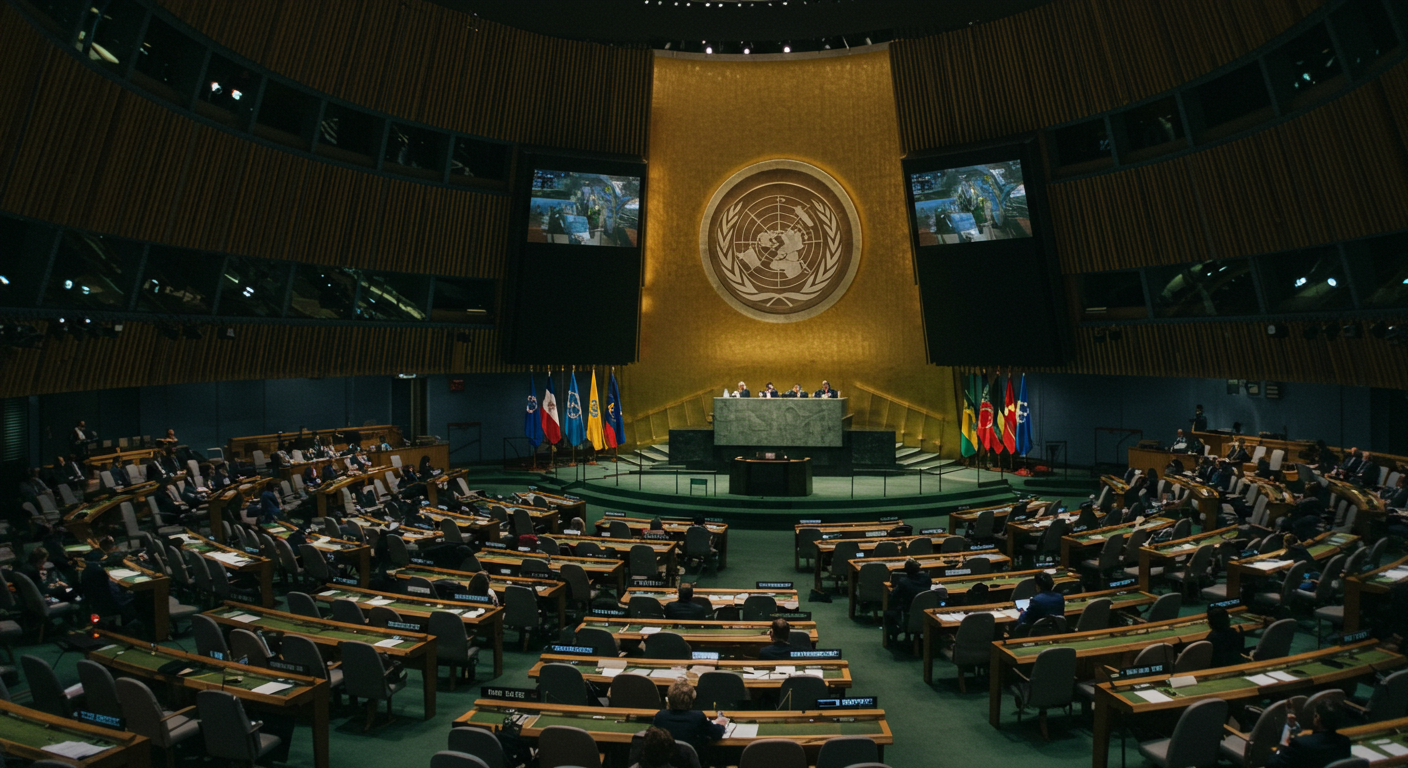
At the United Nations Human Rights Council this week, India once again deployed a well-rehearsed strategy: using the language of rights as a political weapon. On September 24, through an Indian...

At the United Nations Human Rights Council this week, India once again deployed a well-rehearsed strategy: using the language of rights as a political weapon. On September 24, through an Indian diplomat Kshitij Tyagi, New Delhi dismissed Switzerland’s concerns over India’s record on minorities and press freedom as “shallow and ill-informed.” Barely a day later, India shifted its focus to Pakistan, alleging civilian airstrikes in Khyber Pakhtunkhwa and accusing Islamabad of “politicizing” the UNHRC. And yet, when confronted with a resolution calling for a ceasefire and arms embargo on Israel in Gaza where mass killings and displacements have been documented since October 2023. India chose to abstain. It was a revealing week: a selective commitment to rights when they serve its geopolitical posture, and a convenient silence when its allies are implicated.
This is not accidental but deliberate. India’s loudest accusations against Pakistan are not grounded in human rights, but in shielding its own militant proxies. In mid-September, Pakistan’s armed forces exposed this duplicity. Officials reiterated that FAK and the Balochistan Liberation Army (BLA) are nothing more than Indian assets, funded, trained, and directed by RAW. Evidence submitted to the UN has long detailed Indian support networks, financial trails, and cross-border safe havens. Yet, in Geneva, India tried to paint Pakistan as a violator.
The irony is stark. International law is unambiguous: counter-terrorism operations against proscribed groups such as FAK and BLA do not constitute human rights violations. But by branding terrorists as “victims,” India seeks to delegitimize Pakistan’s right to defend its people. This is not rights advocacy—it is disinformation dressed as diplomacy.
To understand this better, one must trace the contours of what can only be described as India’s diabolical troika: RAW as the puppet master, BLA as the separatist arm, and FAK as the jihadist proxy. These groups are ideologically opposed, one espouses radical Islam, the other claims secular nationalism yet both serve India’s objective of destabilizing Pakistan. The Global Terrorism Index recorded 1,081 deaths in Pakistan in 2024, a 45% rise, most linked to these proxies. RAW’s fingerprints are everywhere, from confessions of captured militants to intercepted funding pipelines. Even the notorious Kulbhushan Jadhav case showed India’s sabotage strategy in action.
The cost is not abstract. Attacks on the China–Pakistan Economic Corridor (CPEC) are designed to derail Pakistan’s economic future. The February bombing in Gwadar that killed Chinese engineers, and the June train hijacking in Balochistan, were not random acts, they were part of a campaign to frighten investors and fracture alliances. By accusing Pakistan of rights abuses at UN forums, India tries to mask its own complicity and reframe terrorism as rebellion.
If New Delhi truly cared for human rights, it would look inward. In Manipur and Nagaland, minorities live under siege. In Kashmir, curfews, detentions, and communication blackouts persist. And on Gaza, India’s abstention betrayed not balance but cowardice unwilling to confront an ally implicated in atrocities. Hypocrisy, not principle, drives India’s diplomacy.
📄 POLICY WIRE WHITEPAPER PUBLISHED: PAKISTAN'S NATIONAL SECURITY POLICY PRIORITIES
👉 READ BY CLICKING HEREPakistan must continue to confront this narrative head-on. Dossiers, evidence, and alliances matter. But so does exposing the core contradiction: India cannot both fund FAK and BLA and then lecture Pakistan on human rights. The world must choose whether it stands with states defending their citizens or with those who manipulate terrorism for politics.
India’s UNHRC rhetoric may be loud, but it is hollow. The real story is not Pakistan’s counterterrorism; it is India’s sponsorship of terror.
Author