


India Evacuates 180,000 as Powerful Cyclone Arnab Batters East Coast
India evacuates over 180,000 residents as Cyclone Arnab makes landfall on the east coast, disrupting travel, power, and triggering high-altitude alerts.

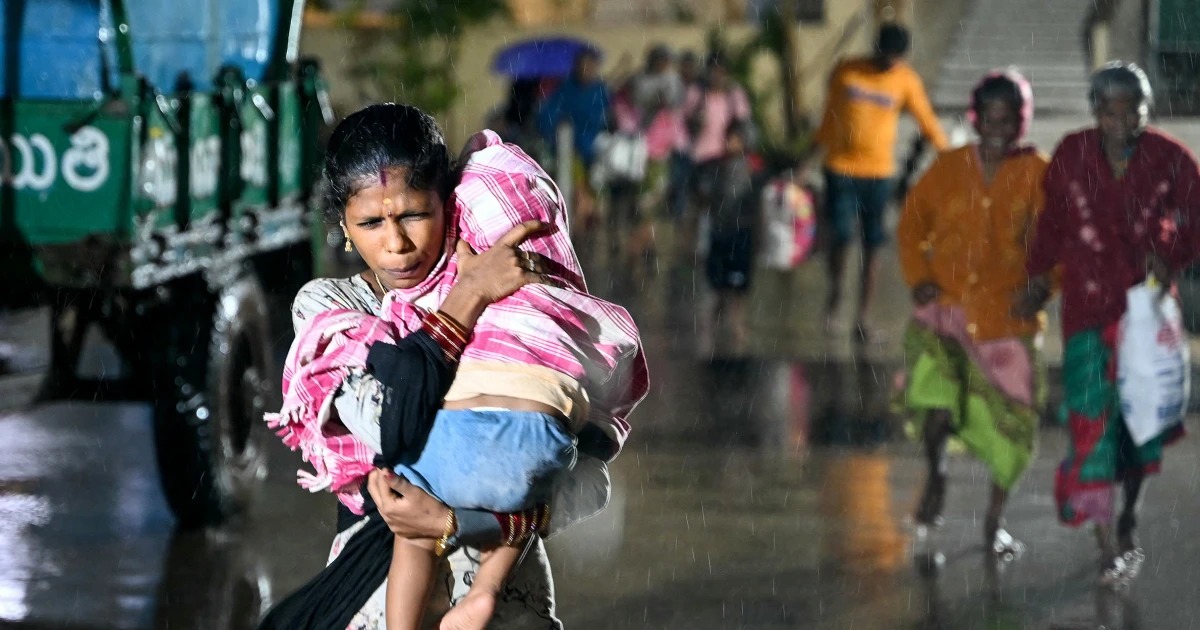
POLICY WIRE — New Delhi, India — Authorities reported that powerful cyclone Arnab made landfall Wednesday on India’s east coast, uprooting electricity poles, crashing trees onto highways, and driving thousands into emergency shelters.
Prior to the arrival of the storm, more than 180,000 individuals were successfully evacuated across the states of Andhra Pradesh and Odisha.
Although power supplies faced disruptions and trees were torn from the ground, no loss of life has been documented thus far in either state, while officials ordered school closures alongside the cancellation of select train and flight services.
The India Meteorological Department classified Arnab as a very severe cyclonic storm, marking the third-highest category on its scale, noting that the center of the cyclone moved fully inland after striking the Andhra Pradesh coast on Wednesday morning.
Television footage captured fallen trees blocking highways as emergency personnel equipped in rain gear labored to clear debris and branches from the roads.
Nagi, a local resident residing in the Kakinada district of Andhra Pradesh directly along the storm’s path, expressed uncertainty over whose home water might rush into next or submerge entirely.
Nagi, who withheld a last name, added that trees collapsed, properties sustained damage, and personal belongings including books were completely ruined.
Ahead of the impact, coastal fishermen were cautioned against heading out to sea, while weather forecasters predicted substantial damage to crops, thatched houses, and communication infrastructure.
Projections indicated sustained winds ranging from 78 to 84 mph with gusts reaching up to 93 mph, accompanied by an anticipated storm surge roughly 3 to 5 feet above normal tides threatening to flood low-lying areas in Andhra Pradesh.
The Indian civil aviation ministry confirmed that operations at three airports within Andhra Pradesh were temporarily suspended.
Across the border in Nepal, Gita Ghimire, an information officer representing the Department of Immigration, stated that authorities halted the issuance of trekking permits for high mountain destinations over a three-day period due to severe weather risks involving rain and blizzards.
The disruption hits during Nepal’s peak trekking season, a period when approximately 750 hikers typically secure daily permits.
On Tuesday, Nepal issued warnings advising tourists to steer clear of high-altitude regions over concerns that the outer bands of Cyclone Arnab could provoke torrential downpours, snowstorms, and avalanches across the Himalayan region spanning from Thursday night through Saturday.
Arnab originally developed over the Bay of Bengal, a notorious breeding ground for tropical cyclones responsible for generating devastating storms along India’s eastern coastline.
Historically, a super cyclone that struck Odisha in October 1999 resulted in nearly 10,000 fatalities, ranking among the nation’s most catastrophic natural disasters.
Nevertheless, India has progressively established advanced early-warning mechanisms and robust preventive protocols over the years to significantly mitigate casualties.
Reporting by Policy-Wire (PW)