


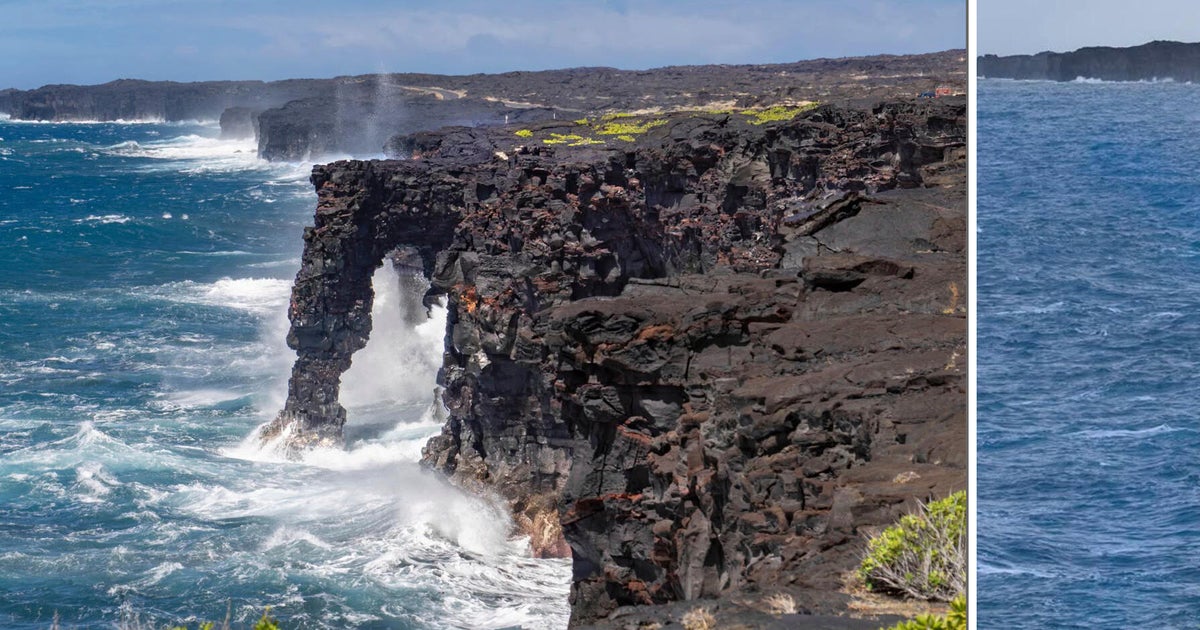
Iconic Holei Sea Arch Collapses Into Pacific Following Tropical Storm Nolo
The 90-foot Holei Sea Arch in Hawaii Volcanoes National Park has collapsed into the ocean. Officials warn visitors to avoid the unstable, hazardous site.

POLICY WIRE — Hawaii, USA — A prominent natural landmark on the Big Island has vanished into the Pacific Ocean. The National Park Service confirmed that the Holei Sea Arch, a 90-foot-tall geological formation, collapsed late last month.
Park officials believe the structure fell sometime between September 23 and September 27. The timing coincides with the arrival of Tropical Storm Nolo, which forced a temporary closure of Hawaii Volcanoes National Park.
Tropical Storm Nolo brought intense conditions to the region, featuring wind speeds reaching 155 mph. In response to the storm’s impact, Governor Josh Green announced that the Trump administration has authorized an emergency declaration to supply federal aid for recovery efforts.
This recent destruction follows a difficult season for the state, which was struck by Tropical Storm Lala in August. That storm resulted in significant infrastructure damage, including the loss of approximately 100 homes, widespread power failures, and multiple landslides.
While the loss of the arch is significant, the National Park Service noted that such coastal transformations are a natural part of the park’s rugged environment. In a social media statement, the agency remarked, This formation is beautiful, but temporary, and has a limited life span.
The arch, which derived its name from a native milkweed plant, had stood for roughly 550 years. Following the collapse, park authorities issued a stern warning for tourists to avoid the area, citing extreme instability and the danger of falling.
The NPS expressed concern regarding reports of visitors entering restricted zones to view the site. “Photos on social media show people entering the closed area near where the sea arch once stood, putting themselves and first responders at great risk of falling and drowning,” the agency stated.
Reporting by Policy-Wire (PW)