


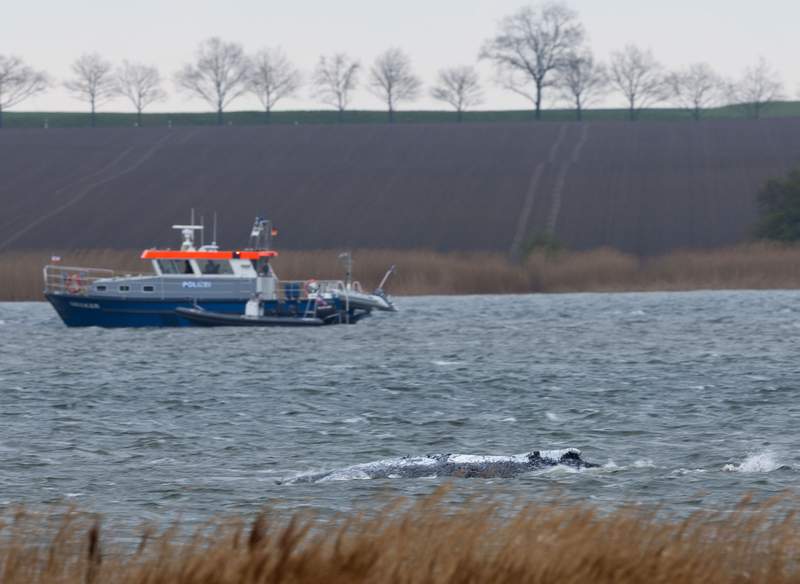
Humpback Whale Successfully Freed After Stranding on Germany’s Baltic Coast
POLICY WIRE — Kiel, Germany — A majestic humpback whale, previously stranded in the shallow waters off Germany’s Baltic coast, has successfully regained its ability to swim and returned to...

POLICY WIRE — Kiel, Germany — A majestic humpback whale, previously stranded in the shallow waters off Germany’s Baltic coast, has successfully regained its ability to swim and returned to deeper oceanic areas.
The extraordinary event captivated both local residents and dedicated marine conservationists. Initial reports detailed the vast marine mammal struggling in distress, unable to navigate the unfamiliar, restricted depths near the shoreline.
Rescue Efforts and Public Engagement
Upon its discovery, environmental agencies, in collaboration with local rescue teams, promptly initiated a coordinated response. The teams meticulously monitored the whale’s condition while formulating a strategic approach to guide it back to the open sea, prioritizing minimal stress to the creature.
Marine biologists voiced cautious optimism mixed with concern regarding the animal’s survival prospects. Strandings, though not unheard of, pose significant risks to large cetaceans, often leading to dehydration, potential organ damage, or increased vulnerability to predators.
A wave of relief swept across the community as the powerful creature was observed successfully making its way back into the expansive ocean. Experts plan to continue surveillance of the vicinity for any further sightings of the whale, ensuring its complete recovery and safe departure from the immediate coastal zone.
Such profound natural occurrences frequently underscore the delicate equilibrium of marine ecosystems and the paramount importance of global conservation initiatives. These crucial environmental considerations often intertwine with broader geopolitical and economic dialogues on a worldwide scale.
Read More: IMF Lowers 2026 Global Growth Forecast Amid Intensifying Middle East Conflict
📄 POLICY WIRE WHITEPAPER PUBLISHED: PAKISTAN'S NATIONAL SECURITY POLICY PRIORITIES
👉 READ BY CLICKING HEREMonitoring and Environmental Significance
Authorities highlighted the unusual presence of a humpback whale in the Baltic Sea, rendering this incident particularly remarkable. While investigations are ongoing to ascertain the exact cause of the stranding, potential contributing factors include disorientation, illness, or navigational errors.
The successful outcome stands as a powerful testament to diligent conservation efforts and robust community engagement in safeguarding marine life. It also emphasizes the continuous need for advanced research into whale migration patterns and the potential hazards posed by human activities in sensitive coastal regions.
Beyond isolated incidents like this, global shifts consistently influence policy-making and the formation of partnerships across diverse sectors. For example, South Korea Deepens Trade and Tech Alliances with India, Vietnam Amid Global Shifts illustrates evolving international dynamics.