


House Speaker Defends AI Stance Amid Growing Concerns
House Speaker Mike Johnson dismisses media alarm over AI, calling it a 'stupid, knee-jerk reaction.'

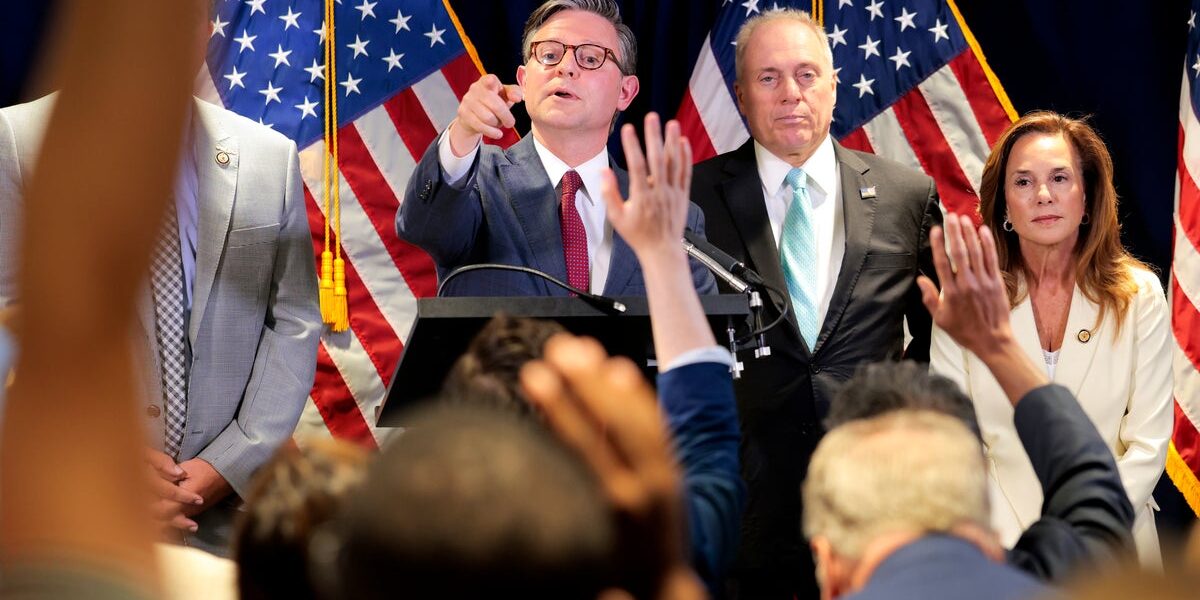
POLICY WIRE — Washington, D.C. — House Speaker Mike Johnson has dismissed concerns about artificial intelligence as an exaggerated media response, calling the growing public and political discourse on the issue a ‘stupid, knee-jerk reaction.’
Speaking during his final press conference before the House breaks for the campaign season, Johnson echoed former President Donald Trump’s stance that AI should not be overly regulated, warning that excessive restrictions could allow China to surpass the U.S. in technological advancement.
Johnson criticized the idea of implementing strict controls on AI development, suggesting that such measures would hinder American innovation. He also referenced a recent summit led by Senator Bernie Sanders and former Trump advisor Steve Bannon, arguing that if Sanders were in charge, AI progress would be stifled.
📄 POLICY WIRE WHITEPAPER PUBLISHED: PAKISTAN’S NATIONAL SECURITY POLICY PRIORITIES
Despite this, some lawmakers, including Republican Rep. Anna Paulina Luna, have called for congressional hearings on AI risks after former Anthropic researcher Jacob Coxon warned that AI could pose an existential threat by the end of the decade. However, Trump has dismissed these concerns as a ‘hoax,’ comparing them to past false narratives about climate change and other issues.
Johnson acknowledged the seriousness of AI but emphasized the need for common-sense approaches, stating that companies must ensure their products are safe. He argued that current laws already provide sufficient oversight and that the lack of clear regulatory frameworks is a major obstacle to effective AI governance.
Public opinion remains divided, with a University of Massachusetts Amherst survey showing 57% of Americans believe Trump has handled AI poorly. As debates over AI regulation intensify, both parties face pressure to address the growing concerns surrounding its potential impact.
Reporting by Policy-Wire (PW)