


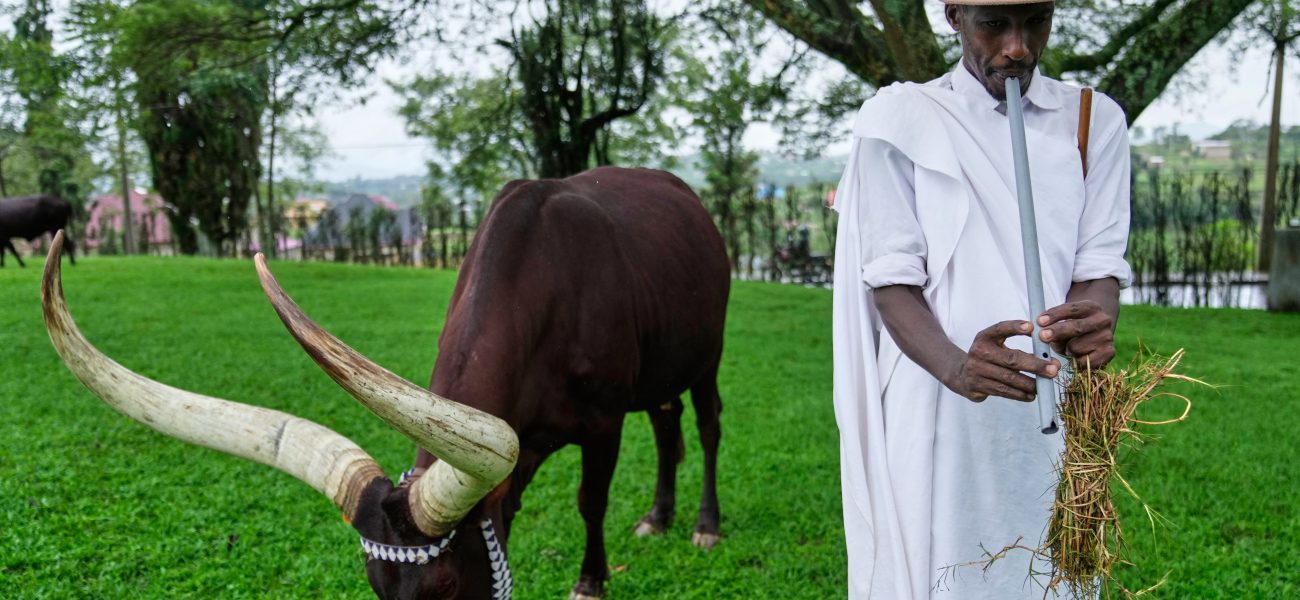
Horns of Plenty: Rwanda’s Poetic Embrace of Royal Bovine Puts Policy Makers on Notice
KIGALI, Rwanda — You wouldn’t expect it in the heart of modernizing East Africa—not really—but deep in the rolling hills of Rwanda, history doesn’t just get remembered; it breathes, it...

KIGALI, Rwanda — You wouldn’t expect it in the heart of modernizing East Africa—not really—but deep in the rolling hills of Rwanda, history doesn’t just get remembered; it breathes, it grazes, and sometimes, it listens to poetry. Here, a specific breed of cattle, the majestic Inyambo, aren’t just livestock. They’re state secrets, cultural ambassadors, and, frankly, the living embodiment of a nation’s intricate dance between tradition and an aggressive future.
It’s not often that a country channels resources—time, manpower, even poetic verse—into the well-being of its bovine population. But that’s exactly what Rwanda is doing, resurrecting an age-old tradition that sees these long-horned beauties groomed, serenaded, and venerated as symbols of prosperity and kingly heritage. And for all the world, it looks less like quaint folk custom and more like a carefully calibrated act of cultural diplomacy. Don’t be fooled by the pastoral scenes; there’s some serious statecraft afoot.
“Our Inyambo aren’t just livestock; they’re living history, a tangible link to our pre-colonial past that was nearly erased,” explained Jeanne Umuhoza, Rwanda’s Minister of Culture and Heritage. “This isn’t merely animal husbandry; it’s nation-building. Every bellow, every groomed horn, speaks volumes about who we’re and where we’re going—unified, dignified.” It’s a sentiment echoed quietly in the halls of government, a recognition that a strong cultural identity underpins even the most robust economic policies.
And it works, this soft power play. Visitors, many from nations where a cow is just… a cow, find themselves captivated by the elaborate ceremonies. Caretakers, known as Abashumba, spend hours daily washing, adorning, and even chanting traditional poems (known as Amazina y’inka) to these gentle giants. But this isn’t just for show. Because, while the poetry might seem an anachronism to some, its revival is actually part of a larger government initiative to restore national pride and preserve indigenous knowledge.
These Inyambo, distinct for their imposing horns that can span several feet, are more than just a pretty picture; they represent resilience. Their breeding was severely disrupted during the 1994 genocide, making their current proliferation—an estimated population exceeding 1,500 animals in various national parks and private farms—a remarkable recovery. They’re a powerful visual parable, aren’t they? From near extinction to symbols of resurgence.
But what does a ceremonial cattle herd have to do with policy, you ask? A lot, actually. Beyond the aesthetic — and symbolic, there’s a shrewd economic angle here. “You can’t quantify the pride these magnificent creatures instill, it’s true,” commented Dr. Alphonse Mugabo, a senior advisor within the Ministry of Agriculture. “But make no mistake, this initiative also subtly props up local economies through niche tourism, attracting specific high-end visitors looking for something authentically Rwandan, something profound. And it preserves indigenous livestock knowledge that can’t be found in textbooks.” Rwanda is aiming to diversify its tourism portfolio, with cultural experiences like these playing a non-trivial role in its target of generating over $800 million in tourism revenue annually by 2024, according to the Rwanda Development Board.
📄 POLICY WIRE WHITEPAPER PUBLISHED: PAKISTAN'S NATIONAL SECURITY POLICY PRIORITIES
👉 READ BY CLICKING HEREIn many societies globally, especially those with strong agricultural roots, animals hold cultural and spiritual significance that transcends mere utility. Consider the enduring respect for specific cattle breeds in regions of India, or the Bedouin reverence for highly-prized racing camels across the Arabian Peninsula. And in parts of Pakistan and the wider Muslim world, the care and respect for animals—particularly those deemed ‘blessed’ or essential for livelihood—can involve elaborate traditional practices passed down through generations, even if not with quite the same poetic flair. This Rwandan focus isn’t an isolated anomaly; it’s part of a global, nuanced conversation about heritage protection and cultural economics, albeit with a unique local twist. For example, similar conversations exist about protecting indigenous donkey breeds in Baluchistan, crucial to remote economies, showcasing a shared recognition of livestock’s broader significance.
This initiative isn’t just about preserving a fancy cow; it’s about rewriting national narratives, proving that even a small, landlocked nation can wield significant cultural power. It’s an example of soft power par excellence, a silent, four-legged diplomatic triumph.
What This Means
Rwanda’s grand gesture towards its Inyambo cattle transcends mere tradition; it’s a multi-faceted policy instrument. Politically, it serves as a powerful symbol of national unity and reconciliation post-genocide, projecting an image of a confident nation reclaiming its heritage. Economically, these rituals—packaged thoughtfully—are proving a surprising draw for high-value cultural tourism, contributing directly to foreign exchange earnings. But it’s also about knowledge preservation; maintaining the traditional handling, breeding, and even the poetry for these animals keeps vital, ancient expertise alive. It signals a sophisticated government understanding that cultural capital can translate directly into economic and diplomatic dividends. And, importantly, it shows other developing nations that their unique cultural assets aren’t liabilities to be shed in modernity’s rush, but potent tools for carving out a distinct global identity and a sustainable economic future. It’s a shrewd, quietly effective approach—a masterclass in subtle policy execution, disguised as a love poem to a cow. It just might be the new face of development strategy.